News Desk
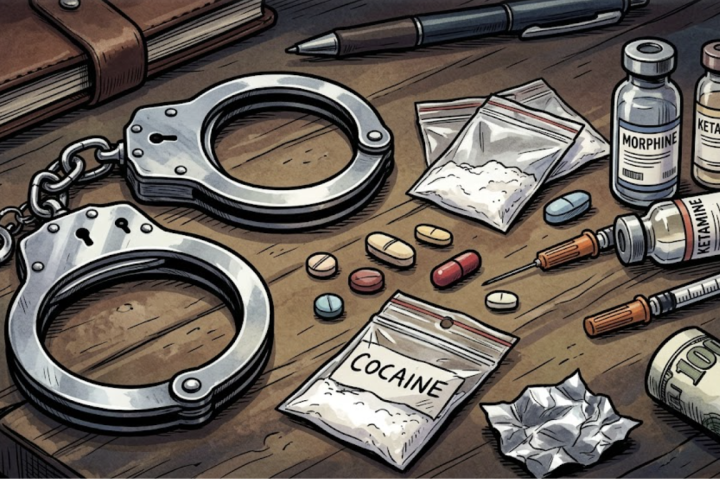
The People’s Majlis Judiciary Committee has voted to investigate the controversial parole release and subsequent re-arrest of Ibrahim Rasheed, known as “Abucha”, who was serving a 25-year prison sentence for major drug trafficking.
The inquiry was initiated following a formal motion submitted by Galolhu North MP (MDP) Mohamed Ibrahim (Kudoo), who called for a thorough review into how a major offender was prematurely freed and whether legal oversights led to the release of other high-profile criminals. During committee meeting, all attending members voted in favour of probing the case, which includes summoning members of the Parole Board for questioning.
Rasheed was originally taken into custody in October 2020 during a major police operation at sea that intercepted 61 kilograms of diamorphine and 17.97 kilograms of methamphetamine, alongside 17 other suspects. He was handed a 25-year prison sentence in May last year following a plea bargain with the Prosecutor General’s Office, which reduced his sentence after he confessed to the charges.
After spending six years in detention, Rasheed was released on parole on the 29th of last month. However, the decision was swiftly overturned, and he was returned to prison.
Addressing the media at the President’s Office, Minister of Homeland Security and Technology Ali Ihusaan stated that the Parole Board had greenlit Rasheed’s release on the 26th of last month based on a miscalculation of his time served in detention. Ihusaan emphasised that the administration’s policy strictly opposes shortening sentences or granting early release to major drug traffickers serving long-term sentences—a stance reinforced by legislative amendments introduced by the current government.
Ihusaan noted that under legal guidelines, parole eligibility for Rasheed’s conviction requires serving at least half of the sentence, amounting to six years and three months, meaning he fell short of the mandatory timeframe. He added that the board also failed to properly evaluate Rasheed’s prison conduct, potential societal risks, or disciplinary record while incarcerated.
In response to the procedural breaches and policy violations, President Dr Mohamed Muizzu has decided to dismiss the six Parole Board members involved in the controversial decision.