News Desk
Congestion at the capital’s harbour, rising freight overheads, and controversial transport fee tweaks push household budgets to the limit—casting doubt on ruling party pledges to tame the parallel exchange rate.
Global inflationary headwinds—fuelled by regional conflict in the Middle East, volatility in energy markets, and shifting international trade dynamics—have left small, import-dependent island nations like the Maldives uniquely vulnerable. In the archipelago, however, these external price shocks are being severely compounded by a domestic bottleneck: acute operational strain at the nation’s primary commercial gateway, the Malé Commercial Harbour.
As household grocery bills reach historic highs across the nation, political leaders have offered long-range reassurances. Speaking during a parliamentary debate on a no-confidence motion against Economic Minister Mohamed Saeed, Ibrahim Falah, parliamentary group leader of the ruling People’s National Congress (PNC), claimed that giving President Dr Mohamed Muizzu’s administration 15 years in power would see the US dollar exchange rate fall to 10 Rufiyaa—a timeframe notably spanning three presidential terms, whereas the Maldivian constitution limits any individual president to a maximum of two five-year terms.
“This is what happens when economic affairs are managed irresponsibly. Honorable Speaker, this is why changes occur in the dollar rate and other things. God willing, if this administration of ours continues for some time—for around 10 to 15 years—the dollar will stay at 10, right at 10,” Falah said.
Yet, a fact-check of Falah’s assertion reveals a reality far removed from economic fundamentals. On the ground in Malé, traders, freight handlers, and logistics operators describe a supply chain under severe, structural distress—rendering political currency targets increasingly detached from market conditions and driving the inflation currently pressing ordinary citizens.
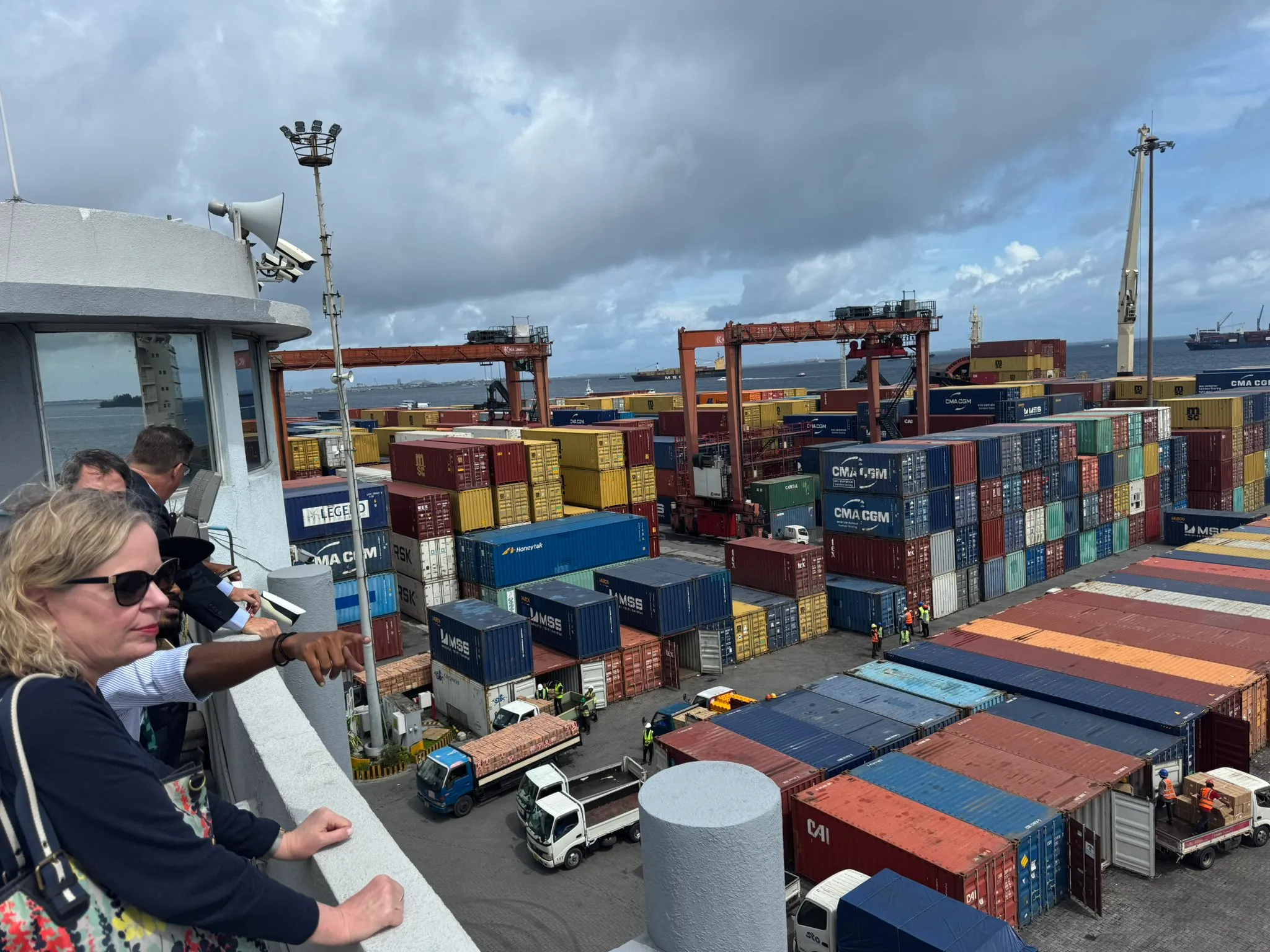
At the heart of the domestic price surge is a chronic shortage of yard space at the capital’s port. Container vessels are regularly forced to remain at outer anchorage for extended periods waiting for clearance slots. Industry sources confirm that severe backlogs have forced some regional feeder ships to return cargo to Colombo for reshipment—adding punitive demurrage charges, secondary freight fees, and lengthy inventory delays to everyday consumer goods.
The prolonged exposure of containers to tropical heat during these delays has resulted in direct material losses. Importers report that volatile goods such as paint thinners and industrial solvents have evaporated inside anchored containers, while silicone sealant tubes have hardened into unusable waste and pressurized aerosol cans like WD-40 have leaked—losses that businesses must ultimately recoup through higher retail prices.
While state-owned Maldives Ports Limited (MPL) has initiated a transition of certain container clearance operations to Thilafushi to alleviate capital gridlock, local traders report that interim measures have introduced fresh friction. MPL’s media relations office has not yet responded to requests for an interview to explain how the Thilafushi relocation is easing delays.
Meanwhile, to manage urban traffic in Malé, authorities established designated time windows for cargo clearance and delivery—a policy generally accepted by the trading community. However, responding to rising fuel costs, MPL sanctioned an increase in lorry loading and handling rates, a decision small-and-medium enterprise (SME) owners contend was implemented without adequate commercial consultation.
Furthermore, the adjustment triggered controversy after official notices explicitly specified distinct brand names alongside approved handling tariffs. Merchants have raised concerns over the precedent of single-out naming conventions in state port directives, questioning whether the practice risks commercial distortion or selective disadvantage. Multiple traders spoke on condition of anonymity, citing fears of administrative friction should they publicly challenge port policies.
The connection between harbour gridlock, food inflation, and the parallel dollar market is direct and self-reinforcing.
When container ships are stranded at sea, importers do not merely lose time; they accumulate compounding costs. Port demurrage fees, double-handling charges from regional hub re-shipments, spoiled cargo write-offs, and elevated domestic transport tariffs accumulate long before goods reach shop shelves. To survive, businesses pass these overheads directly onto consumers, driving up retail prices across essential groceries and building supplies alike.
This logistical breakdown feeds directly into the foreign exchange crisis. Because physical import costs are artificially inflated by port friction, local traders require significantly more US dollars to import the exact same volume of goods. With official banking channels unable to meet commercial FX demand at the pegged central bank rate of 15.42 MVR, importers are forced onto the parallel market—where the dollar commands an unprecedented premium above the official rate.
The increased demand for parallel-market dollars to cover spiralling shipping and demurrage bills further depreciates the informal rufiyaa exchange rate. This, in turn, makes the next shipment of imports even more expensive to purchase, creating a continuous feedback loop of domestic inflation.
Political projections of a discounted 10-Rufiyaa dollar remain fundamentally incompatible with a port system that artificially multiplies the cost of doing business. Until the corruption, structural bottlenecks at the nation’s ports are systematically unblocked and supply chain friction is eliminated, market reality will continue to outpace parliamentary promises—leaving Maldivian households to pay the price.