News Desk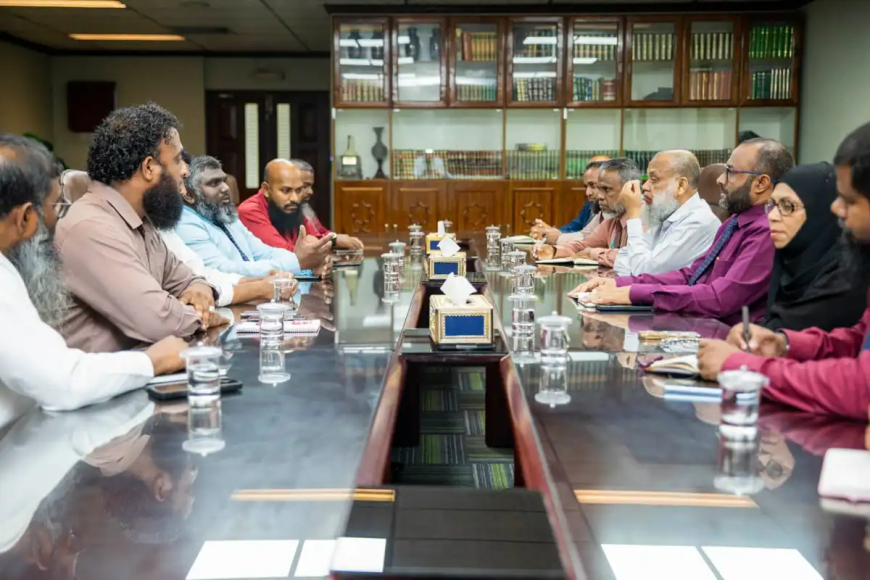
Stopping the Rasmalé project in its current form and reviewing the government’s decision to hand it over to Eagle Hills is a religious obligation, according to a research report compiled by a committee of Ilmveringe Gulhun.
The draft report has been shared with over 160 members of the association. While conducting business transactions with non-Muslims is permissible, the report notes that such agreements must comply with Islamic Sharia principles, which the current Rasmalé project arrangements fail to meet.
The study highlights that the government retains the legal authority to halt the project and that doing so is a legal necessity. It adds that any future continuation of the project requires renewed negotiations.
Addressing potential risks of settling a large non-Muslim population near Malé, the report emphasizes that the primary religious concern is not the construction of a place of worship or the hosting of secular festivals. Instead, the core risk stems from establishing a permanent population of 30,000 foreign expatriates near the capital under resort-style conditions in an inhabited land.
While the government states the Rasmalé land is being leased to Eagle Hills for 99 years, the research points out that the developer claims a new 99-year term would reset if any property on the site is sold or gifted before the initial period expires.
Citing the Treaty of Khaybar, the report states that handing over Muslim land in perpetuity or indefinitely is impermissible. Under the 7th-century Hijri agreement between Muslims and the Jews of Khaybar, residence was permitted on the condition that Muslims retained ultimate sovereignty and the right to dissolve the agreement unconditionally whenever necessary.
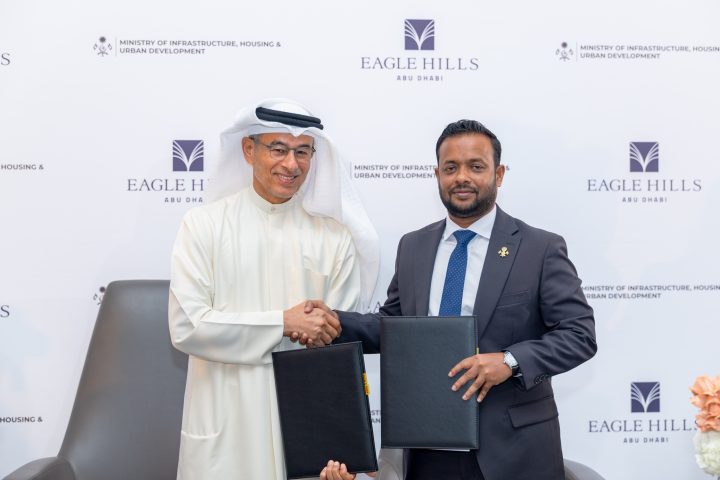
The agreement to hand over Rasmalé—reclaimed using state budget funds, estimated at USD 700 million—to Eagle Hills without an acquisition cost or land rent was signed on 21 September.
As leasing Rasmalé for 99 years conflicts with existing laws, the government is reportedly working to amend legislation to facilitate the project ahead of signing a permanent agreement on 11 November.
Ilmveringe Gulhun, a loose association of religious scholars, stated that the research paper will be finalized and published shortly after incorporating member feedback.