News Desk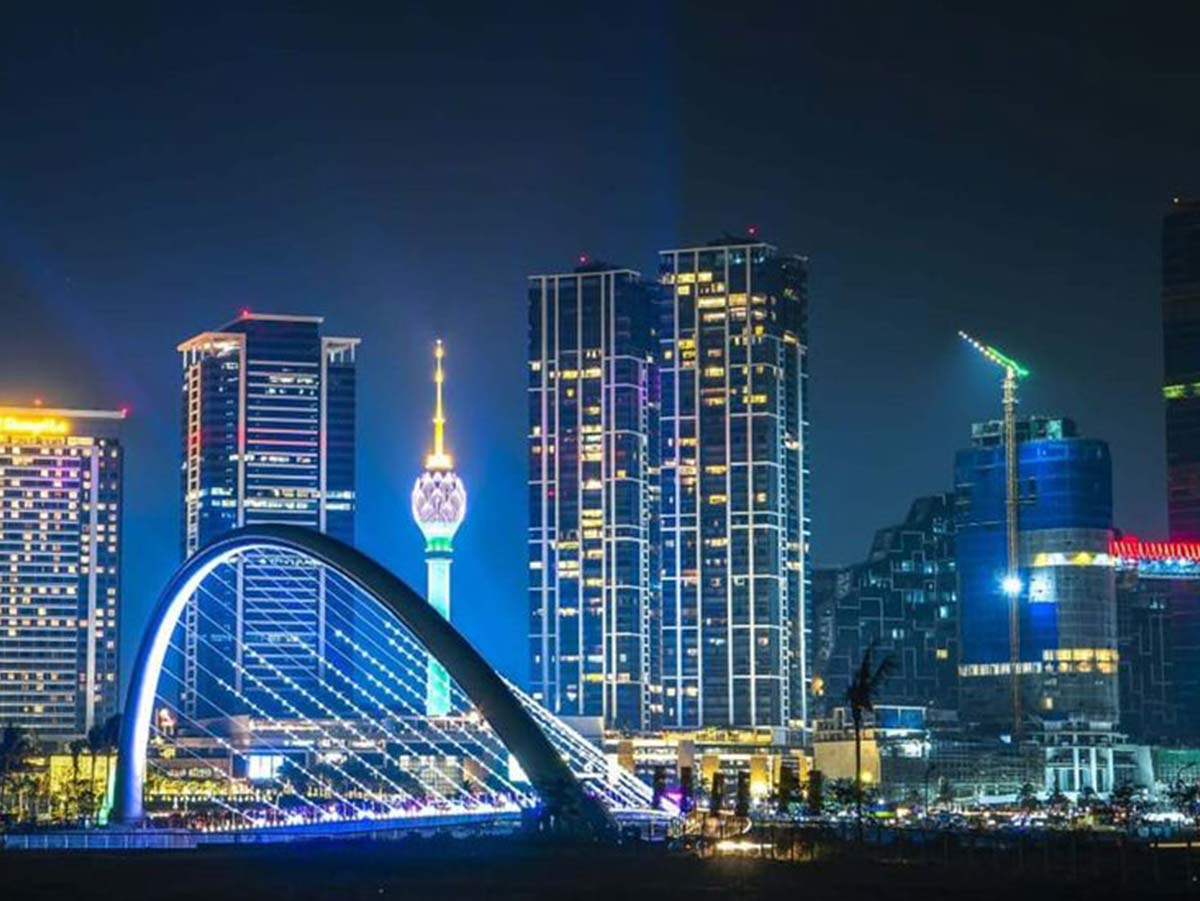
COLOMBO — Half of the initial high-profile projects planned for Sri Lanka’s ambitious Colombo Port City development have fallen through, economic officials told a parliamentary watchdog, highlighting ongoing challenges in attracting long-term foreign capital to the multi-billion-dollar offshore financial zone.
According to a report published on Thursday by local financial news agency EconomyNext, Revan Wickramasuriya, director general of the Colombo Port City Economic Commission (CPCEC), told Parliament’s Committee on Public Finance (COPF) that five out of ten early-stage venture applicants have formally withdrawn.
Among the high-profile pullouts are a proposed private medical facility by Asiri Hospital, an educational complex by Gateway, a mixed-use real estate venture backed by Clothespin Management and Development, and an integrated resort proposal that included a gaming casino by Universal Entertainment Colombo.
According to testimony provided by Wickramasuriya to MPs, Universal Entertainment exited the process during the due diligence phase for a prime 10-hectare plot reserved for integrated resort facilities.
The Port City—a 269-hectare expanse of reclaimed land rising off Colombo’s central coastline—was conceived as a tax-sheltered financial, commercial, and residential enclave aimed at competing with regional hubs such as Dubai and Singapore. However, project execution has suffered delays amid Sri Lanka’s broader economic restructuring and rigorous investor due diligence.
Despite the setbacks, commission officials maintained in their parliamentary testimony that core development on the island remains active. Primary investments across nine leased land parcels have reached $1.12 billion, with fully executed agreements for residential, mixed-use, marina, and hotel plots.
“The marina has started. Piling for the Colombo International Financial Centre (CIFC) has started,” said Harsha Amarasekera, chairman of the CPCEC, detailing active site construction to the parliamentary committee. He added that foundation work is underway for several residential and commercial projects, including developments led by ICC Port City, Home Lands, and Prime Melwa.
The cornerstone of the current phase remains the $515 million CIFC project, developed by Ceylon Real Estate Holdings. Spread over 160,000 square metres, the flagship development is intended to feature grade-A office space, luxury residences, and a retail podium to anchor Sri Lanka’s emergence as a regional financial hub.
A sixth committed project, the Marina Hotel, has signed lease agreements but has yet to break ground.
According to the commission’s report to the parliamentary committee, officials are targeting an additional $1 billion in pipeline investment over the next 12 months, aiming at developers near the central business district.
In total, the master-planned zone comprises 118 individual land parcels. Of these, 48 are being marketed directly by China-backed CHEC Port City Colombo—the primary engineering partner responsible for the land reclamation—while the Sri Lankan government retains control over 28 commercial plots alongside all common public space.
Colombo Port City is a multi-billion-dollar offshore financial center and modern urban extension built on 269 hectares of reclaimed land off Colombo’s coastline. Operating as Sri Lanka’s primary Special Economic Zone, it is regulated by an independent commission offering foreign currency rights, tax incentives, and full capital repatriation to attract international investors. The project is co-developed by the Sri Lankan state alongside China Communications Construction Company’s subsidiary, CHEC Port City Colombo, and encompasses five master-planned districts dedicated to finance, residential living, international health and education, luxury marina facilities, and beachfront recreation.