News Desk
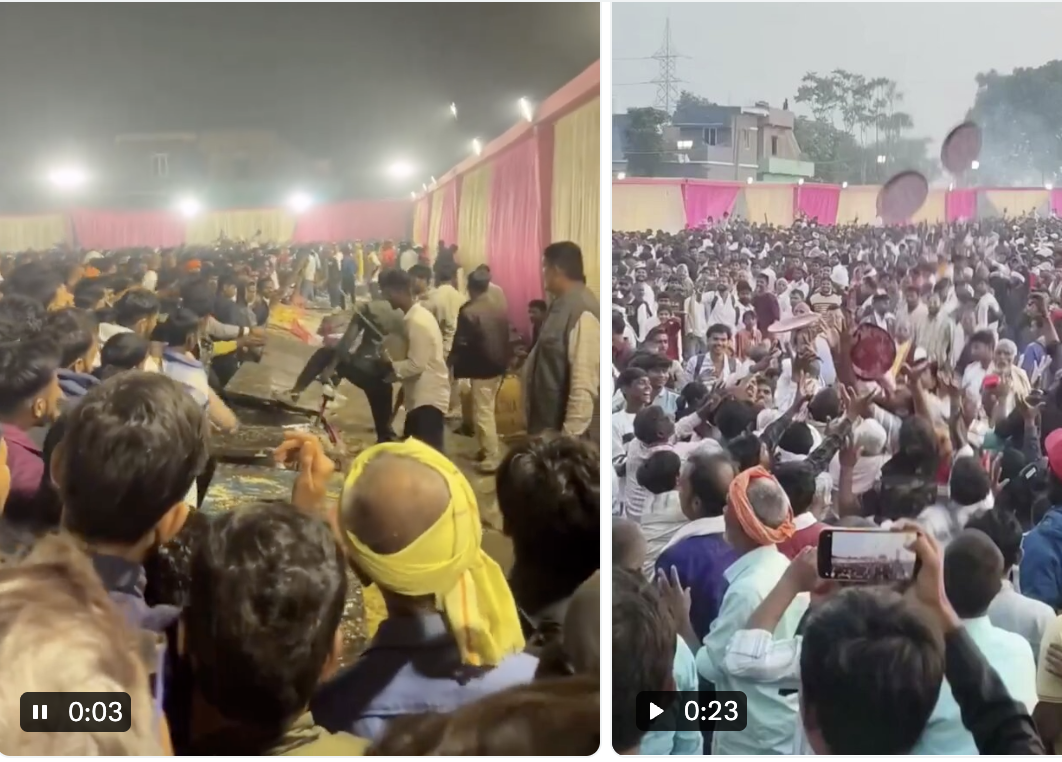
A sprawling wedding in Bihar with multiple helipads, dozens of horses, hundreds of chefs and an estimated 400,000 guests has turned a family celebration into a global talking point about political impunity, wealth and poverty in eastern India.
On the ground in Nadwan, the scene split sharply between those who caught the thrill and those left empty-handed, nursing their saliva in the dust. Thrill-seekers and horse fans swarmed the three-acre track, clambered up trees and high-tension electricity towers for a sightline, and cheered the thundering hooves—until surging crowds forced organisers to call off the race midway. Content creators and YouTubers worked the crowd for viral clips, street vendors hawked puffed rice and paan along the jam-packed approach roads, and plenty of visitors walked away happy after watching the show and sampling the sweets.
Around the overstretched food counters, however, the mood soured as thousands pushed and jostled for plates that ran thin. Some scooped food straight from large vessels or ate off newspapers and cardboard, while others stood watching in frustration, left with nothing but hunger and the bitter taste of a feast that promised everyone a share and delivered chaos.
India has long sought to capitalise on its cultural capital on the world stage, projecting an image of vibrant tradition and modern democratic ascent. Yet the nuptials of Mokama legislator Anant Singh’s daughter—an event so vast it gridlocked traffic for kilometres—offered a blunt display of what unfolds when democratic accountability goes unchecked and strongmen enjoy the quiet blessing of the political class.
Widely known across the region by the feudal moniker “Chhote Sarkar,” or Little Boss, Singh is a sitting member of the legislative assembly who faces dozens of criminal cases, including murder charges. At the very moment the festivities unfolded, he was under strict orders from India’s Supreme Court to surrender to authorities by 1 December 2026.
Even so, critics see little real relief in court orders or legal clouds, arguing that figures blessed by the political class are routinely washed clean inside the political machinery and recycled back into power—much like West Bengal’s Chief Adhikari.
The political embrace was visible on the ground as well, with figures tied to the ruling Bharatiya Janata Party and its allies prominently linked to the celebrations. Uttar Pradesh BJP leader and former MP Brij Bhushan Sharan Singh attended the event, shared the stage with Singh, praised his enduring clout and presented him with an idol from Ayodhya.
Ram Kripal Yadav was also among the political attendees, while BJP figures such as MLC Pawan Singh and MLA Maithili Thakur—alongside prominent politicians and performers including Manoj Tiwari, Ravi Kishan and Union Minister Rajiv Ranjan Singh, widely known as Lalan Singh—featured among the high-profile guests and invitees, underscoring how comfortably political power rubbed shoulders with muscle politics under the glare of public scrutiny.
Even by the standards of India’s notoriously lavish “big-fat-wedding” culture, the scale of the gathering in one of the country’s poorest states stood out. The stark juxtaposition—a politician facing grave criminal charges presiding over immense material excess amid severe deprivation—produced optics that were neither accidental nor easily hidden.
Instead, the affair handed opposition parties, domestic critics and international news outlets—including Al Jazeera and The Independent—a ready-made illustration of the widening chasm between political power and everyday life. While Singh has maintained that the arrangements were funded by friends, the spectacle was entirely self-generated, leaving the whole world talking about what it revealed about India.