News Desk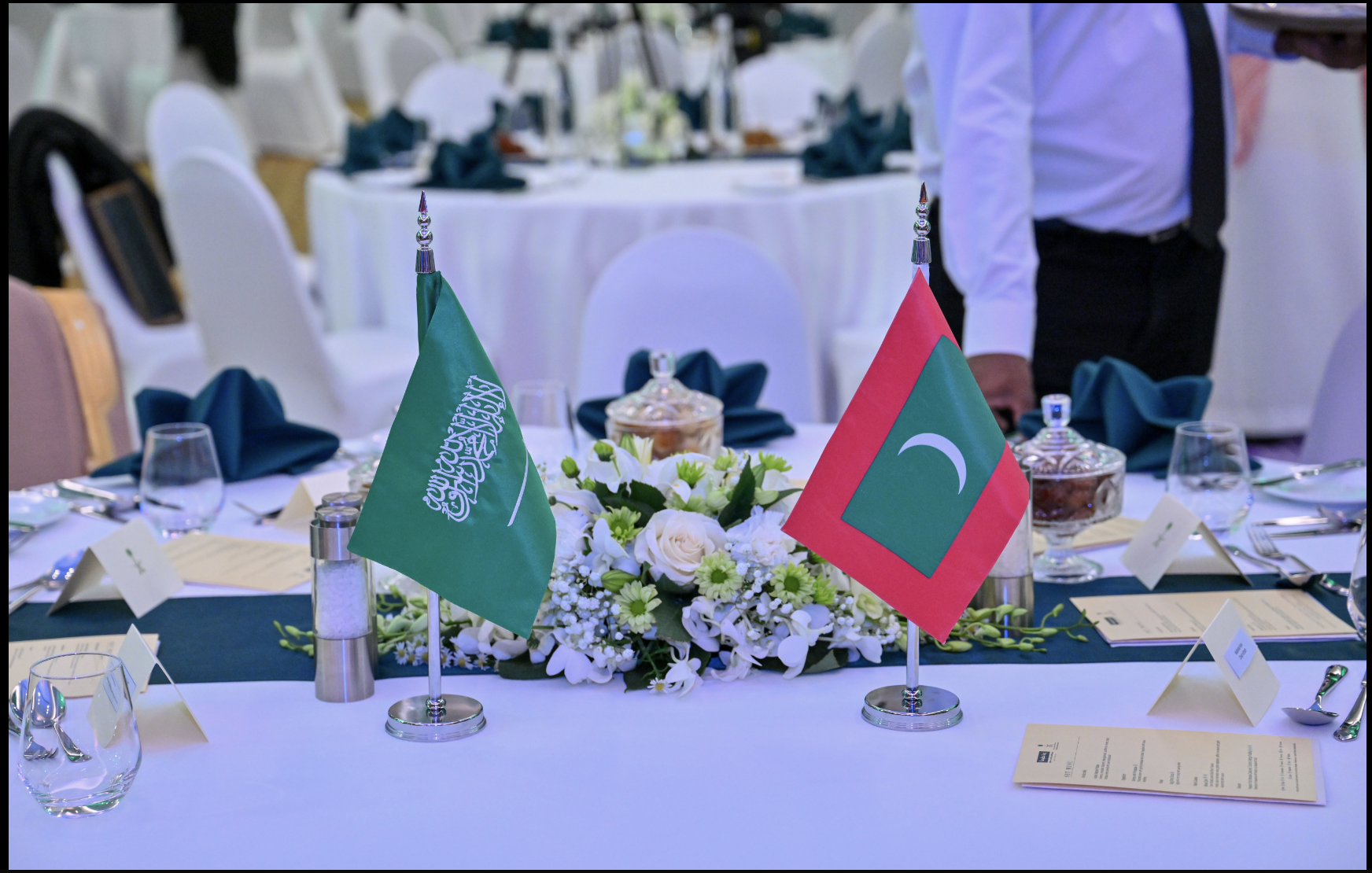
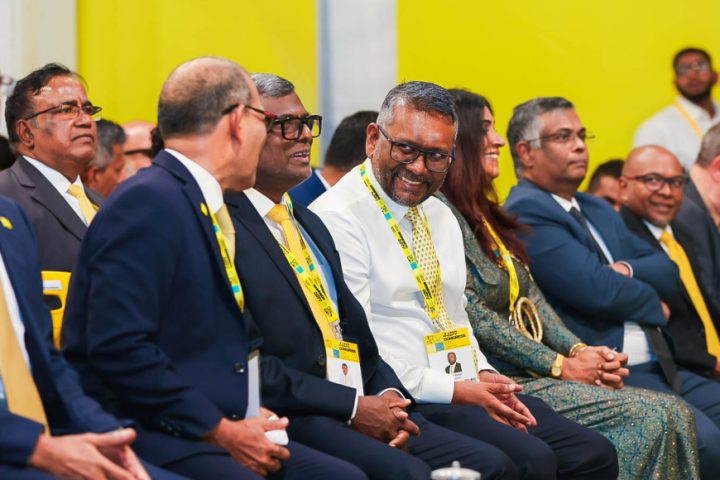
On the festive occasion of Saudi Arabia’s 96th National Day, the Kingdom’s ambassador to the Maldives, Yahya bin Hassan Al-Qahtani, delivered a celebratory address highlighting nearly half a century of bilateral aid. Since 1978, the diplomat announced, Riyadh has channelled $488 million in cumulative development assistance to the aMaldives.
The announcement prompted a warm exchange of diplomatic courtesies. The President, Dr Mohamed Muizzu, extended his congratulations to King Salman bin Abdulaziz Al Saud, Crown Prince Mohammed bin Salman, and the Saudi public, expressing gratitude for the Kingdom’s “generous support” towards island development.
Yet against the backdrop of the Maldives’ burgeoning financial needs and the multi-billion-dollar investments poured into the archipelago by non-Muslim Asian superpowers, the ambassador’s tally underscores a quiet paradox. For a nation that sits on the world’s largest oil reserves and frames its foreign policy around Pan-Islamic solidarity, Saudi Arabia’s financial footprint in the 100 per cent Sunni Muslim nation appears surprisingly modest—averaging roughly $10 million a year over nearly five decades.
Ambassador Al-Qahtani pointed to key sectors sustained by the Saudi Fund for Development, including transport, healthcare, housing, water and sanitation, education, and Islamic affairs. He noted Riyadh’s ambition to deepen future cooperation across trade, tourism, technology, and investment. However, when examined alongside the vast capital flows injected into the Maldivian economy by regional giants India and China, the Saudi contribution resembles a modest trickle rather than a deep reservoir of brotherly support.
While Saudi Arabia has historically maintained a deep cultural and religious affinity with the Maldives, its capital expenditure pales in comparison to the geopolitical investments made by Beijing and New Delhi.
Saudi assistance, managed predominantly through concessional loans from the Saudi Fund for Development, has focused on steady public-utility financing. Key allocations include $217 million in soft loans to co-finance the redevelopment and passenger scaling of Velana International Airport, an $80 million soft loan dedicated to coastal protection, bridges, and channel works in Hulhumalé Phase II, alongside funding for regional health facilities like the S. Hithadhoo Regional Hospital, island water networks, and targeted Islamic grants.
In contrast, China has capitalised on its Belt and Road Initiative to re-engineer the physical geography of the capital region. Beijing’s portfolio—exceeding $1.5 billion—is anchored by the $200 million Sinamalé sea bridge linking Malé to Hulhulé and Hulhumalé, backed by $126 million in direct grants, alongside loan facilities for the 7,000-unit Hiyaa social housing complex and major construction contracts for airport terminals and solar micro-grids.
Meanwhile, India has backed its “Neighbourhood First” policy with a capital commitment ranging between $1.5 billion and $2 billion. New Delhi’s flagship undertaking, the $500 million Greater Malé Connectivity Project, links the capital to neighbouring industrial islands through a blend of a $100 million grant and a $400 million line of credit. India has coupled these mega-projects—which include upgrades to regional airports in Hanimaadhoo and Gan—with dozens of grassroots community grants and vital currency swap agreements to bolster Maldives’ foreign exchange reserves.
To critics and regional observers, the $488 million figure announced on Saudi National Day underscores a stark reality. For a sovereign nation with an economy exceeding $1 trillion, whose financial institutions routinely allocate tens of billions to domestic megaprojects and Western sports entities and Western style entertainment, its financial commitment to a vulnerable, brotherly Islamic nation appears surprisingly conservative.
While Saudi soft loans have undeniably improved Maldivian utilities and aviation infrastructure, the total figure over nearly half a century averages just over $10 million annually. In an era where climate change threatens the physical survival of the low-lying archipelago, and debt burdens press heavily on its fiscal stability, the disparity between Riyadh’s vast capabilities and its actual capital deployment in the Maldives remains hard to overlook.
As President Muizzu’s administration seeks to balance ties between Eastern and Western powers, the question remains whether Saudi Arabia will move beyond modest development loans to offer the transformative economic support its Indian Ocean brother urgently requires.