 News Desk
Across the scattered atolls of the Maldives, banking has never been the simple, high‑street affair imagined elsewhere. Here, where communities live on islands separated by hours of sea, access to cash is not a convenience. It is part of daily survival. Fishermen heading out before dawn, parents paying for school supplies, pensioners collecting their monthly benefits. Almost every Maldivian has a bank account, and pensions and state assistance flow through those accounts. Without an ATM on the island, life slows, costs rise and people are forced to travel simply to withdraw their own money.
Polymer notes have helped. They withstand salt, humidity and the rough handling of island life. The Maldives is the first country in South Asia to adopt polymer currency, a shift that suits a nation surrounded by water and shaped by the sea. Even so, durable notes cannot replace the need for secure, reliable access to banking.
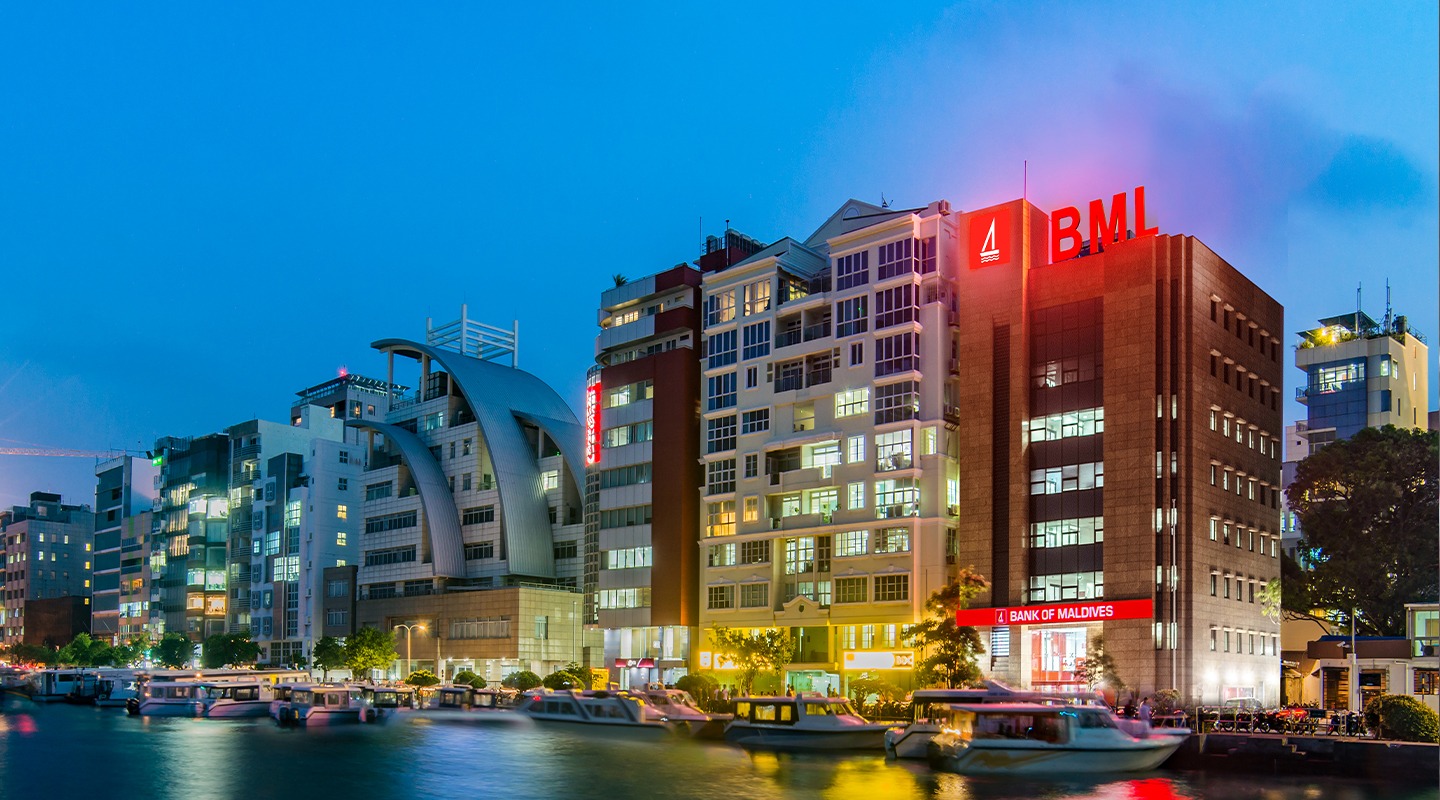
For decades, that gap was felt most sharply in the outer islands, where services expanded slowly and often without a full understanding of the geography or the rhythm of island communities. Bank of Maldives, the country’s largest financial institution, grew steadily but cautiously. Its leadership, mostly foreign until recently, struggled to grasp the lived realities of a nation spread across the ocean.
That changed when Mohammed Shareef, an Addu boy as many proudly call him, took the helm as the first Maldivian CEO of BML. His appointment was made possible by President Dr Mohamed Muizzu’s decision to place trust in a Maldivian to lead the country’s most important bank. The results are now visible across the map.
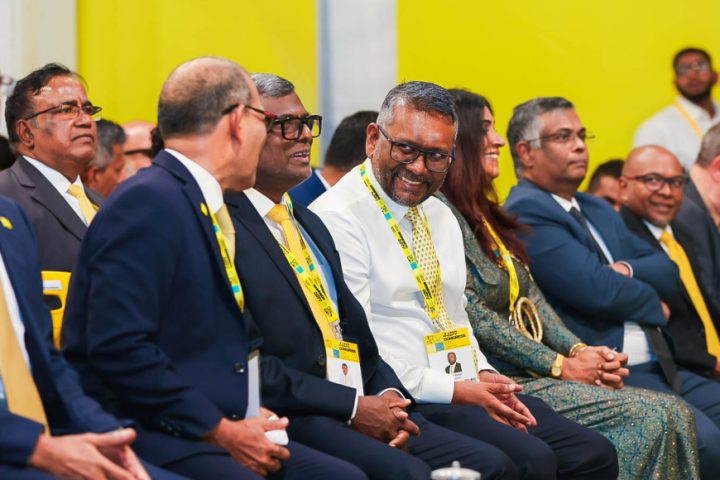
Speaking at the opening of 90 new cash‑cycle ATMs, Shareef said the bank had achieved a historic milestone. The number of ATMs in the BML network has doubled since 2005, a pace unmatched in the previous 24 years. There are now 340 ATMs across 187 inhabited islands, a scale of access the country has never seen.
“The total number of ATMs opened from 2025 to today is twice as many as before,” Shareef said, noting that self‑service banking has become essential in every island community.
The demand is clear from usage alone. Last year, Maldivians deposited MVR 17.1 billion through the ATM network, completing 8.4 million transactions. New ATMs were installed in 105 islands, and deposits through those machines reached MVR 356 million.
For islanders, these numbers translate into something far more tangible. Security. Independence. The ability to manage their finances without boarding a boat. The reassurance that their pensions, salaries and savings are accessible at any hour.
The expansion also aligns with the broader economic direction of the Muizzu administration, which has emphasised national capability, financial resilience and service delivery that reaches every island.
In a country where geography often dictates opportunity, the rapid growth of ATM access is more than a banking achievement. It is a quiet but meaningful shift in how the state and its institutions serve the public.
In the Maldives, surrounded by water and spread across the sea, an ATM is not a symbol of modernity. It is a necessity. And for the first time, that necessity is being met with the urgency and understanding it deserves.