News Desk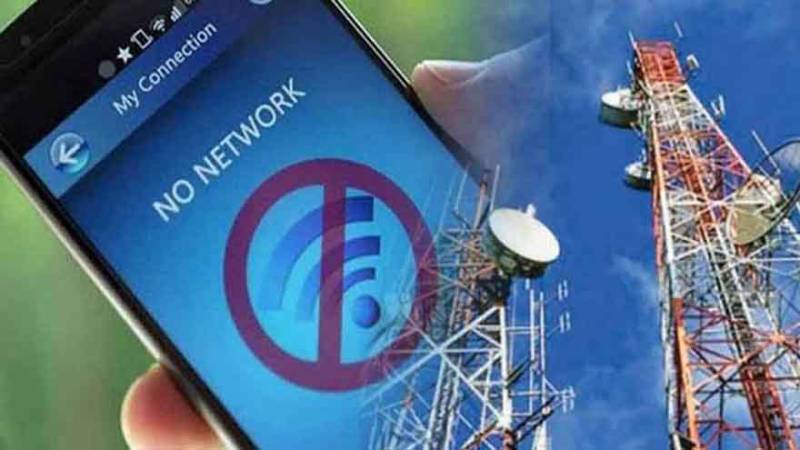
In recent years, Pakistan has increasingly resorted to internet shutdowns as a tool of control, particularly in regions like Balochistan, Waziristan, and Gilgit-Baltistan. These shutdowns are often justified by authorities as security measures to curb unrest or prevent the spread of misinformation.[1] Yet, behind these official explanations lies a troubling reality. The frequent disruption of mobile and internet services has turned into a routine mechanism to silence expression, suppress dissent, and curtail the rights of millions who rely on connectivity for their survival and voice in modern society.
The internet has become an inseparable part of daily life. It serves as a bridge for education, healthcare, commerce, and communication. In rural and conflict-prone areas of Pakistan, it is often the only lifeline linking citizens to the rest of the world. When this connection is severed, people are pushed into forced isolation. The human and economic toll of these shutdowns is immense, yet it receives little acknowledgement in official circles.
Balochistan, the country’s largest province, has borne the heaviest burden of this practice. For years, entire districts have faced routine blackouts in mobile and broadband networks under the pretext of maintaining law and order.[2] The government claims these blackouts are essential to combat terrorism and insurgency. However, for the people living in these regions, the cuts often coincide with periods of protest or political unrest, making the motive appear less about security and more about control. In a province already marginalized from the federal mainstream, these shutdowns deepen alienation and fuel resentment among its population. The absence of internet access means citizens cannot share their stories or communicate their grievances with national or international audiences, leaving the narrative entirely in the hands of the state.
The tribal districts of Waziristan, which have long suffered the brunt of military operations and displacement, now face a digital clampdown that adds to their struggles. The residents of North and South Waziristan frequently witness disruptions that last for weeks or even months. Each time protests erupt over land rights, civilian casualties, or enforced disappearances, the internet mysteriously goes silent. Voices demanding justice vanish in an instant, and the world outside remains unaware of what transpires on the ground. By cutting access to communication, the state effectively erases testimonies of suffering and prevents solidarity movements from forming across the country.
The control of information has always been a feature of authoritarian governance. In Pakistan’s case, the manipulation of digital access has evolved into a subtle yet effective instrument of domination. The internet, once seen as a democratizing force capable of giving voice to the voiceless, has been turned into a space that can be easily switched off whenever the state feels threatened. This practice violates not only the fundamental right to freedom of expression but also the basic right to live with dignity in a connected world. The Constitution of Pakistan guarantees citizens the right to free speech and access to information. Blocking access to the internet effectively nullifies these rights and places entire populations under digital siege.
Beyond the moral and legal aspects, internet shutdowns in Pakistan have dire socio-economic consequences. A modern economy relies heavily on digital infrastructure for trade, banking, and entrepreneurship. According to estimates by digital rights organizations, the country loses millions of dollars in productivity for every day of network disruption. For small traders and freelancers in Balochistan or Khyber Pakhtunkhwa who depend on online transactions and clients, each shutdown has an impact on their livelihood. At a time when the world is rapidly moving toward digital inclusion and innovation, such restrictions drag Pakistan backward into silence and stagnation.
In remote districts where insecurity and marginalization already prevail, connectivity represents hope and access to opportunity. Young people in these regions aspire to education through online platforms, to employment through remote work, and to visibility through social media. When the internet is shut down, it extinguishes these aspirations. It isolates youth from the digital future that their counterparts in other parts of the country take for granted. It fosters frustration and deepens the sense of being left behind both politically and economically.
The frequent use of internet shutdowns during protests exposes a pattern of governance that relies more on suppression than dialogue. When teachers, students, or residents hold peaceful demonstrations demanding basic rights, the state often responds not with negotiation but with digital blackout. The shutting down of online access ensures that images, videos, and reports of these protests do not spread. This deliberate information vacuum allows authorities to control the narrative and diminish accountability for any excesses that may follow. It is a tactic meant to weaken unity among citizens and restrict the possibility of national outrage.
International human rights organizations have consistently warned that blanket internet shutdowns violate global norms.[3] The United Nations has described access to the internet as integral to the exercise of human rights. Pakistan, as a member of the international community, bears the responsibility to uphold these principles. Continuing to disrupt networks not only damages its reputation but also reinforces perceptions of a government fearful of its own citizens’ voices.
Breaking the cycle of digital repression requires transparency and reform. The government must publicly justify every instance of internet suspension and impose strict limits on such actions. Civil society and the judiciary need to assert their role in protecting the constitutional rights of citizens. More importantly, there must be a shift in state thinking, from one that views information as a threat to one that embraces communication as a bridge for peace and development.
The Internet is not a luxury but it is an essential component of modern citizenship. Denying it in the twenty-first century is like cutting off electricity or water. It undermines education, livelihood, and expression, three pillars of human development. For Pakistan to build a stable, inclusive, and progressive society, it must recognize that connectivity is not a threat to security but a prerequisite for genuine peace. Repeatedly silencing an entire province or region under the guise of control only widens divisions and distrust between the people and the state.