News Desk
Former Youth Minister Ahmed Mahloof, who currently serves as the Maldivian Ambassador to Japan, has accused opposition political parties of trying to sabotage the massive Rasmale development project strictly out of fear that its success will secure President Dr. Mohamed Muizzu’s re-election in 2028.
Addressing the ongoing debate over the proposed USD 20 billion development, Mahloof claimed that if an opposition administration had brought an investment of this scale to the Maldives, they would be hailing it as an unprecedented triumph.
“The real issue for the opposition is simply that it is President Muizzu and this government delivering a project of this magnitude to the Maldives,” Mahloof said, adding that the development would bring immense benefits to the nation and its citizens. He argued that opposition figures are working tirelessly to stop the project because they recognize it as a major political milestone for the President ahead of the 2028 presidential election.
Mahloof’s public defense mirrors identical talking points recently pushed by the Ministry of Finance. Known as a vocal political figure who honed his podium skills from reading written notes to giving unscripted speeches during the movement against Indian operator GMR’s airport concession, Mahloof has frequently taken to the microphone to push major government agendas.
While proponents point out that any Foreign Direct Investment (FDI) of this size naturally brings foreign currency reserves into the country, critical legal and financial questions surrounding the venture remain unanswered.
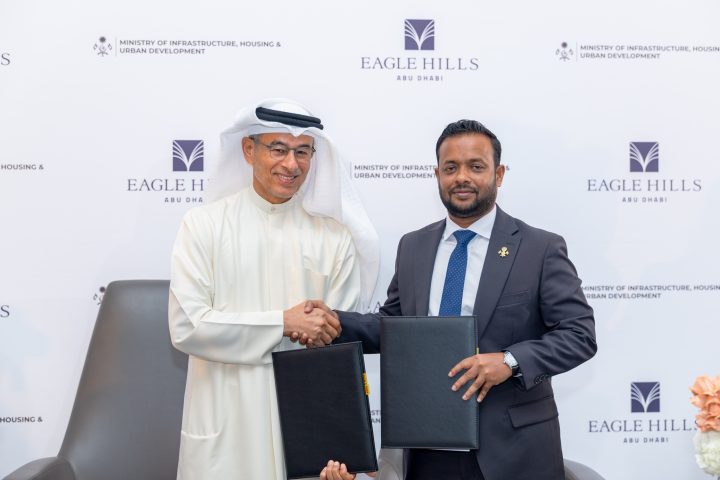
Attorney General Ahmed Usham recently confirmed that no binding agreement exists between the state and UAE-based developer Eagle Hills. The arrangement currently rests only on a non-binding letter of intent, with no specific legislation currently in place to govern the transaction.
The government is drafting a dedicated law for the project, which will soon go to the People’s Majlis for approval. Given the ruling coalition’s supermajority in the Majlis, the bill is expected to pass easily once introduced.
However, despite Mahloof’s political counterattack, opposition members and independent observers maintain that critical questions regarding the deal’s structure, land rights, and long-term financial commitments have yet to receive transparent, satisfactory answers.