News Desk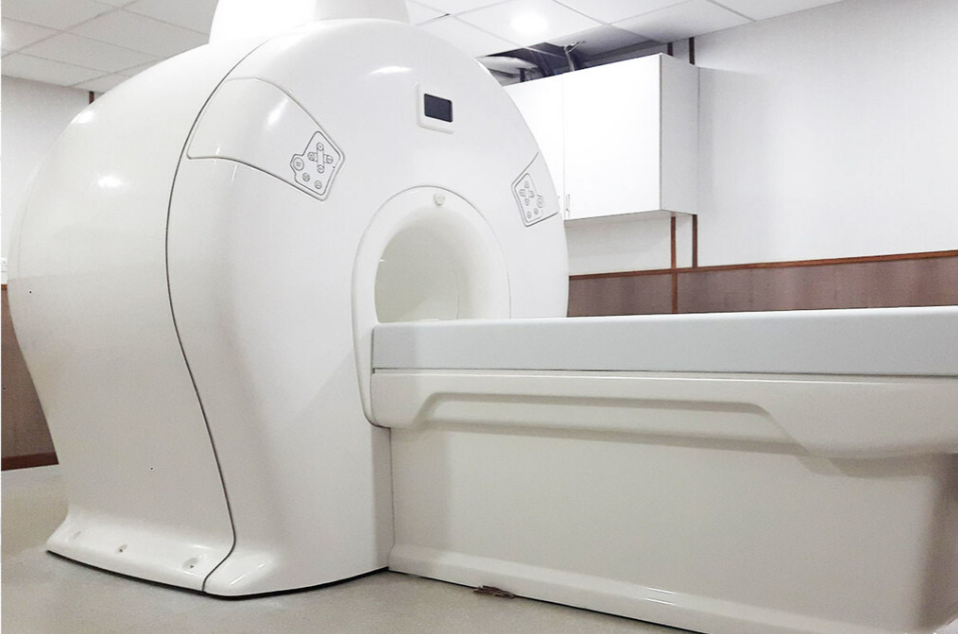
CHANDRAPUR, India — In a quiet corner of Maharashtra, at the Chandrapur Cancer Care Foundation near Nagpur, a sleek new machine hums to life: India’s first fully indigenous 1.5-Tesla magnetic resonance imaging scanner, developed by the Bengaluru-based startup VoxelGrids.
Earlier this month, technicians powered up India’s first fully indigenous 1.5‑Tesla MRI scanner, a little‑known deep‑tech startup backed by Zoho Corporation. For a country that has long depended almost entirely on foreign manufacturers for high‑end imaging equipment, the moment carried a quiet but unmistakable charge.
“It’s been 12 years of work,” said Arjun Arunachalam, the company’s founder, who has spent much of his career trying to prove that India can build complex medical hardware rather than merely import it. “This isn’t a copy. It’s built for our realities.”
India has roughly 3.5 MRI scanners per million people, a fraction of the availability in Europe or East Asia. The scarcity is not just a statistic; it shapes who gets diagnosed early and who does not. In much of rural India, patients travel hours — sometimes days — for scans that can determine whether a tumour is operable or whether a stroke has left lasting damage.
The reasons are structural. Traditional MRI machines weigh several tons, require expensive liquid helium for cooling, and cost far more than most district hospitals can afford. Installation alone can demand reinforced floors and specialized power systems.
VoxelGrids’ scanner attempts to rewrite that equation. Its “dry magnet” design eliminates the need for liquid helium, reducing both weight and cost. The company says its system is about 40 percent cheaper to manufacture than imported models and significantly more energy‑efficient — a crucial factor in regions where power outages are routine.
India’s technology sector is often celebrated for software, not hardware. But VoxelGrids emerged from a quieter lineage: years of government‑supported research, a small team of physicists and engineers, and a belief that India’s medical device market — one of the world’s largest — should not be dominated by imports.
In 2021, Zoho, the Chennai‑based software company known for its contrarian approach to global tech, invested $5 million to help the startup scale. Today, VoxelGrids can produce 20 to 25 scanners a year at its Bengaluru facility. It offers pay‑per‑use financing models aimed at small hospitals that could never afford a multimillion‑dollar machine upfront.
The company is also developing a containerized mobile MRI unit, a concept that could bring advanced imaging to remote districts where even basic radiology is scarce.
At Chandrapur, the scanner’s arrival has already altered the rhythm of the hospital. Nurses who once arranged weekly trips to Nagpur for cancer patients now schedule scans on‑site. Local physicians say the change is more than logistical; it signals that advanced care need not be the privilege of metropolitan centres.
India’s government has spent years urging domestic manufacturing in sectors ranging from semiconductors to defence. But medical technology — especially high‑end devices — has remained stubbornly dependent on imports.
VoxelGrids’ achievement does not solve that imbalance, but it hints at what a homegrown ecosystem might look like: long‑term research, patient capital, and products designed for India’s uneven infrastructure rather than for wealthy markets abroad.
For now, the scanner in Chandrapur stands as a small but potent symbol — a reminder that innovation does not always arrive with fanfare. Sometimes it begins with a quiet hum in a rural hospital, far from the centres of power, and grows outward from there.