News Desk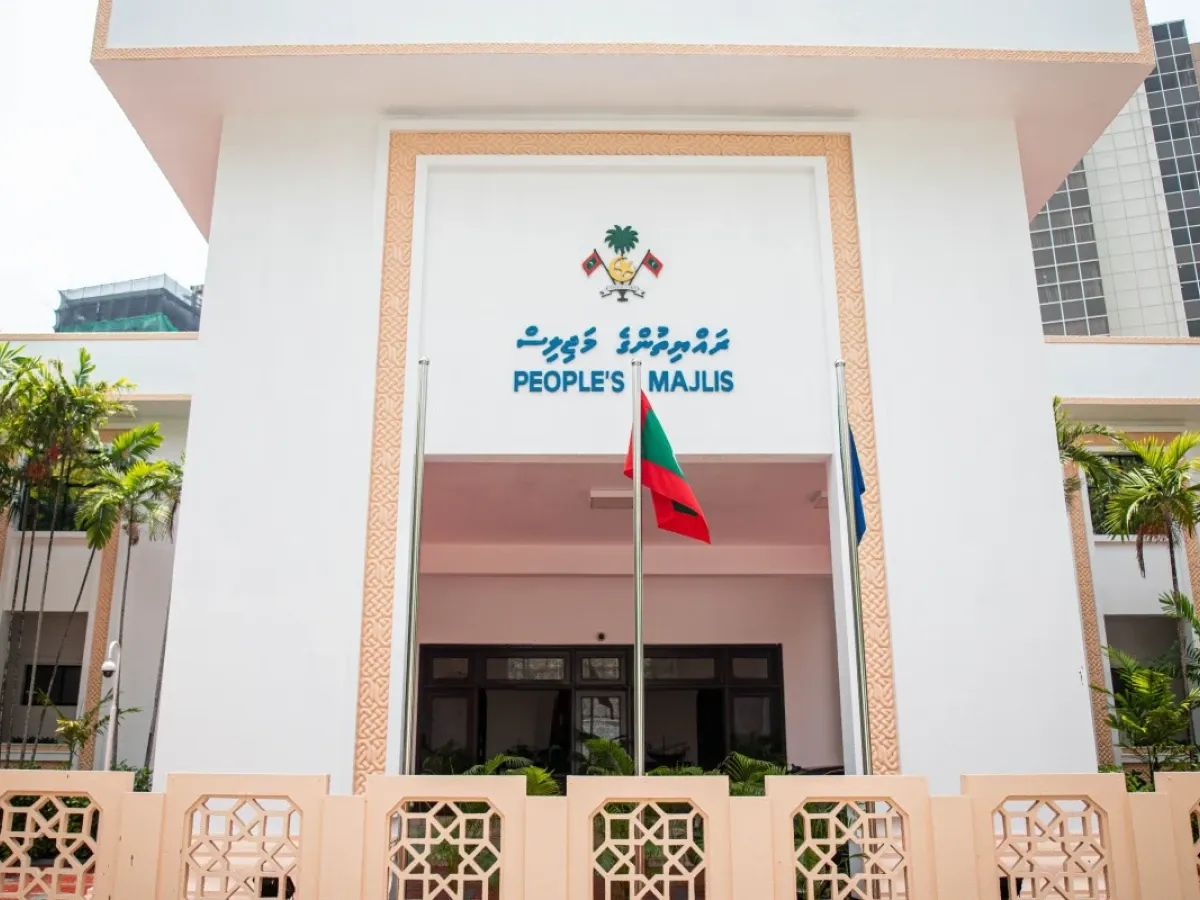
The People’s Majlis has passed a landmark Land Transport Bill that shifts all traffic control, vehicle registration, and urban transit management in the capital under a newly formed dedicated agency beneath the Transport Ministry.
Sponsored by Lh. Kurendhoo MP Mohamed Shamin Habeeb—who won his seat as an Independent before signing to the ruling PNC—the bill cleared the floor with 47 votes in favor out of 59 members present. Twelve members from the opposition Maldivian Democratic Party (MDP) voted against it.
The original legislation laid out seven chapters to govern nationwide transport rules. However, committee revisions added a critical eighth chapter—titled “Special Rules for the Greater Malé Area”—specifically designed to tackle the severe gridlock, overpopulation, and vehicle overload in the capital zone.
Under this new chapter, the government will set up the “Greater Malé Transport and Mobility Office”. The bill formats this chapter as a three-year sunset clause, though its mandate can be extended via the National Road Safety Council if target mobility goals aren’t met within that window.
What the New Greater Malé Transport Office Will Control:
- Traffic & Urban Policy: Formulate overall transport and congestion policies across the Malé, Hulhumalé, and Villimalé region.
- Vehicle Quotas: Impose strict limits on new vehicle registrations in Malé—capping new registrations at no more than 30 percent of the total number of deregistered vehicles.
- Public Transit Rules: Direct and regulate public bus, ferry, and taxi operations in the capital region.
- Automated Inspections: Build and operate automated vehicle inspection systems to check roadworthiness.
- Regulation Power: Draft and enforce binding transport regulations directly from the new office.
The move sparked heated pushback from opposition MPs during the committee report debate. MDP members expressed outrage over provisions transferring key powers—and their associated revenue streams—away from the Malé City Council directly to the central government’s new authority.
Despite the pushback, the bill’s passage paves the way for the executive branch to assume centralized control over capital city traffic, stripping municipal authorities of their long-held transport oversight.
The legislative clash is the latest flare-up in an ongoing political tussle between the executive branch and local municipal authorities. Ever since former Malé Mayor Dr Mohamed Muizzu assumed the presidency, friction has steadily mounted between his administration and the opposition-controlled Malé City Council. Opposition lawmakers view the new transport bill as a direct attempt by the government to undermine the council’s local mandate and strip its municipal powers under the guise of traffic management.