News Desk
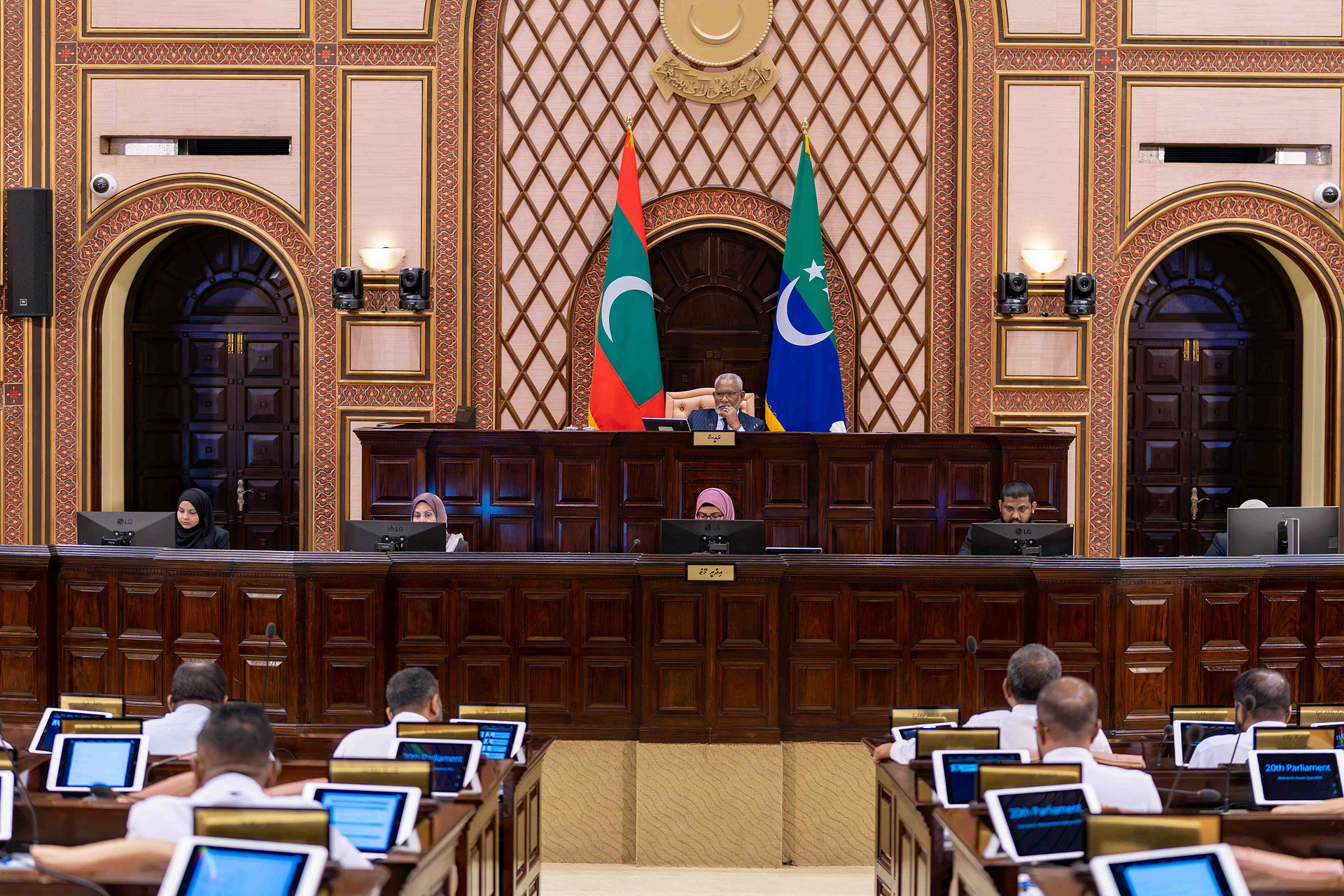
The Maldivian government has presented a new bill to parliament establishing hanging as the sole legal method for carrying out the death penalty, marking a definitive attempt to construct a formal legal framework around capital punishment after decades of a de facto moratorium.
The bill, sponsored by ruling People’s National Congress (PNC) MP Hanan Mohamed Rasheed on behalf of the government, outlines procedural guidelines intended to align executions with constitutional protections, judicial reviews, and human rights considerations.
Under the proposed legislation, if a lower court sentences a convict to death, a higher court must review all legal points and the facts of the case. The bill specifies that capital punishment can only be determined after a transparent trial held within a reasonable timeframe in an open, independent court established by law. Furthermore, it mandates that the Supreme Court must review how the trial was conducted before confirming any death sentence.
The bill also guarantees the convict’s right to legal counsel and stipulates that the death penalty can only be handed down if all legal heirs of the victim agree to it in court.
The text explicitly defines hanging as placing a noose around the convict’s neck to cause death, stipulating that the equipment and procedures used must inflict the least possible pain and ensure rapid execution. It further mandates that personnel carrying out the hanging must receive specialized training—a requirement that underscores the practical hurdles facing the archipelago, which lacks modern infrastructure or trained executioners for capital punishment.
Historically, the Maldives has maintained a moratorium on executions since 1954. Previous efforts under former Strongman Yameen to revive capital punishment focused on lethal injection, leading to the construction of a dedicated execution chamber, though no executions were ultimately carried out.
By pivoting to hanging, the administration faces the immediate challenge of drafting Standard Operating Procedures (SOPs) that address technical specifications, medical oversight, and executioner protocols. Internationally, jurisdictions handle the role of executioners differently, with some relying on trained correctional staff and others utilizing contracted personnel or complex administrative panels.
Under the proposed law, execution proceedings would be overseen by a seven-member panel comprising representatives from the Maldives Correctional Service, the Maldives Police Service, the Prosecutor General’s Office, parliament, the Medical and Dental Council, the Supreme Court, and the Maldives Fatwa Council. The convict, their family, legal counsel, the corrections department, and the victim’s heirs must all be notified at least 72 hours prior to the execution. The bill strictly prohibits public viewing, as well as any audio or video recording of executions.
The legislation also details explicit stay-of-execution provisions, including delays for pregnant women or mothers until a child reaches two years of age, pending judicial reviews or Supreme Court appeals, and instances of severe physical or mental illness.
Whether President Mohamed Muizzu’s move to codify execution procedures will result in the resumption of capital punishment remains a central question. Critics suggest that history’s judgment of Muizzu’s legacy on this issue will depend heavily on whether this framework serves as a deterrent on paper or leads to the end of the nation’s 70-year hiatus on state executions, navigating intense international scrutiny from human rights bodies alongside strong domestic political sentiment.
President Muizzu had previously noted back in March that work on drafting a specialized bill by the Attorney General’s Office was underway.