News Desk
How does anyone come to hold a piece of paradise. Not a metaphorical one, but an island with its own tropical forest, two freshwater ponds and a smaller islet resting beside it.
In the Maldives, the answer has often been shaped not by romance but by the quiet tactics of those who profit from keeping projects stalled just long enough to shift the balance of power.
For years, the formula was familiar.
Form a joint venture with the state, secure a seventy percent stake, run the property at a loss, keep the books in the red and wait.
As the resort slows to a crawl, shops empty out, supply boats cut their trips and families begin to feel the absence of the only steady employer.
When the resort shutters and the local economy feels the squeeze, when frustration builds between island communities and the government, the moment arrives.
The investor returns to the table seeking changes. The state, weakened by the fallout of a stalled resort, has little room to resist.
Bit by bit, the ownership structure reshapes itself in the investor’s favor.
Every Maldivian Island leased for tourism technically remains state property, and every agreement contains a clause allowing the government to reclaim land for national security.
On paper, it gives the state sweeping authority.
In reality, it has rarely been exercised.
Even in places like Djibouti, where the government pushed DP World out of the Doraleh port, the Maldives never attempted anything similar.
For decades, presidents governed in the shadow of a small circle of resort tycoons who dictated terms from behind boardroom doors. Many of them are now old, their influence fading, but for years they set the pace of the tourism economy and ensured that no administration challenged their hold. That restraint shaped policy more than any clause written into a lease.
That dynamic changed under President Dr. Mohamed Muizzu. His government has relied on a mix of pressure and negotiation to reassert state authority in the sector.
The reopening of Shangri La Villingili, once a symbol of stalled investment and political hesitation, has become the clearest example of that shift.
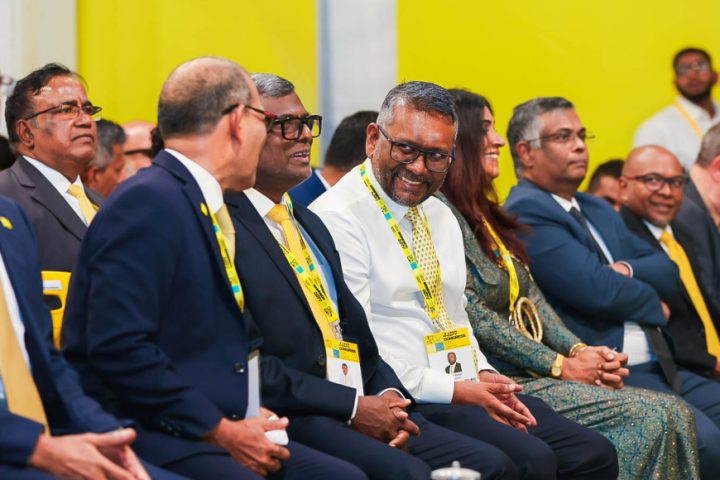
Shangri La Villingili Resort, closed since the early months of the pandemic, welcomed its first guest again this week.
The return comes after five years of silence on an island once marketed as the southernmost luxury escape in the country.
The resort had been shuttered since April 2020, a closure that cost more than five hundred jobs and left Addu City without one of its largest employers.
Its reopening fulfils a promise the president has repeated since his campaign.
The story of Villingili is long and tangled. Operated by Hong Kong’s Shangri La group, the resort is owned through Addu Investments, a joint venture between the Maldivian government and the company.
The partnership dates back to 2005, when the resort was first developed. The state held thirty percent, Shangri La seventy.
The property opened in July 2009 with 142 beds and an investment of roughly 150 million dollars.
From the start, the operation moved at a pace that kept the balance sheets in negative territory, a pattern that seasoned observers in the Maldives had seen before.
When COVID arrived, the shutdown was swift. Reopening required more than unlocking doors.
The share release timeline tells its own story.
A valuation in August 2022.
An Economic Council decision in January 2023.
A share release agreement signed in August that year.
By then, the state’s thirty percent stake had been relinquished under the previous MDP administration, a move that drew criticism from within government and the public.
When the new administration took office, it began direct talks with the company.
Officials from the tourism ministry visited the island, assessed the repairs required and issued the necessary permits.
Recruitment began in early November. The president himself travelled to Villingili to inspect progress.
The reopening marks more than the return of a resort. It signals a recalibration of who sets the terms in the Maldives’ most powerful industry. For decades, a handful of business figures shaped policy, influenced presidents and steered decisions that affected entire sector. Their influence is now diminished. The government has reclaimed space it once ceded.
On Villingili, the first guest has arrived. The island’s long silence has ended. And in the Maldives, where every resort is a story about power as much as paradise, the next chapter has begun.
Under standard international practice, a resort that fails to operate for extended periods would revert to government control, ensuring that investors understand the limits of holding rights over state property.
If Villingili becomes a turning point, the same logic could extend to Kaadedhdhoo Airport, long treated as a private fiefdom despite being a public asset the state has every right to reclaim.
After the story was published, residents in Addu voiced frustration over how the reopening unfolded. Salaah, an Addu local who spoke to Etruth, said the ceremony felt disconnected from the community it was meant to serve.
“It feels like they’ve dismissed the people of Addu,” he said. “They cut a ribbon, brought in about fifteen staff from Hotel Jen, and called it an opening. There isn’t even a proper POS or billing system in place.”
For him, the deeper wound is the absence of local jobs.
“We are looking for work,” he said. “When the resort closed in 2020, nearly five hundred people were employed there. Now, after all these years, not a single local staff member has been hired. It’s an insult to us.”
Image: Ministry of Tourism and Environment