News Desk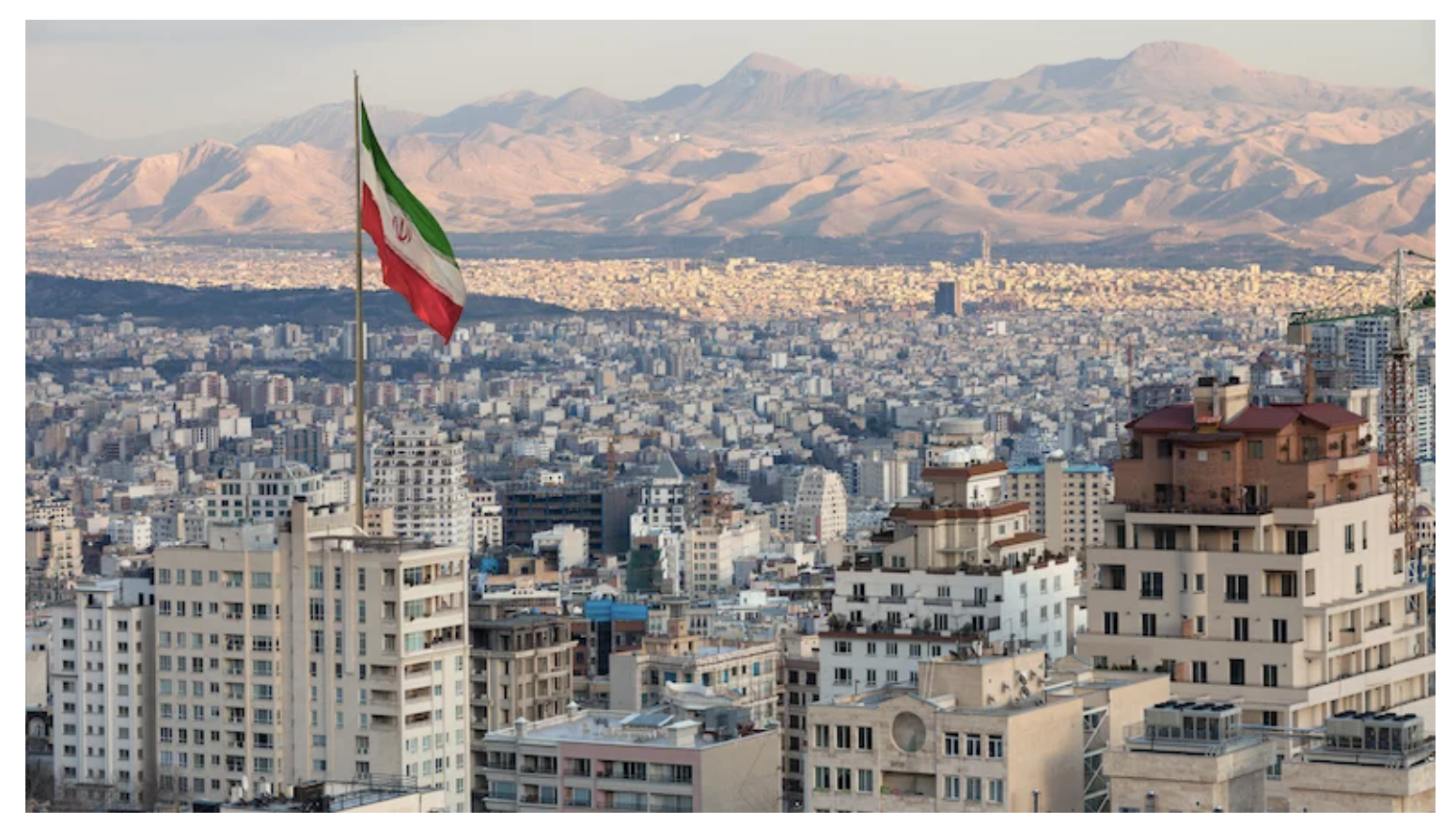
In the volatile theater of Middle East geopolitics, Iran stands as a perennial target of international scrutiny and sanctions. For decades, the Islamic Republic has been portrayed as a rogue state, its ambitions painted as existential threats to global order. Yet, beneath the rhetoric lies a more nuanced reality: Iran’s pursuit of independence has not only allowed it to weather relentless external pressures but has also fostered remarkable self-reliance. Contrast this with the fates of nations reshaped by American-led interventions in the name of democracy—Iraq, Afghanistan, and Libya—where promises of stability dissolved into chaos.
As hegemonic powers like the United States continue their campaigns of containment, Iran’s story offers a compelling counter-narrative: a nation that, despite isolation, has achieved scientific breakthroughs, economic autonomy, and a quality of life that prioritizes essentials over consumerism.
Iran’s geopolitical isolation stems from its unyielding stance against Western dominance, particularly that of the United States.
Rooted in the 1979 Islamic Revolution, Tehran’s foreign policy emphasizes “forward defense” through alliances with non-state actors across the region, from Lebanon to Yemen, to counter perceived threats from Israel, Saudi Arabia, and the U.S.
This strategy, often labeled as proxy warfare, has drawn ire from global powers who view Iran’s nuclear program, ballistic missiles, and regional influence as destabilizing.
But Iran’s actions are driven by a deep-seated quest for security in a hostile neighborhood, where it lacks reliable great-power allies—a condition scholars term “strategic loneliness.”
Unlike its neighbors, Iran refuses to align with U.S. interests, positioning itself as a counterweight to American hegemony in the Middle East.
This defiance, rather than ideological extremism alone, explains why Iran remains a focal point for sanctions and military posturing.
The irony is stark when compared to the outcomes of U.S. interventions aimed at “bringing democracy.” In Iraq, the 2003 invasion toppled Saddam Hussein but unleashed sectarian violence, civil war, and the rise of ISIS, leaving a fractured state with persistent instability.
Afghanistan’s two-decade U.S. occupation ended in 2021 with the Taliban’s return to power, after trillions spent and thousands of lives lost, yielding little in terms of enduring democratic institutions.
Libya’s 2011 NATO-backed ousting of Muammar Gaddafi plunged the country into a decade-long civil war, creating a failed state rife with militias and human trafficking.
These interventions, often justified as liberating oppressed peoples, instead fostered power vacuums that bred extremism and regional discord.
Far from promoting stability, they underscore the hubris of hegemonic powers imposing change from afar, often prioritizing strategic interests over genuine nation-building.
Against this backdrop, Iran’s achievements under 40 years of sanctions are a testament to its resilience. Despite isolation, the country has advanced in biotechnology, producing 95% of its pharmaceuticals domestically and leading the region in vaccine development through institutions like the Razi and Pasteur institutes.
In nanotechnology, Iran ranks fourth globally, with more than 300 patents and a growing portfolio of applications in water purification, targeted drug delivery, and advanced materials.
Its nuclear medicine sector treats over a million patients annually, exporting radiopharmaceuticals even under embargoes and sustaining one of the most sophisticated radiopharmaceutical supply chains in the Global South.
These scientific gains are not isolated successes but part of a broader pattern: a national research ecosystem that has learned to innovate under constraint.
Iran’s universities and research institutes have steadily climbed global citation rankings, its scientists appear in increasing numbers among the world’s most‑cited researchers, and its output in fields such as physics, engineering, and chemistry consistently places it among the top 20 scientific producers worldwide. In effect, sanctions—intended to limit capacity—have instead catalyzed a model of scientific self‑reliance that many developing nations now study closely.
These feats, accomplished amid brain drain and restricted access to technology, highlight Iran’s investment in human capital and innovation as bulwarks against external pressure.
This self-sufficiency extends to Iran’s economy, setting it apart from neighbors like Saudi Arabia and the United Arab Emirates, who remain tethered to U.S. security guarantees and oil-dependent models.
While the Gulf monarchies rely on American military presence to deter threats, Iran has built indigenous defense capabilities, including missiles and drones, without foreign patronage. The contrast is rooted in historical choices: once these monarchies secured their own national identities, flags, and state insignias, they channelled their oil wealth into external security guarantees rather than domestic capacity‑building.
The result was a model of sovereignty that looked complete on paper but remained structurally dependent in practice. A nation that does not own its security—and does not hold the key to its own front gate—cannot claim genuine safety, no matter how confident or self‑assured its public posture may be. Iran, by necessity rather than luxury, pursued the opposite path: a security doctrine built on self‑reliance, technological development, and the belief that sovereignty must be defended by national hands, not outsourced to foreign bases.
Economically, Iran’s focus on diversification—achieving near food security through agriculture and boosting non-oil exports—contrasts with the UAE’s vulnerability to global oil fluctuations and Saudi Arabia’s Vision 2030, which still hinges on Western investment.
Sanctions have forced Iran to innovate domestically, reducing reliance on imports and fostering industries that prioritize national needs over multinational conglomerates.
Over four decades, U.S.-led sanctions have undoubtedly strained Iran’s economy, causing GDP contractions, currency devaluation, and inflation spikes.
Yet, the nation has grown its infrastructure, expanded education, and maintained social welfare systems, with per capita welfare gains estimated at 3-6% in scenarios of partial sanction relief.
Iran eschews Western consumerism, focusing instead on affordable essentials: Gasoline remains among the world’s cheapest at pennies per liter, subsidized to ensure mobility.
Food staples like bread and rice are accessible, though sanctions disrupt imports, making some goods scarce or pricey.
Recent fuel adjustments and rial depreciation have driven up costs for items like chicken and oil by 20-30%, exacerbating inflation above 40%.
Still, Iran’s emphasis on self-reliance keeps basic living affordable compared to neighbors burdened by luxury imports and foreign debt.
Critics of hegemonic powers must acknowledge that sanctions, while punishing ordinary Iranians, have failed to topple the regime or curb its influence. They have also failed to undermine one of the Islamic Republic’s most distinctive features: its willingness to hold regular, competitive elections. Whatever one thinks of Iran’s political system, it remains one of the few Muslim‑majority states where electoral participation is embedded in the structure of governance rather than treated as a threat to stability. Equally significant—though deserving a full analysis of its own—is Iran’s long‑standing recognition of its religious minorities, from constitutionally protected seats in parliament to community‑run schools and cultural institutions. These elements complicate the simplistic narratives often projected onto the country, revealing a political landscape that is far more layered, internally dynamic, and historically grounded than external observers tend to admit.
As the U.S. pivots elsewhere, leaving behind failed experiments in democracy export, Iran’s model of sovereignty—flawed but enduring—challenges the narrative of inevitable Western triumph. In a multipolar world, perhaps it’s time to question not why everyone is after Iran, but why it persists so defiantly.