News Desk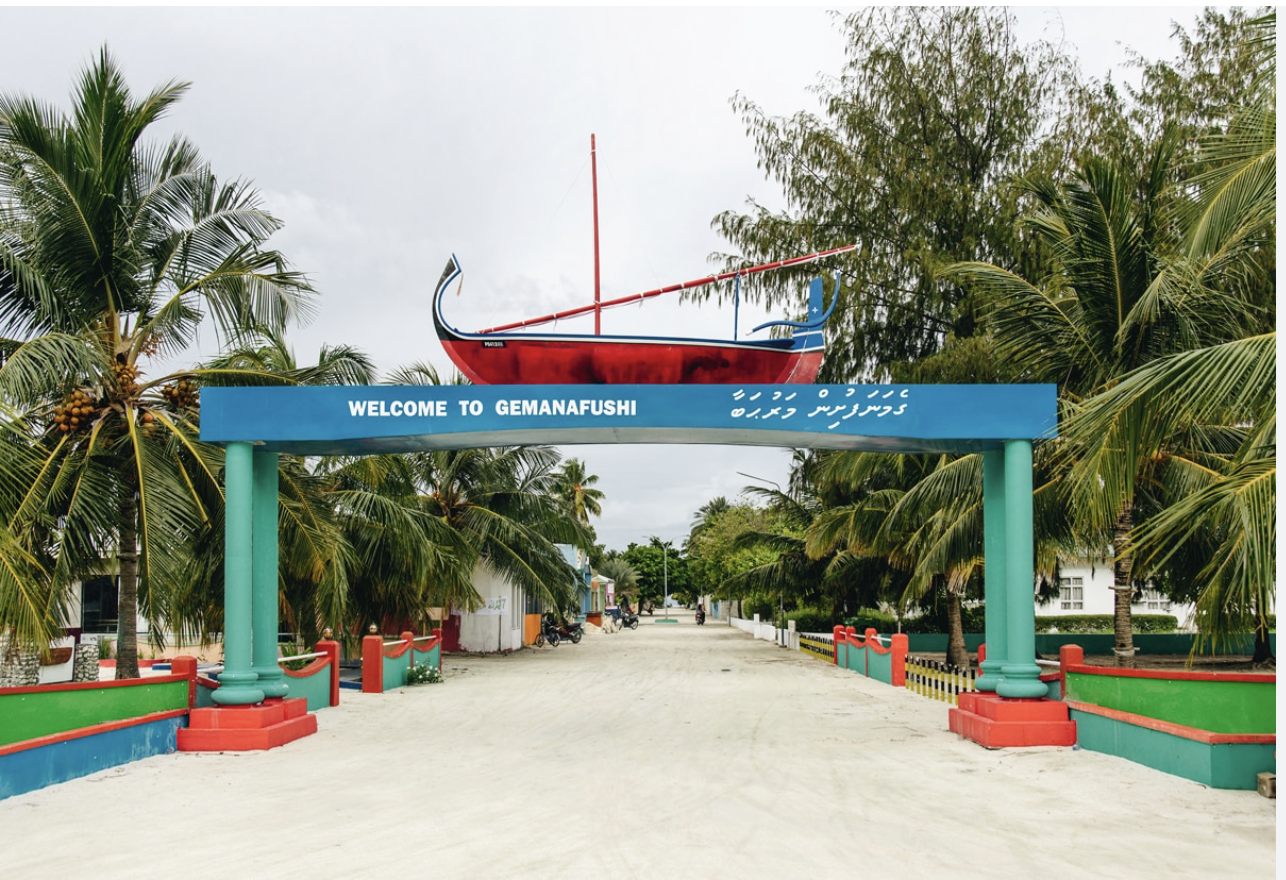
In the Maldives, the ocean does not merely surround life; it swallows it whole.
For generations, men in the southern atolls have pushed off from ivory sands in wooden dhonis, steering into the open blue to harvest skipjack tuna. Some return with hulls heavy with fish. Others are claimed by sudden squalls, rogue currents, or engine failures—vanishing into a vast liquid expanse where the horizon offers no landmarks and the water leaves no graves.
Going missing at sea is a quiet, ongoing tragedy built into the archipelago’s geography. But last Thursday, a routine legal notice posted on a courtroom bulletin board in Gaafu Alifu Gemanafushi island exposed a far stranger reality: a man who disappeared 53 years ago is now officially being searched for—to prove whether he is dead—on an island that no longer exists on the national register.
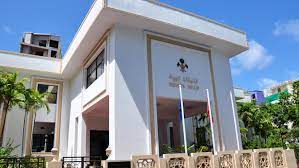
The Gemanafushi island Magistrate Court published an urgent public summons seeking any news on the whereabouts of Hassan Mohamed. His registered home address: Thandirathmaage, Gaafu Alifu Diyadhoo.
The court requested that anyone with knowledge of whether Hassan is alive or dead report to the magistrate within 10 days.
A media official from the Gemanafushi court confirmed the surreal background of the notice. Hassan went missing in 1973 during an incident at sea. He has not been seen or heard from since.
How islands disappear: Read here
The court issued the notice after Hassan’s child filed a legal case to settle an inheritance. Under Maldivian Islamic law, an estate cannot be partitioned among heirs until a missing person is formally declared deceased by a judge—a declaration that requires exhaustive public notices to prove due diligence.
“He was lost in a maritime incident over fifty years ago,” the court official explained quietly. “Now, his child needs legal closure.”
An Address Wiped from the Map
The tragedy of Hassan Mohamed’s disappearance carries a double erasure. Hassan did not just vanish into the Indian Ocean; his home island vanished from the living map of the Maldives.
When Hassan sailed out to sea in 1973, Diyadhoo island was a inhabited island with its own community, tree-lined lanes, and registered homesteads like Thandirathmaage. But in the decades that followed, environmental fragility, rising seas, erosion, and government consolidation policies forced the island’s abandonment.
Diyadhoo island was officially declared an uninhabited, ghost island. Its residents were uprooted and resettled across the atoll—scattered to Gemanafushi, Kondey, and as far as Gan in Laamu Atoll.
Today, the house named Thandirathmaage exists only in aging municipal archives and the memories of elders. The soil it stood on has been reclaimed by palm tress or swallowed by the high tide.
In a country made of 99 per cent water and less than one per cent land, missing-persons cases at sea are rarely solved with physical remains. They linger as administrative ghosts.
Families are left suspended between grief and legal paralysis. Without a body, death certificates cannot be issued, land rights cannot be transferred, and inheritances remain frozen across generations.
For Hassan Mohamed’s family, the court’s 10-day notice is not about holding out hope that an old fisherman will suddenly step off a boat half a century later. It is a necessary, painful formality to put to rest a life that ended in the Indian Ocean in 1973—and to claim what remains of an address that now exists only on paper.