News Desk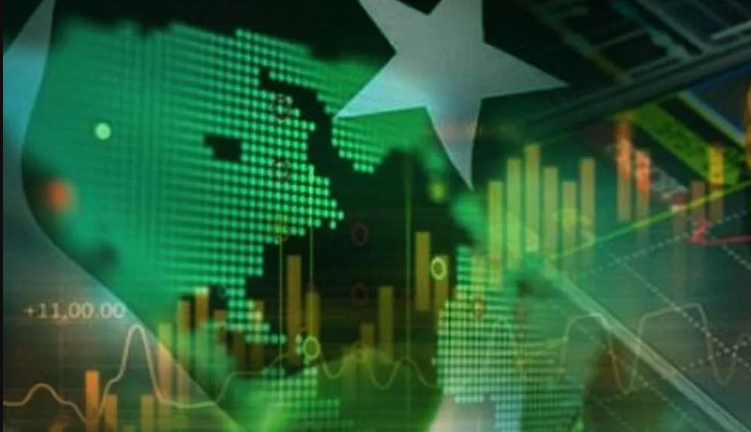
Lately Pakistani media has increasingly adopted a critical lens, drawing sharp attention to a worsening domestic governance crisis in which democratic institutions, constitutional protections, human rights, and labour rights are all portrayed as under siege..
Governance in Pakistan has increasingly become a footnote in the national discourse. Successive governments have announced sweeping reform agendas and ambitious schemes, yet these promises ring hollow against the lived realities of citizens. Good governance has never occupied the priority lists of ruling elites or political parties, leaving ordinary people to grapple with repression, economic hardship, and the absence of credible representation.
The country’s working population is at breaking point. Despite their aspirations, they lack political vehicles to channel their grievances. This is not a moment of stability, regardless of the diplomatic narratives projected abroad. Pakistan’s youth, who form the majority of the population, embody heady ambitions that cannot indefinitely coexist with systemic repression and economic stagnation.
Media coverage underscores how the hybrid political order defined by the fusion of civilian authority with entrenched military influence has hollowed out Parliament, centralized power, and curtailed dissent. The scale of corruption underscores the depth of the governance crisis. Estimates suggest Pakistan loses between 5 to 6.5 percent of GDP annually to corruption, a staggering $20 to $26 billion, or Rs5,600 to Rs7,280 billion. To put this in perspective, the country’s total health expenditure, combining government spending and out-of-pocket payments, is approximately $11 billion. Corruption thus consumes resources equivalent to 2.5 times the nation’s health budget.
Underlying this hemorrhage are structural weaknesses: unchecked bureaucratic power, political patronage shaping public policy, and judicial institutions vulnerable to corruption. These factors erode investor confidence, diminish public trust, and force citizens to pay officials for basic services. At higher levels, state capture by political and economic elites ensures that public authority is wielded for private enrichment rather than societal well-being.
The hybrid political order where civilian institutions operate under the shadow of entrenched military influence has hollowed out Parliament and centralized authority. Formal democratic institutions are weakening across provinces and territories.
Across the provinces, the democratic space is visibly contracting, leaving citizens to confront the stark reality of a state more invested in preserving authority than in safeguarding rights or nurturing representative politics. In Balochistan, the narrative of a “foreign hand” continues to be deployed to deflect from domestic failures, even as youth-led movements like the Baloch Yakjehti Committee (BYC) are suppressed and students disappear. Civilian life remains precarious, fueling insurgency. In Khyber Pakhtunkhwa, the PTI government has been reduced to performative gestures, while the Pashtun Tahafuz Movement (PTM) has been banned and the Tehreek-e-Taliban Pakistan (TTP) operates with impunity.
Gilgit-Baltistan and Azad Jammu & Kashmir are similarly paralyzed. Elections are staged, but outcomes are engineered to suit those in power. In Sindh, mass mobilization against the proposed six-canal project demonstrated public frustration, yet formal institutions remain withered. Across these regions, democratic politics is conspicuous by its absence.
The clampdown on dissent is visible in the incarceration of political dissidents such as Imaan Mazari-Hazir, Ali Wazir, Mahrang Baloch, and Imran Khan. Digital censorship and restrictions on speech have further narrowed civic space. Pakistani media highlights how repression has become normalized, with Parliament and the Senate largely silent as rights are curtailed in plain view.
This suppression reflects a broader acceptance among ruling forces that democratic urges cannot be resuscitated. Politics has been reduced to the pursuit of power, with little regard for constitutional protections or citizen rights.
Pakistan’s governance failures are no longer confined to domestic politics; they are increasingly shaping its international standing. The United States Trade Representative recently concluded that Pakistan has failed to enforce prohibitions against forced labour effectively. The European Union has pressed Islamabad to demonstrate measurable progress on human rights, labour protections, and governance reforms.
Given Pakistan’s extensive trade with both the US and EU, these concerns carry significant economic consequences. Access to these markets is contingent on compliance with higher standards of rights and governance. While such standards may be applied selectively across nations, they nonetheless function as instruments of leverage and moral commitments.
For Pakistan, this has internationalised what might otherwise have remained a domestic governance issue. Sections of the state apparatus often dismiss discussions of human and labour rights as attempts to undermine Pakistan’s global standing. Yet this view is deeply misinformed. Citizens are entitled to dignity, protection, and fair treatment from their own state. Upholding these rights should be seen as a matter of national pride, not external imposition.
If Islamabad can demonstrate compliance through ratified conventions, functioning labour inspectorates, and a credible justice system, it would strengthen its negotiating position in trade talks. Identifying shortcomings in rights provision is thus a national service first and foremost to citizens, and secondarily to Pakistan’s international credibility.
Opinions in Pakistani media are increasingly highlighting how the state that appears outwardly engaged in diplomacy and trade negotiations is internally strained by repression, rights deficits, economic hardship, and weakening institutional credibility. The hybrid order has weakened Parliament, centralized authority, and reduced democratic space across provinces. Corruption drains resources that could transform public services, while suppression of dissent erodes trust in governance.
Pakistan’s failures on labour protections, justice delivery, and human rights are now affecting its trade relations with key partners. This convergence of domestic governance crises and international scrutiny underscores the urgency of reform. Without transparency, accountability, and genuine democratic renewal, Pakistan risks further isolation abroad and deeper instability at home.