News Desk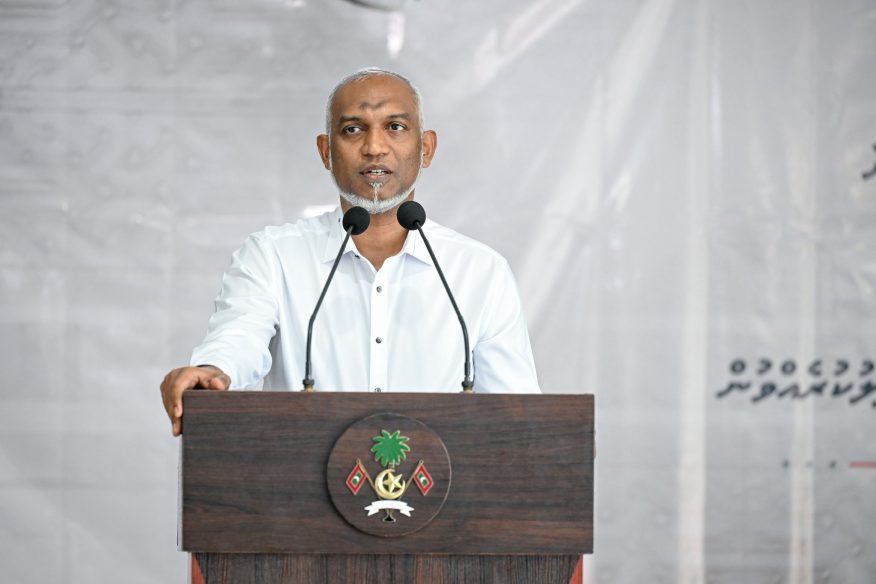
MALE’, – President Dr Mohamed Muizzu has moved to quell growing political anxiety surrounding the government’s ambitious “Maldives 2.0” project, categorically denying that the initiative includes plans to transition the nation’s electoral process to an e-voting system.
Speaking during the second episode of the Nation Chat programme, the President addressed the opposition’s recent claims, which have surfaced in response to two new bills currently before the People’s Majlis. Opposition figures, particularly from the Maldivian Democratic Party (MDP), have alleged that the proposed digital infrastructure reforms are a clandestine move by the administration to introduce e-voting as a mechanism to manipulate future election outcomes.
President Muizzu dismissed these allegations as “false narratives” born of the opposition’s lack of a substantive policy agenda.
“There is absolutely no intention within this government to transition the Maldivian voting system to e-voting as part of this project,” the President stated. He suggested that the opposition’s focus on these claims is a strategic attempt to distract the public, as they lack alternative, constructive proposals to present to the electorate.
At the heart of the “Maldives 2.0” initiative is the automation of state services, a move the administration argues is essential to systematically dismantling corruption. By minimising human intervention in state processes-particularly within public procurement and administrative service delivery-the government aims to eliminate opportunities for graft and nepotism.
“The objective is to create a transparent, reliable system where corruption is inherently discouraged by the technology itself,” the President explained.
Beyond administrative reform, the government frames “Maldives 2.0” as a catalyst for a digital economic revolution. The project seeks to provide a comprehensive framework for the country’s youth to participate in the global digital economy.
Key targets of the initiative include:
- International Payment Gateways: Streamlining access to global platforms like PayPal to empower local entrepreneurs and freelancers.
- Service Digitisation: Ensuring that essential state services are available digitally, reducing bureaucratic friction for both businesses and ordinary citizens.
- Structural Efficiency: Modernising the administrative and economic machinery of the state to keep pace with global technological standards.
With the President’s direct intervention, the administration hopes to steer the conversation away from suspicion and back toward its stated goal: a rapid, transparent, and corruption-free state apparatus. For now, the administration maintains that the “Maldives 2.0” roadmap is strictly one of economic and service modernisation, leaving the manual ballot box as a fixed feature of the nation’s democratic identity.