News Desk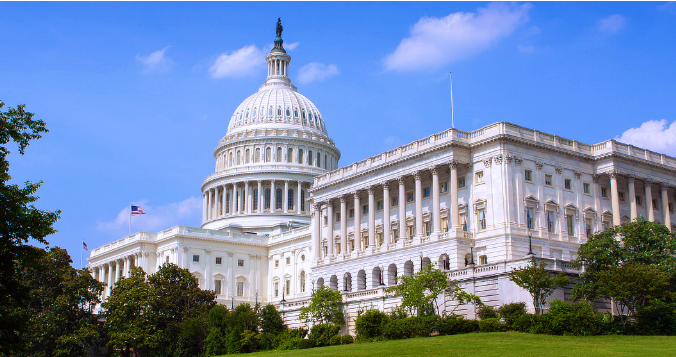
China’s treatment of religious and spiritual communities returned to the centre of US congressional scrutiny this week after a former senior American official described the Chinese Communist Party’s policies as nothing less than a “war on belief systems”.
The remarks, delivered at a Capitol Hill hearing, framed Beijing’s actions not as isolated rights violations but as a coordinated campaign to suppress belief systems perceived as threats to state authority.
The testimony, combined with recent legislative moves and earlier international findings, has renewed focus on allegations that China is using surveillance, detention, and coercive medical practices to dismantle independent faith communities at home while projecting pressure abroad.
Speaking before US lawmakers, Sam Brownback, former US Ambassador‑at‑Large for International Religious Freedom, accused the Chinese Communist Party of orchestrating a global persecution campaign against religious believers.
Brownback said the campaign targets a wide spectrum of faiths, including Christians, Buddhists, Uyghur Muslims, Tibetan Buddhists, and practitioners of Falun Gong.
According to Brownback, Beijing devotes vast financial and institutional resources to suppressing religion.
He told lawmakers that China spends billions of dollars annually to control or eradicate independent belief systems, arguing that the most severe repression is reserved for Falun Gong practitioners.
Brownback characterised believers inside China as individuals operating “behind enemy lines”, describing them as uniquely positioned to challenge state control because their convictions allow them to overcome fear.
His testimony emphasised that faith‑based resistance, rather than political ideology, is viewed by the Chinese state as a destabilising force.
Central to Brownback’s testimony was the role of advanced surveillance technology in enforcing religious repression.
He said China’s vast monitoring apparatus allows authorities to identify and neutralise individuals deemed capable of mobilising others through faith.
Describing the system as highly targeted, Brownback told lawmakers that security agencies can single out one individual among tens of thousands if that person is perceived as a potential leader.
The use of facial recognition, biometric databases, and digital tracking, he argued, has transformed religious persecution into a technologically driven process.
The characterisation of the campaign against religious expression underscored the claim that the Chinese state does not merely regulate religion but seeks to subordinate or eliminate belief systems that operate independently of party control.
During the hearing, Brownback urged the US government to more openly support religious leaders targeted by authoritarian regimes. He cited symbolic diplomacy as a means of signalling solidarity with persecuted communities.
Among the examples he raised was a call for senior US officials to meet openly with the Dalai Lama in Dharamsala, India, as a public demonstration of support for Tibetan Buddhism.
He also suggested that leaders of Falun Gong living in exile should be formally recognised in the United States for preserving what he described as elements of traditional Chinese culture.
These remarks reflected a broader debate in Washington over how visible and confrontational US advocacy for religious freedom should be when dealing with Beijing.
The hearing also addressed concerns about the resilience of US efforts to promote religious freedom internationally, efforts that are often viewed by some states as external interference — a perception that can blunt the effectiveness of such initiatives.
Stephen F. Schneck, former chair of the US Commission on International Religious Freedom, warned lawmakers that key programmes are at risk due to budget reductions.
Schneck said funding cuts could undermine initiatives across multiple institutions, including USAID, the State Department, the US Institute of Peace, and Voice of America.
He cautioned that reduced capacity could weaken the United States’ ability to document abuses and support persecuted communities.
His remarks introduced a note of institutional vulnerability into a discussion otherwise focused on external threats, highlighting the tension between policy commitments and resource constraints.
As testimony unfolded, lawmakers pointed to recent legislative steps aimed at holding Beijing accountable.
In May last year, the United States passed the Falun Gong Protection Act, legislation designed to address allegations of forced organ harvesting and other systematic abuses against people of faith in China.
The Act currently has eight co‑sponsors in the US Senate and targets individuals and entities involved in coercive organ procurement.
Supporters argue that the law reflects growing bipartisan concern over the treatment of religious groups under Chinese rule.
The legislation builds on years of advocacy by rights organisations and lawmakers who have argued that existing tools were insufficient to confront abuses described as both widespread and persistent.
Much of the current legislative momentum traces back to findings released in 2019 by the China Tribunal, an independent people’s tribunal that examined allegations of forced organ harvesting in China. The findings have been repeatedly referenced by lawmakers and rights advocates as evidence of systematic abuse tied to religious identity.
After a year‑long investigation, the tribunal concluded that there was credible evidence of engagement in the practice since 1999. The groups named in testimony and reports represent a broad cross‑section of China’s religious landscape.
What links these communities, according to critics, is not doctrine but autonomy. Each represents a form of collective identity that exists outside the Chinese Communist Party’s ideological framework.
Brownback and other witnesses framed the campaign against them as a defining feature of Beijing’s governance model, one that treats independent faith as a rival source of loyalty and moral authority.
The Capitol Hill hearing placed China’s domestic religious policies within a broader international context.
Brownback described the campaign as global in scope, arguing that pressure extends beyond China’s borders through intimidation of diaspora communities and diplomatic influence.
As lawmakers consider further action, the allegations outlined during the hearing add to an expanding body of claims that frame religious persecution as central, rather than incidental, to China’s political system.
The description of a “war on belief systems” may be rhetorical, but the policies and practices discussed — surveillance, detention, alleged forced organ harvesting, and transnational pressure — reflect a sustained effort to control belief.
For US lawmakers, the issue now sits at the intersection of human rights, foreign policy, and legislative oversight, with implications that extend far beyond China’s borders.