News Desk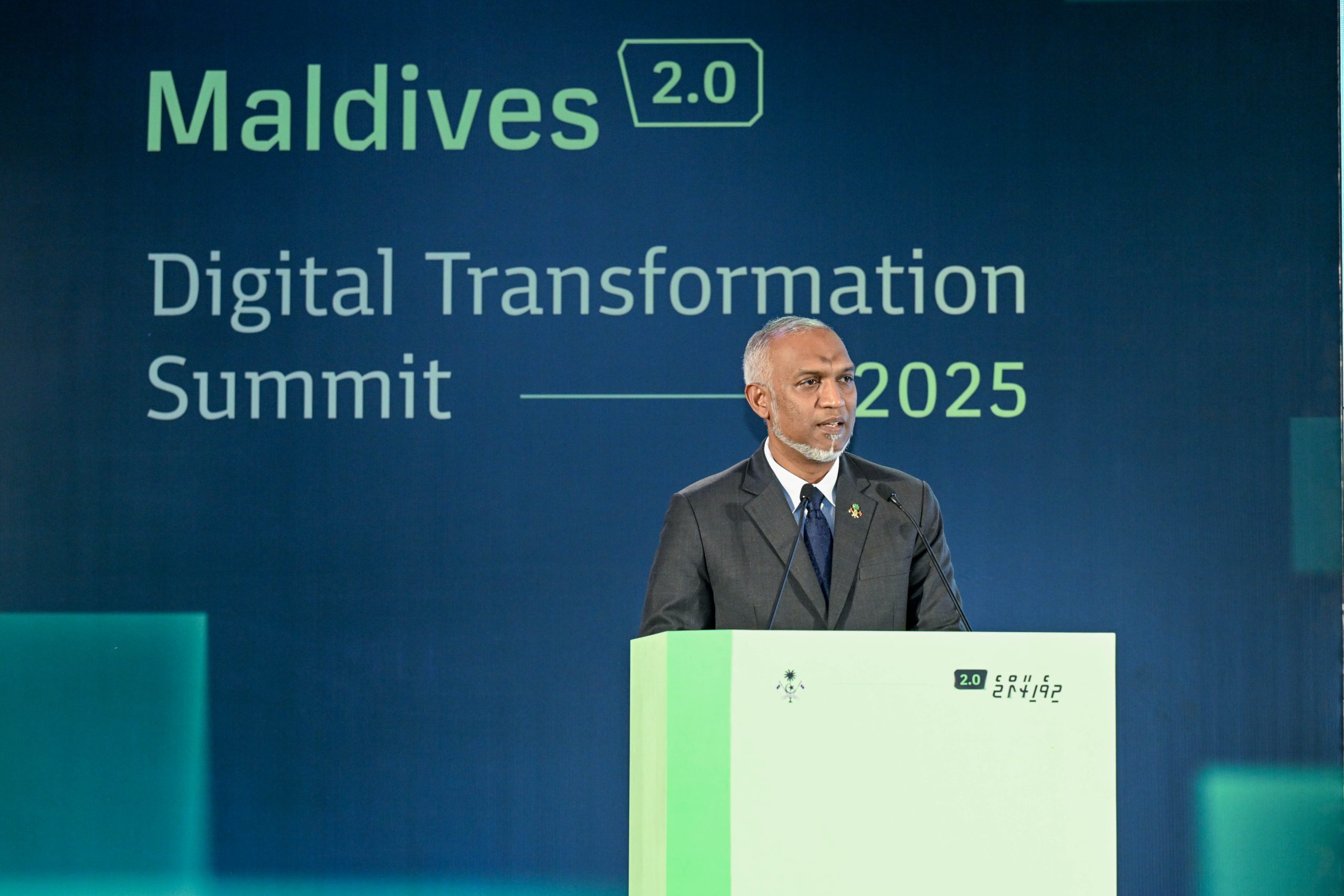
In global governance, there’s a familiar irony: the countries with the most power often stumble over the most basic administrative tasks. While the United States grapples with a fractured, chaotic system of voter rolls and identity verification, the Maldives has quietly perfected a model of civic administration that is, quite literally, the envy of the world.
Recent reporting from Washington suggests a federal system struggling with its own paperwork. As Congress debates the “Make Elections Great Again Act,” a proposal that would require proof of citizenship to vote, a more basic problem has come into focus: the United States still does not maintain a single, comprehensive national registry of its citizens. As a result, even a seemingly straightforward question—who is eligible to vote—has become entangled in partisan fights, legal disputes, and hours of opaque testimony.
The contrast with the Maldives is hard to ignore. Here, the idea of an “undocumented citizen” is largely unknown. From the northernmost island of Thuraakunu to the southern city of Addu, the state maintains a comprehensive national registry that accounts for every citizen. Each Maldivian is issued a secure national identity card, anchored in a centralized digital system. The result is an administrative clarity that many larger democracies, constrained by legacy systems and persistent political conflict, have struggled to achieve.
Some years ago, I attended a meeting on civil registration attended by an Irish delegation funded by an international agency. The visitors arrived in style—business class flights, generous daily allowances, and crumpled suits—and proceeded to lecture on best practices in national registries.
Around the table, reactions varied. A few colleagues, veterans of such encounters, exchanged glances that conveyed weary familiarity. Others, particularly officials from the line ministries and the Department of National Registration, listened in visible disbelief.
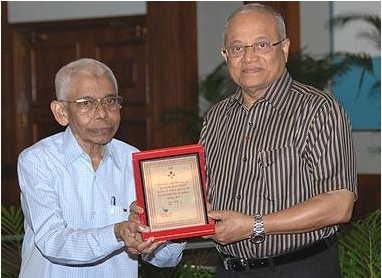
As the discussions unfolded, a quiet realization settled over the Maldivian side of the room. Many of the “innovations” being described were systems we had put in place decades earlier. Thanks in no small part to figures like Mr Saikuraa Ibrahim Naeem, a diligent and unsentimental civil servant, the foundations of our registry were already well established.
We’d seen this happen before: the people who came to teach us slowly realising they were the ones learning. But the usual aid‑agency etiquette doesn’t really allow for pointing that out. So we stayed polite and let them go on, watching as they gradually caught up to things we’d been doing for years.
In many ways, the Maldives is very different from most other small island countries. Its geography—more than a thousand islands scattered across the Indian Ocean—would seem to make something as basic as a national census extraordinarily difficult. Instead, the country has turned that challenge into a logistical achievement, building a system that reliably accounts for its population despite distances that might overwhelm far larger states.
The American crisis, as reported by The New York Times today, underscores the dangers of a weak registry. When a nation cannot definitively verify its electorate, the door swings wide for claims of fraud, disenfranchisement, and civil unrest. The U.S. Republican party’s current obsession with banning mail-in ballots and demanding birth certificates at polling stations is a symptom of a deeper malady: the lack of a reliable, central truth. It also exposes an uncomfortable uncertainty. Does every citizen of the United States actually possess a birth certificate?
In the Maldives, such debates do not arise. The national registry is not a political instrument but a core piece of civic infrastructure. Every birth is registered within seven days, and the National Identity Management System (NARES) assigns a unique identifier that follows each citizen for life — and on the rare occasions when a child’s name isn’t already in the database, parents even have to get the name formally validated before it can be entered. The system underpins everything from voter rolls to the delivery of public services, ensuring that every citizen is accounted for and verifiable from birth.
While the United States continues to debate the “Save America Act” and increasingly stringent versions of voter identification laws, the Maldives has focused on refining its digital infrastructure. The country has moved toward Maldives 2.0 and eFaas 2.0, a national digital identity system that enables biometric verification and provides access to more than 140 public services. The experience suggests that scale and income level need not be obstacles to administrative competence—or to building systems that work.
As we look ahead, it may be time to rethink the usual direction in which expertise flows. Rather than continuing to host delegations from Europe or North America to explain the basics of governance, the Maldives could just as reasonably be sending its own officials to Washington.
It is worth remembering, too, that the Maldivian system did not emerge overnight—or arrive with the language of digital governance. As an island civilization that developed without a river system, an unusual condition in the history of state formation, the Maldives spent centuries refining its own administrative practices, shaped by geography, necessity, and continuity. Much of that indigenous Katheebu and Atholhuveriya model was later recast and discarded under the new Constitution in favour of Western institutional form. Still, the habits it produced—careful registration, administrative precision, and a strong sense of accountability—have endured, adapted rather than erased.