News Desk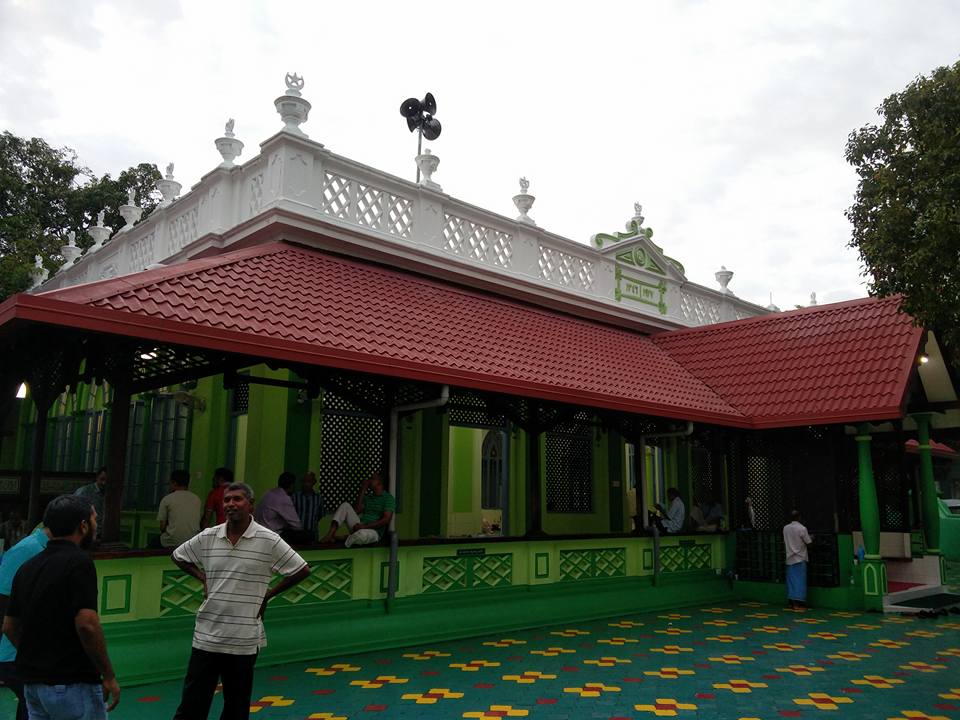
For close to a century, the Bandaara Mosque has stood quietly at the northern edge of Malé, its pale walls and pointed arches carrying a story most Maldivians no longer remember. Soon, if the government proceeds as announced, the only mosque in the country built in the Bohra‑Ismaili tradition will be reduced to rubble. A new multi‑storey mosque will rise in its place. What will not rise again is the history embedded in its timber pillars and Cairo‑inspired windows.
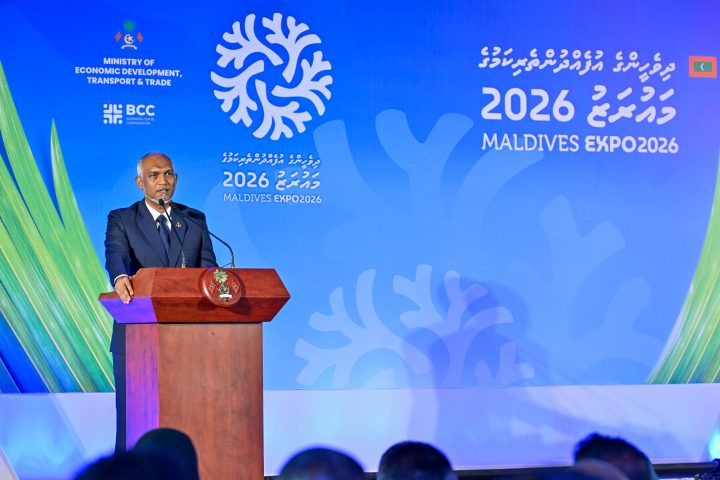
The Islamic Minister, Dr Mohammed Shaheem Ali Saeed, has said the demolition will begin after Ramadan. A donor has already been secured. In official language, the project is framed as progress. In the language of memory, it is an erasure.
The mosque, formally named Masjid Sultan Mohammed Shamsuddeen, is better known as Bandaara Miskiy. Older Malé residents still call it by its earlier name, the Bombay Mosque or Bumbaa Miskiy, a reminder of the era when Bohra merchants from Bombay dominated trade in the Maldives. They controlled the import and export lifelines of the country, and their influence seeped into the architecture they left behind.
The Bohras belong to the Musta’li branch of the Ismaili Shia tradition, a community with deep roots in Fatimid Cairo. That city was founded in 969 CE under Caliph al‑Muizzu li Deen Illaah, its construction overseen by the general Jawhar al‑Siqilli. In the mosques of Cairo’s Jamaliyya district, one feature repeats itself with quiet insistence. The windows rise in pointed arch shapes, a signature of Fatimid design, framed by carved timber pillars and rows of decorative openings that give the neighbourhood its character.
Those same features appear, almost uncannily, in the Bandaara Mosque. Its windows echo those of Cairo’s Al Hussein Mosque, a mosque and shrine built to house the remains of Imam Hussein, transferred from Ashkelon — present day occupied Palestine — to protect them from Crusaders. The resemblance is not accidental. The Bohras carried their architectural vocabulary wherever they settled, and in Malé they built a small but unmistakable fragment of Fatimid Cairo.
There is an irony in the timing. President Muizzu, whose surname mirrors that of the Fatimid caliph who founded Cairo, is presiding over the demolition of the only Fatimid‑influenced structure in the Maldives. History has a way of looping back on itself, though not always kindly.
Stories ripple outward from this mosque. One such story was told to this writer by Sheikh Hussain Abdul Rahman, the father of President Muizzu, who spent many years in Cairo. He recalled how, during special occasions, King Abdul Majeed of the Maldives — who had settled permanently in the El‑Qubbah neighbourhood of Cairo while his family ruled the country on his behalf — would visit the shrine of Imam Hussein. Ahead of him, his staff would walk carrying trays of gold and silver coins, handing them out to the poor who gathered around the square. The locals, unaware of his identity, simply called him Hindi Basha, assuming he was a wealthy Indian. These are the kinds of stories that vanish when buildings vanish.
The neighbourhood around Bandaara Mosque is layered with its own memories. Nearby, justice was once dispensed at Athiree Fandiyaaruge by Chief Justice Salaahudeen, whose famous phrase “kal dho bajey aao” — come tomorrow, in Urdu — became a national shorthand for delayed justice.
The row of shops beside the mosque once housed the early ventures of the Mamigili tycoon, who made his start selling Frisian milk, advertised endlessly on the radio then.
Cities change. Modernity has pushed through Malé for decades, and many old buildings have already given way to new concrete and glass. But the question here is not simply nostalgia. The Bandaara Mosque already has more than enough space to generously accommodate those who come for the five daily prayers. On Fridays, the spillover fills the surrounding streets, as it always has.
The Islamic Centre is only 550 feet away, a two‑minute walk, and it already accommodates thousands. If space is the issue for Friday prayers, it is not a convincing one.
A multi‑storey mosque may offer more space, but it cannot replace the cultural and architectural lineage embedded in the existing structure. Once demolished, this part of our history will be reduced to photographs and whatever memories remain.
The mosque’s compound once held the only cinnamon tree known to grow in Malé, a small curiosity that older residents still remember. Its old well, now demolished, was another landmark. The water drawn from it was famously sweet, and in earlier decades island travellers would stop here to fill their containers before setting out to sea. These small details, too, are part of the memory held in this place.
Those who never knew the old Malé, the raw island capital of fifteen thousand people, may not feel the weight of these landmarks or the memories held in them.
Buildings do not speak, yet they hold the voices of the people who built them, prayed in them, traded beside them and passed them on. The Bandaara Mosque is one such vessel, sitting in a pocket of Malé where history still clings to the ground.
It stands beside the presidential compound, now loaned for the Supreme Court, in a neighbourhood that once held the country’s political heart. The mosque fits into this landscape not as an ornament but as part of the city’s memory, a reminder of the merchants, rulers and ordinary people who shaped the area long before modern offices rose around it.
If it falls, a chapter of Maldivian history falls with it, and the city will open its eyes to a morning where one more memory has been cleared away. The Fatimid style that travelled from Cairo under Caliph Muizzu found a small home in Malé. Under President Muizzu, that home may soon be gone.