News Desk
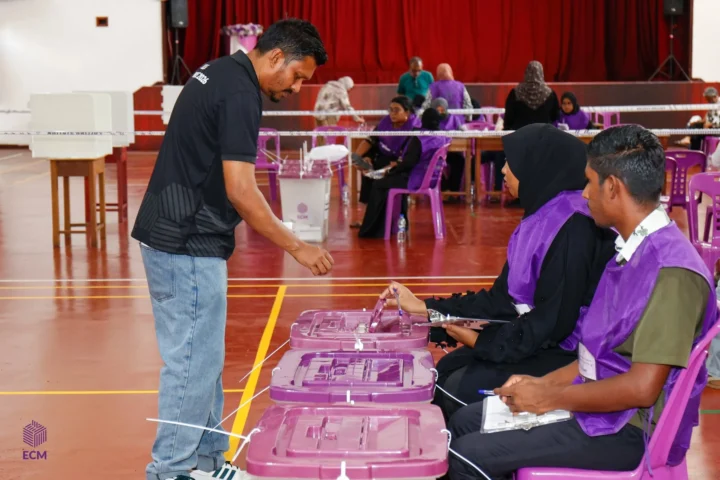
Thirteen ballot boxes across the country returned a majority YES vote in the referendum, standing out against the national pattern of a dominant NO. These pockets are scattered and politically varied. Some are government aligned constituencies, while others sit in areas traditionally held by the opposition. The results show that the YES vote did not follow a single partisan line, but emerged from local dynamics, personalities and development ties.
In K. Guraidhoo 3 (Box H9.3), where no opposition candidate contested the council seat, the box returned a clear YES majority of 66.13 percent. With MDP absent and the island shaped by PNC and independent figures, the result reflects the constituency’s existing political make up.
Addu Feydhoo Miscellaneous 1 (S10.3) is the only box in Addu City with a decisive YES lead at 55.16 percent. This is the native island of Home Minister Ali Ihusan and his father, MP Ibrahim Didi, and the result aligns with the area’s PNC leaning voter base.
Lh. Naifaru 4 (G2.4), the constituency of Fisheries Minister Ahmed Shiyam, delivered a narrow YES win of 50.44 percent. The split result suggests ministerial influence, but not a commanding one.
Fuvahmulah City’s Maadhadhu 1 (R4.1) produced the strongest YES result in the country at 79.06 percent. The city council is held almost entirely by MDP, except for one seat in Dhandimagu. The box reflects a consolidated pro YES sentiment in a largely MDP aligned area.
Fonadhoo 2 (O7.2), the constituency of Majlis Speaker Abdul Raheem, returned a 56.91 percent YES vote. The result is consistent with the Speaker’s political base and indicates institutional support for the referendum.
Th. Guraidhoo 1 and 2 (N5.1 and N5.2) both leaned YES. This is notable as the former constituency of Defence Minister Ghassan Maumoon, where airport construction and land reclamation are ongoing. Development activity may have contributed to the 52.70 percent YES result.
Maavah 1 (O6.1), once represented by former Economic Minister Mohamed Saeed, also voted YES at 55.42 percent, hinting at lingering influence from earlier leadership.
Thinadhoo Dhekunu 1 (Q1 5.1) returned 66.86 percent YES. Although the mayoral seat was narrowly won by MDP, the referendum result shows the constituency leaning towards the ruling congress party.
Medhu Henveiru 4 (T2.4) in Malé is one of the more unusual cases. The council seat was won by MDP’s Meekail Mohamed Riyaz, yet the referendum box shows 73.99 percent YES. The constituency appears politically fluid, with signs of a swing towards PNC despite the MDP victory.
Nilandhoo 1 (L5.1), the constituency of MP Sauda and the island of Foreign Minister Dr Abdulla Khaleel, returned a narrow YES majority of 52.26 percent. Airport development underway on the island may have shaped voter sentiment.
Vashafaru 1 (A7.1), the ancestral island of President Muizzu, delivered 63.82 percent YES, reflecting personal and political ties to the presidency.
Thulhaadhoo 2 (F9.2) returned one of the highest YES percentages at 80.47 percent. Although historically an MDP constituency, all council seats are now held by PNC, signalling a complete political shift.
| # | Constituency / Island | Box Code | YES Votes (%) | NO Votes (%) | Total Votes | Void |
| 1 | K. Guraidhoo‑3 | H9.3 | 41 (66.13%) | 21 (33.87%) | 74 | 12 |
| 2 | Addu, Feydhoo Misc‑1 | S10.3 | 123 (55.16%) | 100 (44.84%) | 225 | 2 |
| 3 | Lh. Naifaru‑4 | G2.4 | 231 (50.44%) | 227 (49.56%) | 469 | 11 |
| 4 | Fuvahmulah City, Maadhadhu‑1 | R4.1 | 355 (79.06%) | 94 (20.94%) | 457 | 8 |
| 5 | L. Fonadhoo‑2 | O7.2 | 350 (56.91%) | 265 (43.09%) | 624 | 9 |
| 6 | Th. Guraidhoo‑1 | N5.1 | 223 (55.89%) | 176 (44.11%) | 405 | 6 |
| 7 | Th. Guraidhoo‑2 | N5.2 | 205 (52.70%) | 184 (47.30%) | 393 | 4 |
| 8 | L. Maavah‑1 | O6.1 | 184 (55.42%) | 148 (44.58%) | 335 | 3 |
| 9 | Thinadhoo Dhekunu‑1 | Q1‑5.1 | 226 (66.86%) | 112 (33.14%) | 342 | 4 |
| 10 | Medhu Henveiru‑4 (Malé) | T2.4 | 219 (73.99%) | 77 (26.01%) | 300 | 4 |
| 11 | F. Nilandhoo‑1 | L5.1 | 220 (52.26%) | 201 (47.74%) | 425 | 4 |
| 12 | HA. Vashafaru‑1 | A7.1 | 187 (63.82%) | 106 (36.18%) | 307 | 14 |
| 13 | B. Thulhaadhoo‑2 | F9.2 | 272 (80.47%) | 66 (19.53%) | 351 | 13 |
Taken together, the YES vote emerged from a mix of government aligned constituencies, ministerial strongholds, development linked islands and a handful of opposition held areas. The pattern shows that the referendum’s support base was shaped less by party lines and more by local loyalties, personalities and ongoing projects.