News Desk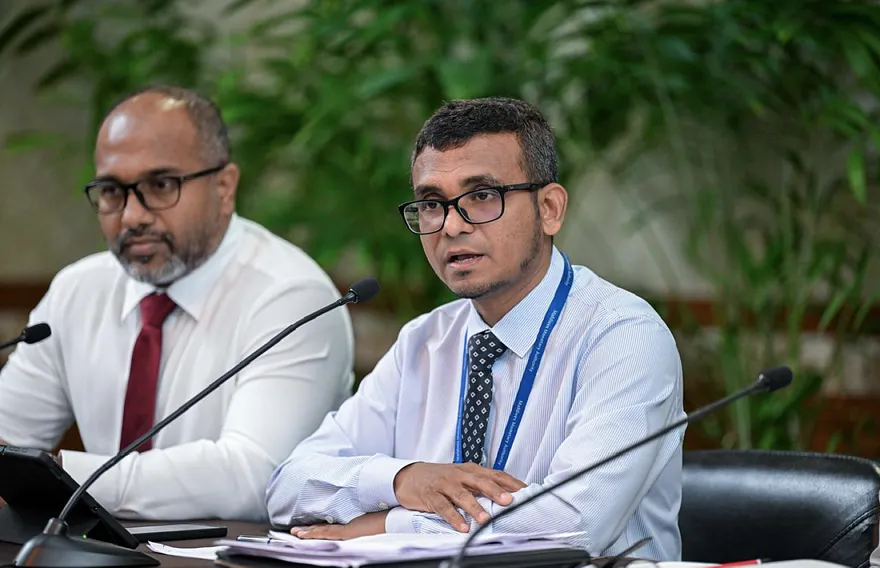
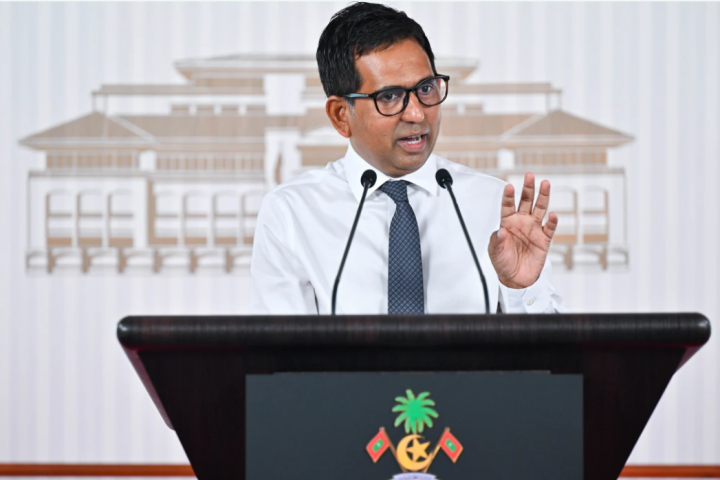
Foreign currency earners, including luxury resorts and guesthouses, will soon be legally required to surrender 40 per cent of their monthly foreign revenue to local banks, Maldives Monetary Authority (MMA) Governor Ahmed Munawwar announced today.
Speaking at a press conference at the President’s Office, Munawwar said the government will shorty present amendments to the Foreign Exchange Act to Majlis to enforce the rule.
Scrapping the USD 500 Choice
Under current foreign exchange rules, dollar-earning businesses have two options: exchange USD 500 per tourist head or surrender 20 per cent of their total foreign income to domestic banks.
The proposed legal changes will completely axe the USD 500 per-head option, replacing it with a flat 40 per cent surrender rule.
Governor Munawwar added that the amendments will give authorities broader powers to track where remaining foreign exchange goes, introducing tighter monitoring to stop dollars leaking out of the banking system.
He insisted that forcing dollar earners to route cash through domestic banks is the only way to solve the country’s ongoing dollar crunch for local importers.
Black Market Pressures and Debt Payments
The central bank governor revealed that 56 per cent of all foreign currency exchanged with the MMA up to last month was spent directly on servicing state debt.
Meanwhile, Home Minister Ali Ihusaan called out the resort sector directly during the press briefing. He pointed out that resorts are the primary source of dollars feeding the local black market, claiming that 90 per cent of the cash circulating in parallel channels originates from dollar-earning businesses.
In another recent crackdown, authorities discovered that seven unlicensed money-changing operations had managed to exchange MVR 1.18 billion (USD 77 million) over just nine months.
Long-Term Vision: Full Rufiyaa Economy by 2030
The central bank aims to transition all domestic financial transactions to Maldivian Rufiyaa by 2030, a goal supported by previous governors including Ali Hashim, Ahmed Naseer, Dr Azima Adam, and Dr Fazeel Najeeb.
“Everything, all services, must be priced in Maldivian Rufiyaa,” Munawwar said. “This isn’t something I’m bringing up today. This has been discussed for a very long time.”
He noted that during Ali Hashim’s tenure under former President Ibrahim Mohamed Solih’s administration, the MMA prepared to introduce a 60 per cent surrender rule, though it was never implemented.
The transition to a Rufiyaa-only economy will be phased in gradually to avoid market shocks. It will eventually require resort lease payments and local dollar-denominated salaries—such as those paid by resort operators and Trans Maldivian Airways (TMA)—to shift entirely into Rufiyaa.
“If salaries and resort rents move to Rufiyaa, it will create real, actual demand for our domestic currency,” Munawwar explained, adding that the country must build strong foreign reserves before moving toward a managed floating exchange rate.