News Desk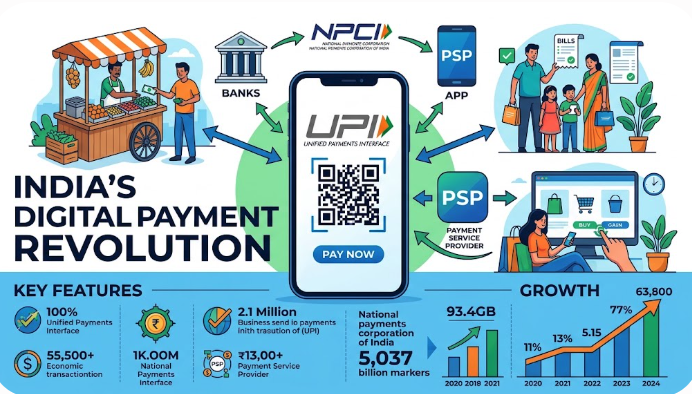
MALÉ — Walk into almost any corner shop along the bustling lanes of Malé these days, scan a QR code at the register, and your banking app will prompt you with an option that was unthinkable just a short while ago: pay in Maldivian Rufiyaa or Indian Rupees.
What looks like a tiny menu toggle on a smartphone screen is actually the local face of a massive monetary shake-up. On 25 August 2026, India’s Unified Payments Interface (UPI) marks its tenth anniversary. Launched in August 2016 by the National Payments Corporation of India (NPCI) under the guidance of the Reserve Bank of India (RBI), the system started out with just 44 participating banks. Today, that network has expanded to 703 banks, completely reshaping how money moves across South Asia.
The leap in volume over the past decade is staggering. According to figures from India’s Finance Ministry, UPI logged just 17.8 million (1.78 crore) transactions in its initial 2016–17 financial year. By the close of the 2025–26 financial year, that number had skyrocketed to 241.62 billion (24,162 crore)—a more than 13,000-fold increase. Total transaction value surged over the same period from $840 million (70 billion rupees) to over $3.7 trillion (314 trillion rupees).
UPI’S Ten-Year Growth
| Financial Year | Annual Transactions | Total Value (INR) | Participating Banks |
|---|---|---|---|
| 2016–17 | 17.8 million | 70 billion | 44 |
| 2025–26 | 241.62 billion | 314 trillion | 703 |
By 2026, daily usage reached over 660 million transactions. May set a monthly record with 23.2 billion transfers, only to be topped in July when transactions hit 23.66 billion. The International Monetary Fund now ranks UPI as the world’s largest real-time payment network, accounting for roughly 49 per cent of all global instant payment transactions in 2025.
Here in the Maldives, the setup bridges everyday trade and personal finance between two closely tied island neighbours. Whether it is Maldivian families settling medical bills in South India, parents transferring money to students in Bengaluru, or shopkeepers buying goods across the Laccadive Sea, transactions move instantly without the traditional drag of hefty FX conversion fees and multi-day wire delays.
The Maldives is not alone in linking up. The cross-border reach of UPI now covers 11 countries, including the UAE, France, Bhutan, Sri Lanka, Nepal, Singapore, Mauritius, Qatar, Cambodia, and Greece.
While the service remains free for general consumers, Indian officials have hinted that minor fees could eventually be introduced for certain commercial merchant transactions as the system expands its technical footprint. But for shoppers and merchants from the crowded streets of Malé to distant outer atolls, the ability to flip between Rufiyaa and Rupees on a phone screen has already made cross-border commerce feel as effortless as buying a cup of tea.
Adopted from a kaafu.mv article.