News Desk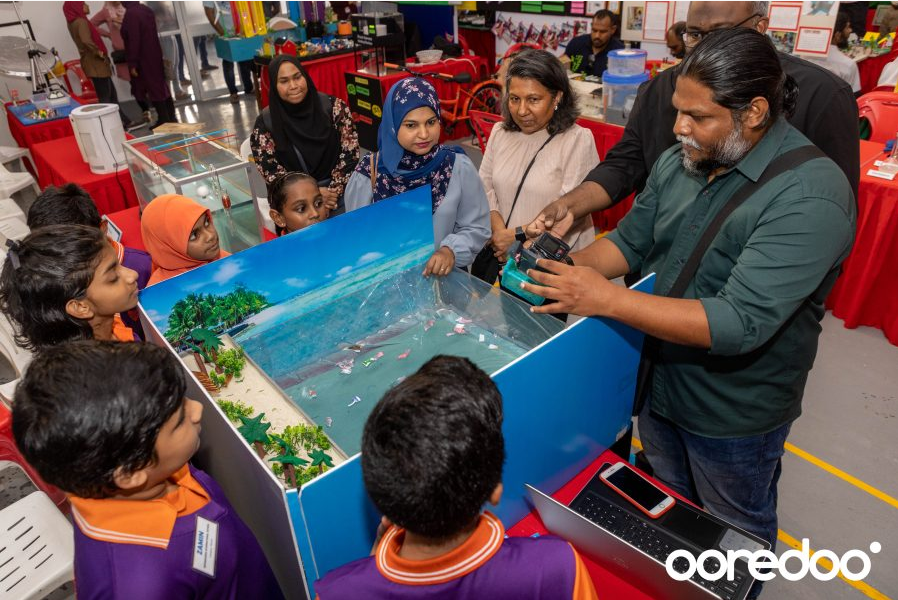
President Dr Mohamed Muizzu has highlighted that the equal participation of women and girls is the cornerstone of a scientific landscape that truly serves the global community. In a message marking the International Day of Women and Girls in Science, the President said the Maldives’ path to national progress is inseparable from empowering women in technical fields.
He noted that women’s contributions are central to addressing global challenges in climate resilience, health, energy, cybersecurity and artificial intelligence. Their equal participation, he said, is essential to shaping scientific advancement that benefits all.
The President pointed to a series of national initiatives designed to expand the number of women and girls entering STEM fields. These include widening access to higher education, strengthening technical and vocational training, increasing scholarships and introducing new programmes in engineering, ICT, marine science, health sciences and emerging technologies. Continued investment in research capacity and digital skills, he said, is opening new pathways for young women across the country.
President Muizzu added that an inclusive future for science begins with opportunity. He reaffirmed the Government’s commitment to removing barriers, improving access and building a supportive ecosystem so that every Maldivian girl with a passion for science is able to learn, lead and contribute to national development.
In a message shared on his official X account, the President honoured the women who have broken traditional barriers in the scientific community. He described their contributions to the nation’s knowledge base as irreplaceable, particularly in the health and technology sectors. He reiterated his administration’s resolve to dismantle systemic obstacles so that personal passion for discovery becomes the only requirement for Maldivian girls aspiring to shape the country’s future.
First Lady Sajidha Mohamed, in a separate message on X, addressed the social foundations required for women to excel in science. She noted that while research consistently shows girls matching or surpassing their peers in scientific aptitude, stereotypes in homes and classrooms continue to deter them. She called for a collective effort to dismantle these early barriers, stressing that meaningful change depends on the active support of parents, educators and communities.
The President’s remarks come at a time when his Administration has launched an aggressive push to prioritise STEM education across the country. President Muizzu has repeatedly argued that the Maldives’ reliance on foreign experts for major infrastructure and medical projects stems from a long‑term decline in interest in technical fields. His Government has pledged to reverse that trend.
A series of strategic policy shifts has placed STEM at the centre of national development planning. The Government has restructured student loan schemes to prioritise STEM disciplines, steering students away from traditional favourites such as Accounting and Finance. Public sector recruitment has also been revised to give preference to STEM graduates, supported by more competitive salary packages.
The Administration has published the first National Human Capital Need Index Analysis, identifying critical shortages in engineering and quantity surveying. Officials say the findings will guide workforce planning and help reduce dependence on foreign technical labour.
Through the Atoll Education Development Project, the Government is establishing science, ICT and STEM laboratories across the islands. Recent agreements include new facilities for schools in Kulhudhuffushi, Funadhoo and Kalaafaanu School in Malé. The project is supported by World Bank financing and includes refurbishment of laboratory facilities at Dh Atoll Education Centre in Kudahuvadhoo.
The Government is also opening the country’s first vocational high schools, shifting the education system toward practical, industry‑aligned technical skills. In early 2026, the Administration launched the Kuri Portal, an automated system designed to streamline student funding and scholarship processes, particularly for those pursuing technical subjects abroad.
Beginning in 2026, a new National Curriculum Exam for Grade 6 has been introduced in Mathematics and Science to benchmark Maldivian student performance against international standards. The primary syllabus is being revised to an integrated curriculum model that links scientific concepts to daily life. The Government is also working to make Grade 12 the standard school‑leaving stage, replacing the long‑standing Grade 10 exit point, in an effort to better prepare students for higher education in technical fields.
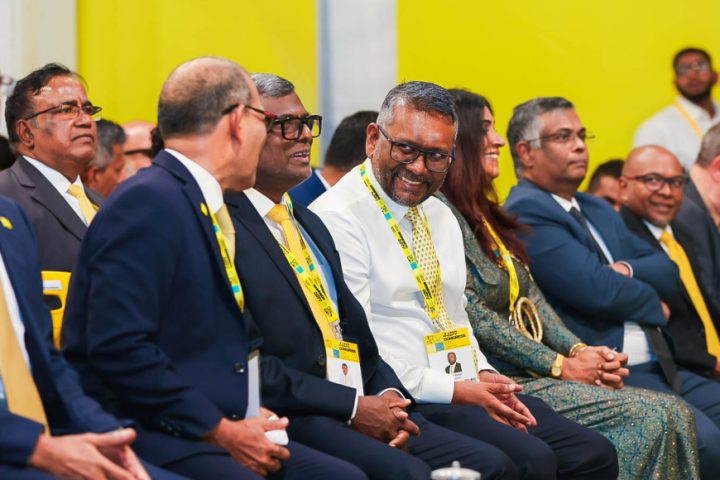
The International Day of Women and Girls in Science coincided with the launch of the National Human Capital Needs Assessment Report, produced jointly by the Ministry of Higher Education, Labour and Skills Development and the World Bank. The study identifies gaps in the labour market, outlines the skills required across sectors and highlights the challenges faced by Maldivian youth. Its findings are expected to guide both short and long‑term strategies aligned with the President’s manifesto.
The report, launched earlier by Vice President Hussain Mohamed Latheef at the Maldives National University auditorium, examines the mismatch between training programmes and employer needs. It proposes a roadmap to equip Maldivians with the knowledge and skills required for a changing economy. Data was collected from seven key sectors: tourism, construction, education and health and social services, wholesale and retail, ICT, agriculture and fisheries, and transportation.
The survey identifies tourism, construction, health and ICT as the sectors expected to see the greatest growth in employment opportunities over the next decade. It calls for stronger links between education and labour market needs, expansion of vocational and micro‑credential programmes and a culture of continuous skills development. It also recommends deeper public‑private partnerships in training, targeted support for skills shortages and regular evaluation of higher education incentives.
The report highlights the need for family‑friendly work policies to advance gender equality and stresses the importance of training in climate resilience and emerging technologies. It also emphasises expanding education and employment opportunities across the atolls.
For President Muizzu, the push for STEM is both a development strategy and a social project. His Administration has framed scientific literacy as essential to national sovereignty, economic diversification and climate resilience. The emphasis on women and girls, echoed by the First Lady, signals an attempt to widen participation in fields that have long been dominated by men.