News Desk
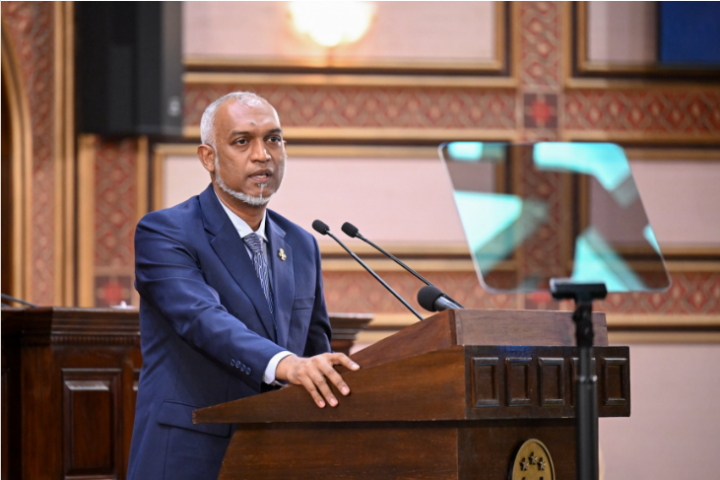
The Maldives postal service, an institution that has long been a vital thread in the nation’s fabric, was honored by President Dr. Mohamed Muizzu on World Post Day. “The post has provided valuable services to the development, communication, and economy of Maldives,” he said, expressing pride in the leaders and employees who have guided the service for 119 years.
For a nation of scattered islands, the postal service was the country’s first reliable lifeline to the outside world. This foundational link bridged immense logistical distances and connected the archipelago to the global community.
The formal history of the service began in 1906, when the first stamps, bearing the profile of Britain’s King Edward VII, were issued. A pivotal moment followed just three years later with the Maldives’ membership in the Universal Postal Union (UPU), connecting the remote nation to a burgeoning global communication network.
By 1909, the Maldives took a bolder step toward its own philatelic voice, debuting original stamps simply inscribed “Maldives.” These stamps, printed in English and Arabic, featured the minaret of the Friday Mosque in Malé.
As the islands edged toward independence in the mid-20th century, their stamps began to reflect a budding national identity. Inscriptions evolved from “MALDIVE ISLANDS” in 1950 to “REPUBLIC OF MALDIVES” or “MALDIVE ISLANDS” from 1970 onward, mirroring the shift from a sultanate to a republic in 1968. Local themes took root, celebrating the unspoiled essence of island life.

Perhaps the most colorful chapter of the Maldives’ postal history is told through its stamps, which have become a form of cultural diplomacy and a source of revenue. A small, exquisitely detailed square of paper can tell a remarkable story of a nation, and the Philatelic Bureau of the Maldives Post has long understood that its stamps are a valuable commodity in the global collectors’ market.
While the stamps look inward with series celebrating Maldivian fauna, flora, and local heritage—from traditional dhoni boats to the iconic Friday Mosque—they also look outward. Commemorative issues have marked events as far-reaching as the 1967 World Cup, the 1960 Olympic Games, and even the Gemini 6 and 7 space rendezvous in 1966. The post has honored international figures like John F. Kennedy and has engaged in joint stamp issues with countries like India and Singapore, a nod to its deep regional connections.
From the 1990s onward, a commercial shift took hold. Themes grew more fanciful and less tethered to local reality, with stamps featuring exotic animals, comic-book motifs, and designs catering purely to collectors. Today, many stamps are destined less for envelopes than for albums, a savvy pivot that sustains the bureau amid the decline of physical mail.
Over a century later, the postal service has evolved far beyond its original mandate. In 1994, it transitioned from a government department to a state-owned enterprise, Maldives Post Limited, with a mission to adapt to the modern economy. Central to this mission is the Universal Postal Service Obligation (USO), a commitment to ensure every citizen has access to essential postal services.
To remain relevant in the digital age, the post has diversified its offerings. In addition to traditional mail, it now provides financial services and has embraced e-commerce with platforms like eTukuri. These services underscore its role as a key logistical partner for a nation that imports most of its goods, supporting both personal commerce and small businesses in remote communities.