News Desk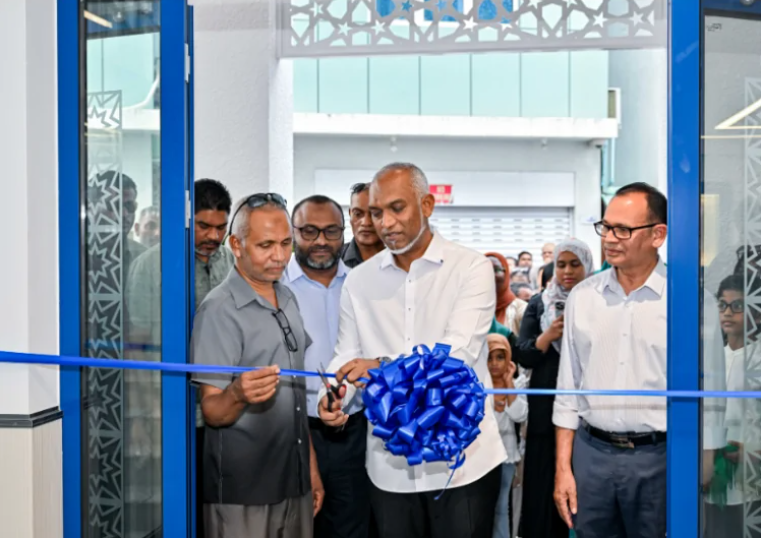
With the start of Ramadan, fifteen mosques have now been opened for worship, and the Islamic Minister says the number will reach nineteen before the month ends. As part of the preparations for the fasting month, four more mosques in the capital have been fitted with air conditioning in both the main halls and women’s prayer areas. Masjid al‑Furqan, Masjid Jalaluddin, the Merchants’ Mosque and Masjid Umar bin Khattab in Hulhumalé are the latest to be completed under the government’s project to upgrade major prayer spaces. The government set a simple criterion: any mosque with capacity for more than 800 worshippers would receive a cooling system.
The newly opened mosques include both government‑built and privately funded projects.
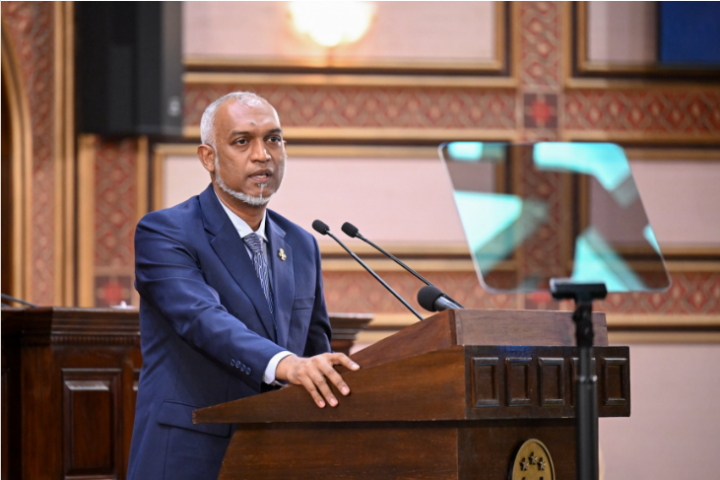
The most prominent addition came with the start of Ramadan, when President Dr Mohammed Muizzu inaugurated the newly constructed Masjid Yusuf Barbari during evening prayer. The three‑storey mosque, designed with modern facilities and space for 1,400 worshippers, was opened in the presence of the Islamic Minister, Dr Mohammed Shaheem Ali Saeed, senior officials and a large crowd of residents.
In his presidential address this year, the President said mosque development remains a priority, with new projects underway in Malé and across the islands.
Yet as the country builds larger and more sophisticated prayer spaces, a new way of thinking is needed. Environmental conservation within mosques must become part of the national conversation if these developments are to align with the President’s environmental policy and long‑term vision. With an engineer at the helm, this is an area where the Maldives can lead with practical solutions.
Across the Islamic world, the idea of the “green mosque” has gained momentum, especially after the UAE hosted COP28 and introduced the first Interfaith Pavilion at a UN climate conference. It was the first time a global environmental summit placed religion and climate action side by side. The message was clear: religious institutions can help shape climate action.
Islamic teachings already emphasise stewardship, balance and the avoidance of waste. Concepts such as khilafah, israf and mizan are not abstract ideas. They speak directly to how we use resources in our daily lives, including in our mosques.
In the Maldives, where electricity is expensive and freshwater is limited, these principles carry particular weight.
One of the most overlooked areas is water use during ablution. A single person performing wudhu typically uses no less than 15 litres of water. Multiply that by hundreds of worshippers at a grand mosque like the Islamic Centre, especially during Ramadan, and the volume becomes staggering.
This water is clean. It is not sewage. Yet it goes straight into the drain.
If even a portion of this greywater were captured and reused, it could irrigate the park areas on both sides of the Islamic Centre. In a city where every patch of green struggles under the hot Maldivian sun, this is not a small opportunity.
Other countries have already moved ahead. The Cambridge Central Mosque in the UK uses greywater recycling. Masdar City’s Sustainability Mosque in the UAE was designed to minimise water and energy use. In energy conservation, Badriya Jum’a Masjid in Kundapur, Karnataka, and Al‑Nasr Mosque in Egypt run entirely on solar power. These examples show that sustainable design is not a luxury. It is practical, replicable and aligned with Islamic values.
Cooling is another challenge. Air conditioning is now standard in many Maldivian mosques, and worshippers appreciate the comfort. But it comes with a heavy energy cost. Experts say mosques can reduce electricity use through a mix of renewable energy, efficient lighting and smarter cooling systems that operate only during prayer times.
Solar panels are an obvious solution. Mosque rooftops are large, unobstructed and exposed to sunlight throughout the day. Some mosques in Malé and the islands have already installed solar panels connected to the main grid. Alongside this, more natural light inside prayer halls would reduce the need for electric lighting during the day.
In the Maldives, mosques are more than places of worship. They are community anchors. People visit them five times a day, and children grow up learning from what they see there. If a mosque encourages water saving, people talk about it. Environmental habits formed in these spaces can ripple outward into homes and workplaces.
As the government continues to open new mosques and upgrade old ones, this is a moment to think about conservation in our religious spaces and show the world the kind of environmental leadership the Maldives is capable of.
Ramadan reminds us to avoid excess. Extending that principle to our mosques, through efficient wudhu systems, greywater reuse, solar power and thoughtful design, would be a meaningful step towards a greener future for the country.