News Desk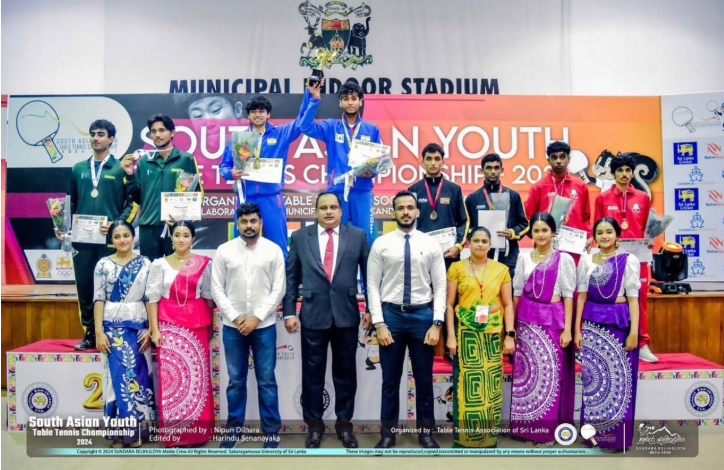
The bullying of 18‑year‑old table tennis player Umyr Mohamed Muizzu is more than a moment of online cruelty. It is a test of whether the Maldives — and the global platforms that shape its public life — are willing to protect the young from becoming collateral in adult political battles.
Maldivians are not asking for censorship; they are asking for fairness. Every major social network — from those headquartered in the United Kingdom to the tech giants based in the United States — claims to prohibit targeted harassment, coordinated attacks, and the bullying of minors. Yet when these abuses unfold in real time, the platforms that profit from Maldivian users too often look away.
And there is a deeper irony that does not go unnoticed in the islands: many of the very countries that regulate, influence, and profit from these platforms — and that routinely arrive in Malé to lecture on democracy, free expression, and civic responsibility — preside over online ecosystems where harassment is tolerated as the price of engagement. Their embassies and high commissions sit only a short walk from the young people who bear the brunt of these digital pile ons, yet in moments like this they remain spectators, watching a teenager weather abuse on platforms headquartered in their own capitals.
If these nations expect small democracies to uphold the highest standards of political conduct, then the platforms they host must meet those same standards. They cannot preach democratic values in the morning and allow their digital spaces to become arenas for unchecked bullying by night. Protecting the young — especially those who never sought political visibility — is not an optional courtesy. It is a basic obligation of any system that claims to value fairness.
Online platforms must enforce their own rules with consistency and urgency. They must recognise context: in a small island nation, online hostility spreads faster, hits harder, and leaves deeper marks. A single post can ricochet through the community within minutes. When a teenager becomes the focus of disproportionate scrutiny, platforms have a duty to intervene — not as a political act, but as a moral one.
The Maldives cannot be treated as a scaled‑down version of a continent‑sized democracy. The social consequences are sharper, the distances shorter, and the harm more immediate. A hostile comment in a country of millions is noise; in a country of half a million, it is a blow that lands directly.
This moment is not about shielding the powerful. It is about safeguarding the young.
Umyr is not a policymaker or a strategist. He is an 18‑year‑old athlete whose nomination reflects hours of training, discipline, and quiet ambition. To turn his achievements into a political battleground sends a bleak message: that the Maldives cannot celebrate its own children without first sorting them into partisan categories.
A nation that values respect, dignity, and the promise of youth must do better. It must recognise that the young deserve encouragement, not hostility; protection, not bullying.
Fairness is not merely a technical standard — it is a cultural one. And in the Maldives, where every young talent matters, it is a principle worth defending.
One can only hope that the “listening posts” in the UK High Commission and the US Embassy — the political officers who cable their capitals with assessments of Maldivian democracy — are paying attention to what this moment truly reveals: that protecting a child from bullying is not politics, but basic decency.
A Young Athlete Caught in the Crosswinds of a Nation Still Learning Political Maturity