News Desk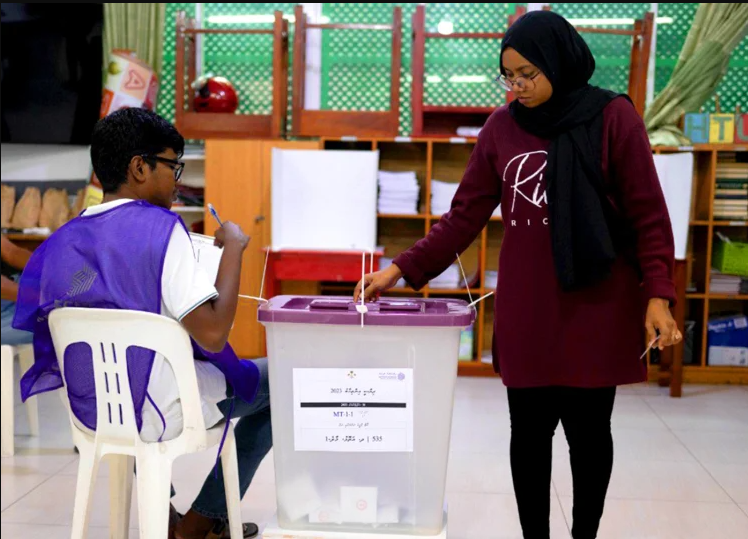
A broadening group of senior legal figures, former ministers and constitutional experts say the Maldives should move toward holding the presidential and parliamentary elections on the same day, arguing that synchronising the two polls would strengthen political stability, improve accountability and reduce the turbulence that has defined recent administrations.
The discussion, hosted at a Policy MV forum titled Policy Special, brought together former attorneys generals, former ministers and former lawmakers. While their perspectives differed on some details, a clear thread ran through the evening: the current system of staggered elections has produced instability, weakened institutions and left governments struggling to govern effectively.
Former Attorney General Azima Shakoor said the Maldives must confront the reality that the present election cycle keeps the country in a constant state of political agitation. She noted that since the 2008 Constitution came into force, no president has secured a second term, a pattern she believes is linked to the repeated electoral cycles that interrupt governance.
“Holding three elections in five years is a burden on the people and on national development,” she said. “This is not only about cost. It is about the political turmoil that comes from always being in election mode.”
Azima said fewer elections would not weaken democracy. Instead, she argued, synchronising the two main elections would give the country the stability needed to manage foreign policy, debt and long‑term planning. “The fewer the elections, the greater the stability,” she said.
Former Attorney General Fathimath Dhiyana Saeed supported the move, saying the Maldives has repeatedly seen how supermajorities in parliament weaken the separation of powers. She said former presidents and former attorneys general have backed synchronising the elections, including former President Ibrahim Mohamed Solih in 2020 and former President Mohamed Nasheed last month.
Dhiyana said holding the two elections on the same day gives voters a better chance of electing a parliament capable of holding the government accountable. “We have had supermajority parliaments for two terms and now again. What happens is that accountability weakens. The government and parliament become too closely aligned,” she said.
She pointed to the rapid pace of constitutional amendments and changes to the Supreme Court bench as evidence of the imbalance. “The Constitution has been amended seven times and the Supreme Court bench changed five times in just 18 years,” she said. “A combined election increases the likelihood of a more balanced parliament.”
Former Economic Minister and former Ambassador to India Ahmed Mohamed, known as Andey, said the financial argument against synchronising elections is overstated. The two elections held in 2023 cost MVR 147 million, which he described as a small figure compared to the national budget. He said 72 percent of election spending goes to administrative operations and staffing, costs that would not fall even if the elections were held together.
“Economically, this would save only a fraction of the total cost,” he said. But he added that the real value of synchronising elections lies in reducing political disruption and creating a more predictable environment for governance. He warned against rushing constitutional changes without proper study, but said the debate should focus on long‑term national interest rather than short‑term political advantage.
Former Kendhoo MP and lawyer Ali Hussain offered a different view, saying staggered elections give the public an opportunity to reassess the government midway through its term. He argued that giving any government a clear majority in parliament has historically weakened institutional independence. But even as he defended mid‑term parliamentary elections, he acknowledged that the current system has produced repeated supermajorities that have not served the country well.
The forum made clear that the Maldives is at a turning point. The question is no longer whether the current system is flawed. It is whether the country is ready to adopt a model that many constitutional experts say would bring greater stability, clearer accountability and a more balanced distribution of power.
As the nation goes to the ballot box on 4 April, the momentum behind synchronising the two elections is growing.
The argument is increasingly framed not as a political convenience, but as a structural reform aimed at giving the Maldives a more stable and predictable future.