News Desk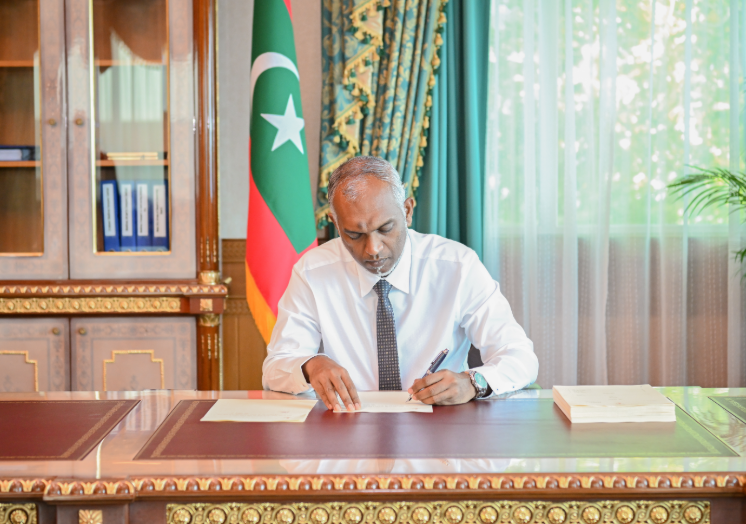
MALE’, Maldives — The Maldives took a decisive step in reshaping the country’s media landscape, as President Dr. Mohamed Muizzu approved the Maldives Media and Broadcasting Regulation Bill, legislation that its backers say will strengthen press freedom while critics warn could deepen government control.
The bill, passed in an extraordinary session of Parliament on Tuesday, September 16, consolidates the patchwork of agencies that had previously overseen the press and broadcasting. The new law dissolves both the Maldives Media Council and the Broadcasting Commission, replacing them with a single Media and Broadcasting Commission. Until a permanent commission is constituted, the body will be run by a five-member ad hoc committee appointed by the Civil Service Commission.
According to a statement from the President’s Office, the law seeks to “promote and develop freedom of the press in the Maldives, prevent the spread of false news, and ensure the responsible exercise of the constitutional rights of journalists.” It also eases registration requirements for newspapers and magazines, a move the government argues brings the regulatory framework in line with the times.
Press freedom has long been a contested terrain in the Maldives, where journalists have faced harassment and, at times, violent attacks. Rights groups have often criticized successive governments for using regulation as a means of restricting coverage, particularly of political corruption and religious extremism.
The law’s stated emphasis on countering “false news” reflects a broader regional trend, as governments across South Asia struggle to regulate online content. But media advocates worry such provisions could provide legal cover for censorship.
The Maldives has in recent years seen its democratic institutions tested amid political polarization and rapid social change. The passage of the bill signals the administration’s effort to recalibrate the rules governing one of its most contentious arenas: the flow of information.