News Desk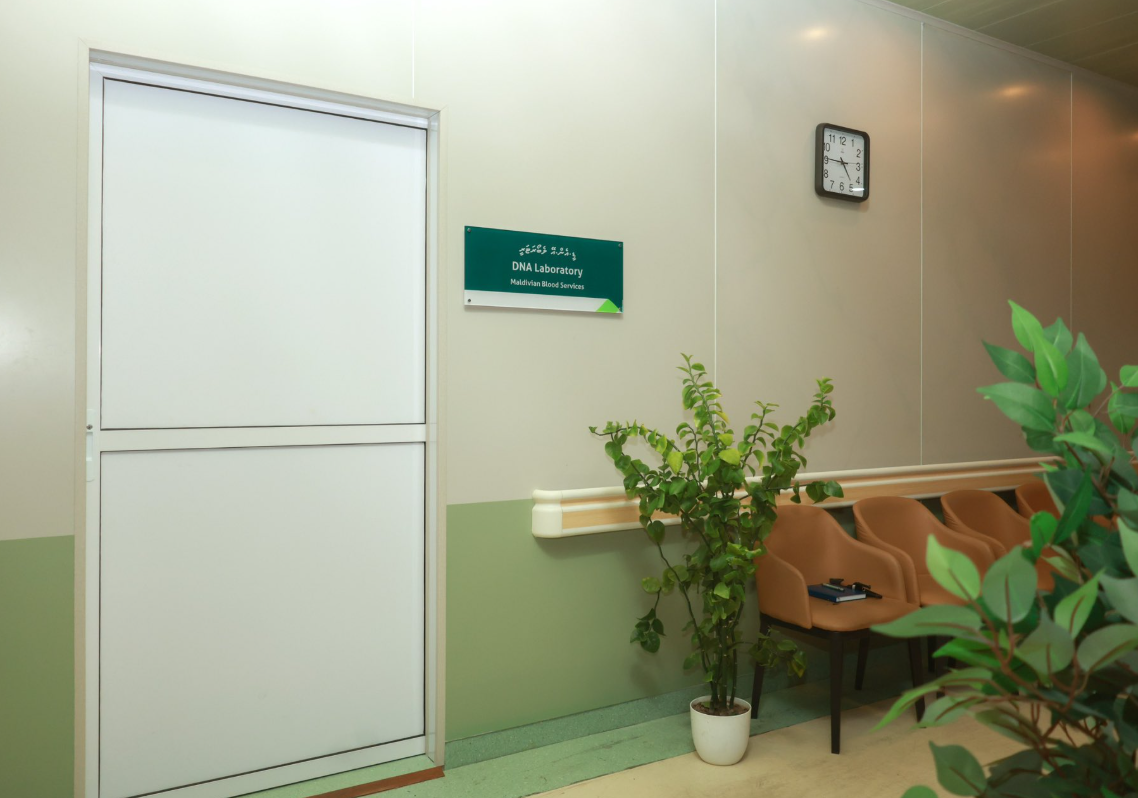
The Maldives has opened its first government‑run molecular laboratory for thalassaemia diagnosis, a development health officials say will significantly expand the country’s capacity to detect and manage blood disorders.
The DNA laboratory, housed within Maldives Blood Services under the Malé City Group of Hospitals, was inaugurated yesterday by Health Minister Abdullah Nazim Ibrahim. The facility was established with 2.5 million rufiyaa from the state budget.
Hospital Chief Executive Ibrahim Abdul Razzaq Halim said the laboratory will be able to identify 27 types of haemoglobin mutations, with results processed in collaboration with partner facilities in the Maldives. He noted that the testing kits have been designed to match the blood disorders most commonly found in the country.
The new laboratory will also allow clinicians to detect mutations that were previously missed in earlier analyses. Officials said the service will support early identification of thalassaemia carriers, including before marriage, and pave the way for the introduction of prenatal diagnostic services.
Until now, DNA testing for thalassaemia in the Maldives was carried out only by a small NGO run laboratory. This marks the first time such services have been established within the government health system.
The Health Minister said the facility represents a major step forward in the country’s treatment of blood disorders, enabling automated testing and expanding the range of diagnostics available domestically. The initiative forms part of the government’s broader commitment to improving care for thalassaemia patients, a priority highlighted in President Muizzu’s Presidential Address to the Majlis on Thursday.
The President noted that the automated DNA analysis laboratory is the first of its kind to operate within a government hospital in the Maldives, capable of detecting mutations across 27 haemoglobin types.
The opening of the laboratory follows a series of expansions at Maldives Blood Services since its relocation to a new building in Hulhumalé. Recent additions include endocrinology, internal medicine and haematology clinics, as well as a dedicated thalassaemia patient care centre. Plans to establish a dedicated Thalassaemia Hospital later this year were reaffirmed in the Presidential Address.