News Desk
DHIHDHOO, Maldives — In a country that has built more airports than any other small island developing state, the start of dredging for the new Dhihdhoo Airport carried a sense of national momentum as much as local anticipation. With twenty airports now stretching across its scattered atolls, the Maldives has created an air network unmatched among island nations, and the latest project pushes that frontier even farther north.
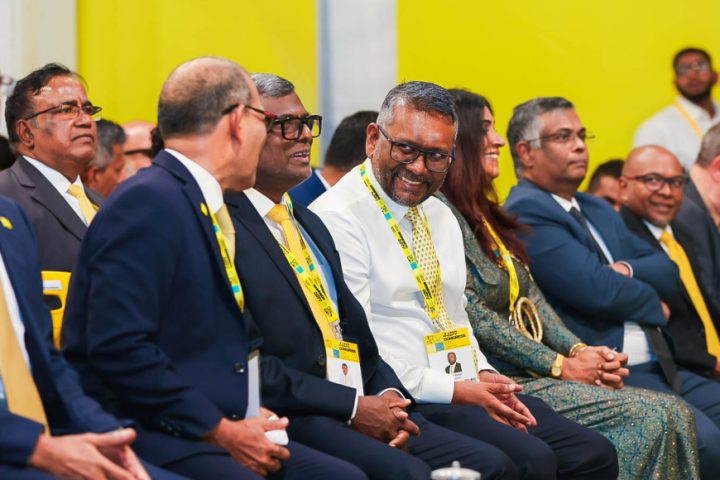
The ceremony, held at dusk on the island, drew residents who had waited through an election cycle for the project to move from pledge to reality. Minister of Finance and Planning Moosa Zameer inaugurated the work, joined by senior MACL officials, local council leaders and members of Parliament.
At the centre of the launch was the arrival of a trailing suction hopper dredger named Leave Ericsson, a vessel MACL describes as one of the most advanced in operation today. With a capacity of 46,000 cubic meters, it is among the largest dredgers in the world. MACL officials said the machine will allow continuous, high volume dredging as the land reclamation effort accelerates.
MACL plans to reclaim 115 hectares of land for the airport, a scale that will more than double the size of Dhihdhoo and ease long standing constraints on housing and public services while creating the footprint for a runway, terminal and coastal protection structures.
President Dr. Mohamed Muizzu visited Dhihdhoo last year and told residents that the airport would anchor the island’s medium and long term development. He reminded the community that the project had been a central promise of his presidential campaign. During that visit he said he expected dredging to begin within the year and that runway and building work would follow at high speed.
As the dredger’s engines rumbled offshore, MACL officials said the work would continue without delay, with major components of the airport scheduled to follow in successive phases. The company has not announced an opening date, but the scale of the machinery and the pace of activity suggest a rapid buildout ahead.
The project comes at a time when the Maldives has reached the highest level of domestic air connectivity in its history. Among small island developing states, the Maldives stands alone in having built an aviation network this extensive and this geographically dispersed. No other island nation of similar size has developed air connectivity on this scale. The Maldives now operates twenty airports across its chain of islands, linking remote communities to the capital and to each other in a way unmatched by any other small island nation.
Five airports handle international flights and fifteen serve domestic routes. The network stretches from Hoarafushi in the far north to Gan in the deep south, covering nearly the entire length of the archipelago.
In the northern region, international service operates from Hanimaadhoo in Haa Dhaalu Atoll and Maafaru in Noonu Atoll. Domestic airports serve Hoarafushi in Haa Alif, Kulhudhuffushi in Haa Dhaalu, Funadhoo in Shaviyani, Ifuru in Raa and Dharavandhoo in Baa.
The central atolls include Velana International Airport in Kaafu, Villa International Airport Maamigili in Alifu Dhaalu and a series of domestic airports in Madivaru in Lhaviyani, Dhaalu in Dhaalu Atoll, Muli in Meemu and Thimarafushi in Thaa.
The southern region is served by Gan International Airport in Addu City and domestic airports in Kadhdhoo in Laamu, Kooddoo in Gaafu Alifu, Kaadedhdhoo, Maavarulu and Faresmaathoda in Gaafu Dhaalu, and Fuvahmulah in Gnaviyani.
For residents of Dhihdhoo, the arrival of the dredger signalled more than the start of a construction project. It marked the beginning of a long awaited shift in how Dhihdhoo connect to the rest of the country, and how the country connects to Dhihdhoo.