News Desk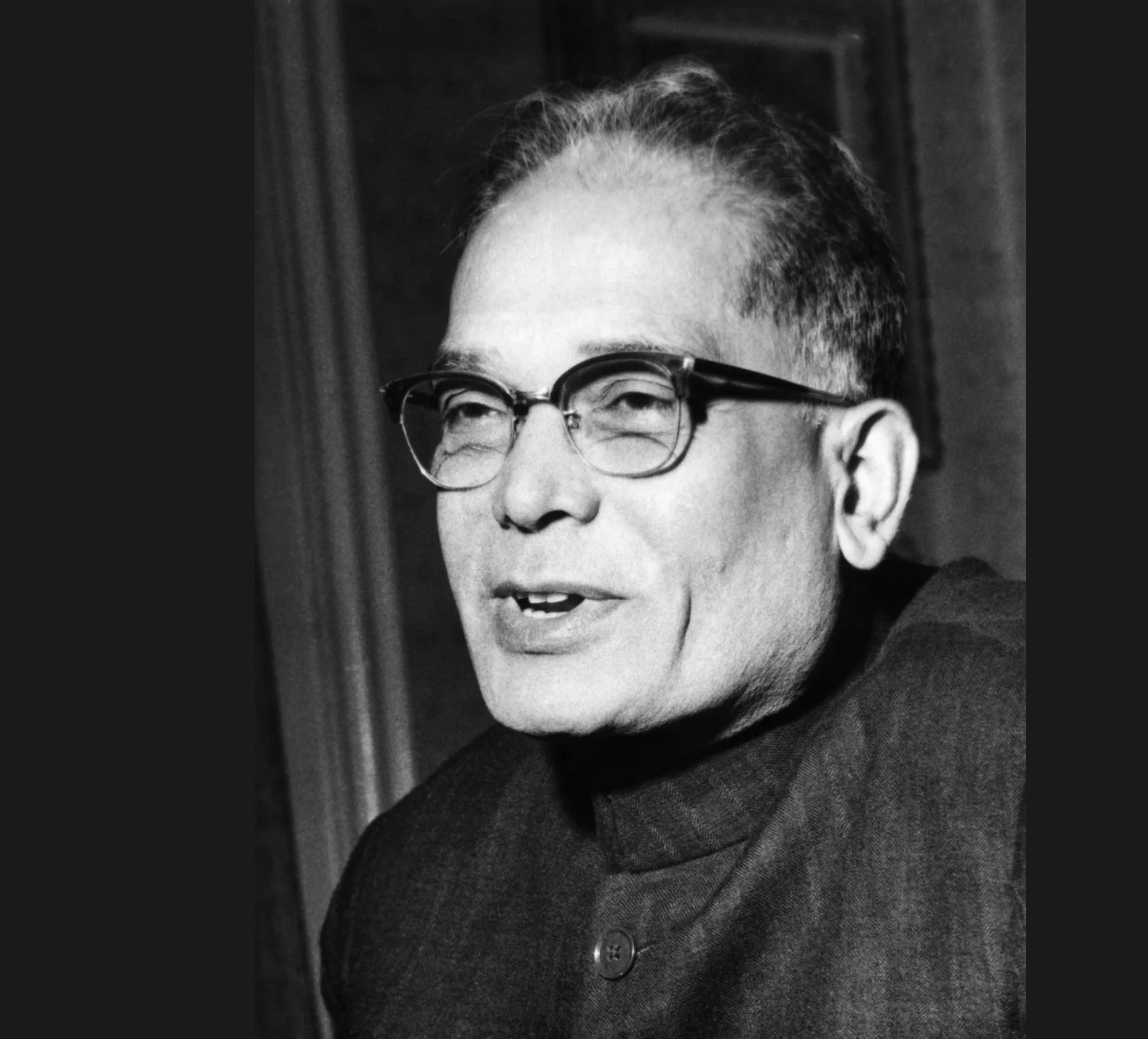
NEW DELHI — In the bustling, sun-baked sprawl of modern India, the name Jayaprakash Narayan—or simply “JP,” as he is etched into the fading memories of the older generation—has become a geographic abstraction. You will find his name woven into the civic tapestry of almost every city in the nation: there are JP Wards, JP Townships, and JP Roads that serve as the arterial veins of urban life. Yet, for the digital-native generation navigating these very streets, the name on the plaque carries no weight. He is a ghost in a country that has largely moved on.
The irony is as stark as it is deliberate. Today, India’s political elite, across an irreconcilably divided spectrum, continue to pay homage to the “Lok Nayak” (People’s Leader). Only this morning, Union Home Minister Amit Shah inaugurated a library in his name, invoking JP’s belief that a nation’s future is measured by the vitality of its libraries. It is a ritual of legitimacy: to claim the mantle of JP is to claim a stake in the moral high ground of Indian democracy. But beneath the wreaths and the high-minded rhetoric lies a decades-long project of political erasure.
To understand the man the establishment has quietly sidelined, one must look back to the mid-1970s. When Prime Minister Indira Gandhi, facing mounting domestic unrest and a court order nullifying her election, declared a nationwide Emergency in 1975, she suspended civil liberties, shuttered the press, and jailed her opposition.
It was JP, an aging, ascetic socialist who had long retreated from active politics, who emerged from the wilderness to provide the moral and organizational gravity for the resistance. His call for a “Sampoorna Kranti” (Total Revolution) was not merely a protest against Gandhi; it was a fundamental challenge to the post-colonial order of dynastic, centralized power. He rallied students, trade unions, and the disparate fragments of India’s opposition into the Janata Party, a unified force that eventually delivered the first non-Congress government in independent India in 1977.
JP’s revolution was not fought with the language of market liberalization or identity politics—the twin pillars of modern Indian discourse—but with the language of conscience. He viewed power not as a prize, but as a public trust that required constant, grassroots vigilance.
The process of sidelining JP was a masterclass in political co-optation. For the politicians who rode his wave into power in the late 70s, JP was a necessary catalyst, but a political liability. Once the Emergency was dismantled, the very individuals he united found his uncompromising idealism inconvenient. They were interested in holding the levers of power; JP was interested in decentralizing them.
Slowly, the man was turned into a monument. By reducing JP to a ceremonial figurehead whose portrait sits on the wall of every municipal office and whose name marks the borders of every township, the political class has effectively neutralized his ideology. When a radical visionary becomes a symbol of official respectability, his actual ideas—decentralized democracy, the moral accountability of the leader, and the sanctity of civil dissent—are safely tucked away in the archives.
This phenomenon is not unique to India. History is littered with figures whose revolutionary fervor was smoothed over by the very establishments they sought to dismantle. Think of the way the radical, anti-war sentiment of Martin Luther King Jr. is often scrubbed from US public memory in favor of a sanitized, “dream-only” version of his life. Or consider the way Nelson Mandela, once labeled a terrorist by the Western establishment, was later canonized as a saint to obscure the radical economic redistribution he initially championed.
Back in Delhi, the inauguration of the new library stands as a testament to this paradox. It is a celebration of a man who once insisted that “the freedom of the press is a sacred trust.” Yet, in an era where the public square is increasingly defined by surveillance, algorithmic echo chambers, and the erosion of institutional accountability, the living spirit of JP’s “Total Revolution” feels distant—perhaps intentionally so.
India’s youth may walk past his name on a street sign or traverse a JP-named road every morning, but they are not taught the grit of his defiance. They are not told that once, a man who possessed no seat in parliament, no party, and no money, was capable of shattering the perceived invincibility of an all-powerful Prime Minister simply by demanding that the government answer to the people.
As the political class continues to curate the memory of Jayaprakash Narayan, they have ensured that he remains in his rightful place: a name on a road, a face on a bust, and a hero in a history book that fewer and fewer people are bothering to read. In doing so, they have honored the man, but they have buried the revolution.