News Desk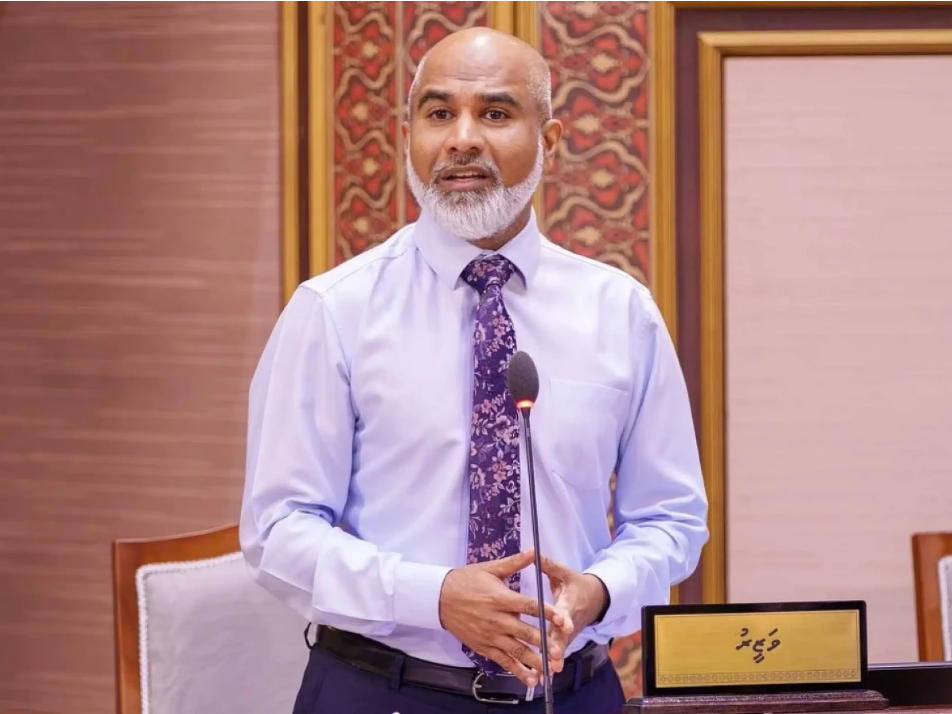
MALE ‘— For thousands of students across the country, the school bell does not signal the end of the academic day; it merely marks the transition to a second, often exhausting, shift.
Following six hours of formal classroom instruction, a significant number of students spend an additional four to six hours in private tuition. This culture of academic over-reliance has now prompted a stern warning from the highest levels of government, with Minister of Education Dr. Ismail Shafeeu calling for an urgent reassessment of the country’s approach to student well-being and learning.
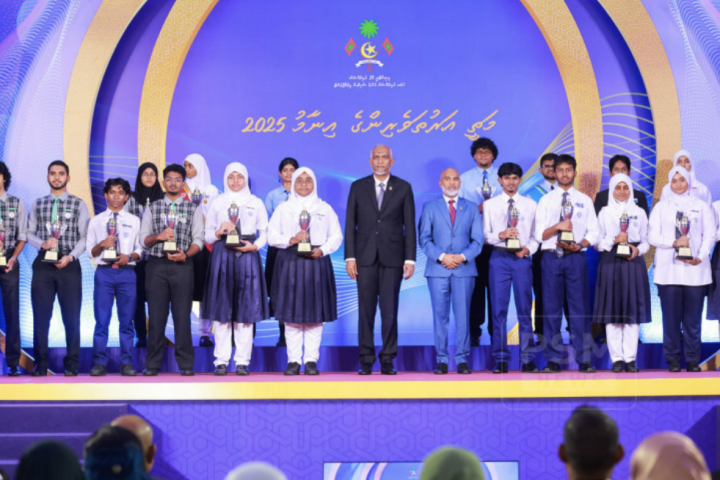
Addressing an audience at the “Top Achievers Award 2025” ceremony this morning, Dr. Shafeeu expressed deep concern over a systemic trend that he argues is detrimental to both the intellectual and mental health of the nation’s youth.
“We take pride in our students’ results, but we must ask ourselves: is this the extent of their potential?” Dr. Shafeeu remarked. “If we work together—students, parents, and educators—we can achieve far more, and do so in a way that is healthier and more sustainable.”
The Minister’s central argument is one of agency. He believes that the current reliance on private tuition stems from a lack of emphasis on autonomous learning. When students are coached excessively, they often become passive recipients of information rather than active explorers of knowledge.
“We must encourage students to take ownership of their education,” the Minister stated. “When a student develops the curiosity to research, think, and engage with their subject matter independently, they develop the cognitive skills necessary for lifelong success. Research shows that students who take responsibility for their own learning retain information at significantly higher rates than those who depend on constant external tutoring.”
The Minister’s critique extends beyond academic methodology to the psychological impact on students. By consuming nearly every waking hour with formal instruction—first at school and then at private classes—children are being deprived of the time necessary for physical activity, social development, and personal interests.
“The culture of tuition has become deeply entrenched,” Dr. Shafeeu observed. “Sending a child to tuition for four to six hours after a full school day is a practice we need to reflect upon. We are neglecting the importance of leisure, sport, and downtime—all of which are essential for a child’s mental and emotional health.”
While acknowledging that some students may require supplementary support, the Minister cautioned that such help should never undermine a student’s engagement in the classroom. He urged parents to prioritise the quality of attention during school hours over the quantity of hours spent in private centres.
The Minister’s remarks serve as a significant challenge to a long-standing norm in the Maldivian education system, where academic success is frequently equated with the number of after-school classes a student attends.
As the Ministry looks toward future curriculum improvements, Dr. Shafeeu’s message is clear: the path to educational excellence in the country must move away from the “tuition trap” and toward a model that fosters self-reliance, critical thinking, and a balanced life. Without such a shift, the Minister warned, the pressure on students will only continue to intensify, potentially at the cost of their long-term well-being.