News Desk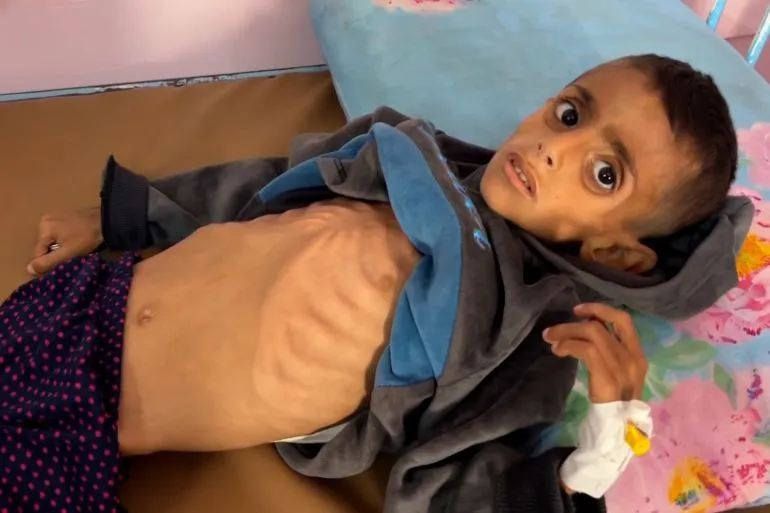
The Gaza Strip, a 25-mile-long enclave home to over two million Palestinians, has become a crucible of human suffering, where the deliberate withholding of aid and relentless military operations have pushed an entire population to the brink of annihilation. The world watches, with growing outrage, as starvation is weaponized, and the term “genocide” gains traction in global discourse.
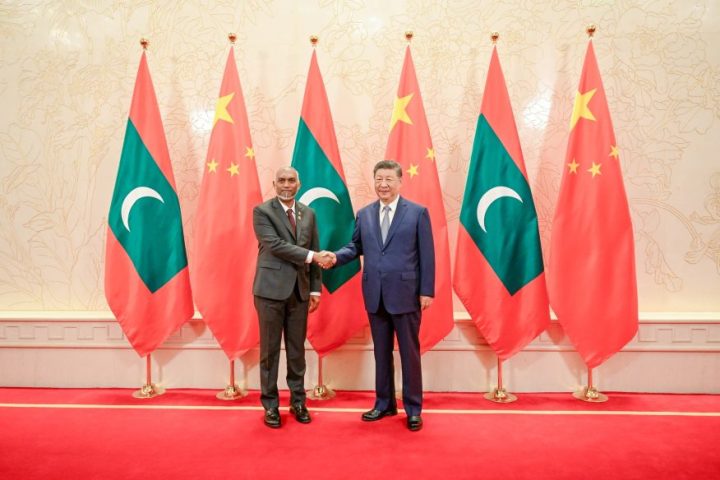
The international community—led by voices from the United States, Canada, France, and the European Union—has begun to shift its stance, condemning Israel’s actions while grappling with the moral weight of inaction. Meanwhile, leaders like the president of the Maldives have not minced words, labeling the crisis a genocide, a charge that resonates with a world increasingly sickened by the images of emaciated children and crumbling infrastructure.
The notion that some souls are “precious” while others are deemed expendable lies at the heart of this crisis. In Gaza, the Palestinian population faces a deliberate siege that has blocked food, water, and medical supplies for months, a policy that the United Nations and human rights organizations have called a war crime and a hallmark of genocide.
The blockade, reimposed by Israel in March 2025 after a brief ceasefire, has left charity kitchens on the verge of collapse and families surviving on a single meal a day. Sewage, disease, and toxic pollution compound the misery, with over 25,000 tons of explosives dropped on Gaza by early 2024, equivalent to two nuclear bombs, decimating water and sanitation systems.
The UN Special Committee to Investigate Israeli Practices has stated that Israel’s actions—targeted attacks on civilians, obstruction of aid, and starvation policies—are “consistent with the characteristics of genocide.”
Why are some souls deemed more “precious” than others? The answer lies in a complex interplay of geopolitics, historical narratives, and selective empathy.
Western nations, historically aligned with Israel, have long framed its actions as self-defense against terrorism, particularly following Hamas’s attacks on October 7, 2023. Yet, as the death toll in Gaza surpasses 50,000, with thousands more buried under rubble, the narrative is shifting. The indiscriminate bombing of schools, hospitals, and mosques, coupled with the starvation of civilians, has eroded the moral legitimacy of Israel’s campaign.
Francesca Albanese, the UN Special Rapporteur on the occupied Palestinian territories, has argued that Israel’s siege deliberately imposes “conditions of life calculated to bring about [Palestinians’] physical destruction,” a genocidal act under international law.
The United States, Canada, and France—longtime supporters of Israel—have begun to recalibrate their positions. On May 19, 2025, the leaders of these three nations issued a joint statement condemning Israel’s “wholly disproportionate” military escalation in Gaza and its blockade of humanitarian aid, which they called “egregious.” They demanded an immediate ceasefire, the release of hostages by Hamas, and unrestricted aid access, warning of “concrete actions,” including potential sanctions. This marks a dramatic shift from their earlier unequivocal support for Israel’s right to self-defense. The statement also criticized Israel’s expansion of settlements in the West Bank as illegal, signaling a broader rejection of policies that entrench occupation.
The European Union, Israel’s largest trade partner, is also taking steps to hold Israel accountable. European foreign ministers, led by the Netherlands and supported by France, are considering suspending the EU-Israel trade cooperation agreement, a move that could have significant economic repercussions. This follows reports of over 760 NGOs worldwide petitioning for an end to the siege on Gaza, reflecting a groundswell of global civil society pressure. The EU’s potential action is not merely symbolic; it underscores a growing recognition that economic leverage may be necessary to compel Israel to comply with international humanitarian law.
The Maldives, a small but vocal player on the global stage, has taken an uncompromising stance. Its Foreign Ministry has described Israel’s actions as “deliberate acts of aggression against the innocent civilian population of Palestine,” tantamount to war crimes and genocide. This echoes the sentiments of other Muslim-majority nations and aligns with the UN’s increasing willingness to use the term “genocide” in official reports. The Maldives’ statement reflects a broader frustration in the Global South, where Israel’s actions are seen as a continuation of colonial-era impunity, enabled by Western powers.
The U.S. administration, under President Donald Trump, has expressed frustration with the Gaza crisis, though its response remains conflicted. Trump has voiced a desire for the war to end, hostages to be released, and aid to flow, citing Gaza as a roadblock to Middle East prosperity. Yet, his administration has also suppressed pro-Palestinian voices domestically, with Trump labeling university protests as “anti-Semitic” and threatening deportations for foreign students critical of Israel. This duality—public concern for Gaza’s humanitarian crisis paired with unwavering support for Israel’s security—highlights the delicate balance the U.S. treads.
The world’s growing exhaustion with Israel’s starvation tactics is palpable. A Gallup poll indicates that U.S. support for Israel has plummeted to a 25-year low, with a majority of Americans now holding negative views of the nation. Social media has amplified images of Gaza’s devastation, making it impossible to ignore the human toll. From France’s Emmanuel Macron, who has called the suffering “unacceptable,” to the UK’s Keir Starmer and Canada’s Mark Carney, who have threatened sanctions, the international community is signaling that the status quo cannot persist.
Yet, the question remains: why do some souls—those of Palestinian children, teachers, and aid workers—seem less “precious” to the global order? The answer lies in a system that prioritizes strategic alliances over universal human rights. Israel’s military campaign, justified as targeting Hamas, has instead obliterated civilian infrastructure and imposed collective punishment, a war crime under international law. The UN’s Tom Fletcher has warned that “not a single civilian in Gaza has been spared,” a sentiment echoed by Amnesty International, which describes the siege as a “genocidal act.”
As the world grapples with this moral failing, the path forward requires more than statements of condemnation. The International Court of Justice has issued binding orders for Israel to allow humanitarian aid and halt military operations in Rafah, yet compliance remains elusive. The UN General Assembly has set a deadline of September 17, 2025, for Israel to end its occupation, a demand that carries the weight of international consensus but lacks enforcement.
The crisis in Gaza is a test of humanity’s commitment to justice. The world is sick of starvation, sick of double standards, and sick of watching precious souls perish under the rubble of indifference. As the Maldives’ president Dr. Muizzu and others have declared, this is not just a humanitarian crisis—it is a genocide, one that demands immediate action to restore dignity to a people long denied it. The question is whether the international community, led by the U.S., Canada, France, and the EU, will rise to the challenge or continue to let geopolitics dictate which lives are deemed worthy of saving.