News Desk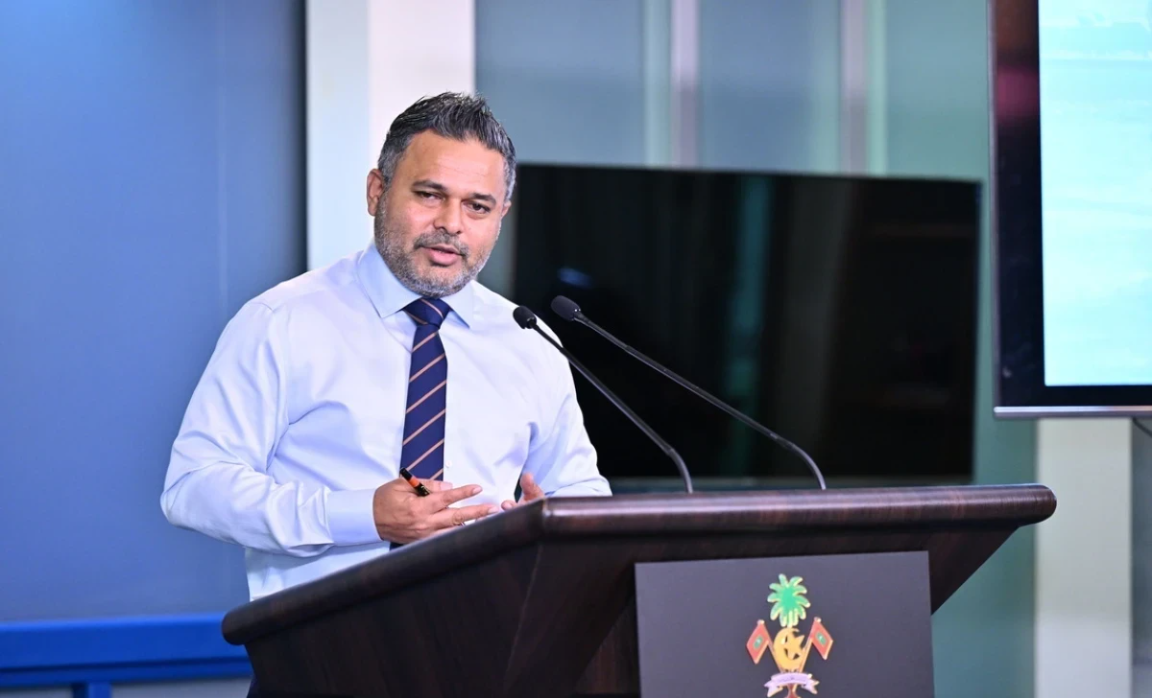
MALÉ, — In a country where the economy rises and falls on the back of the daily catch, the availability of ice is not merely a matter of convenience; it is a matter of survival. Yet, for years, local fishers have found themselves facing a crippling shortage of cold storage precisely when the oceans are at their most bountiful.
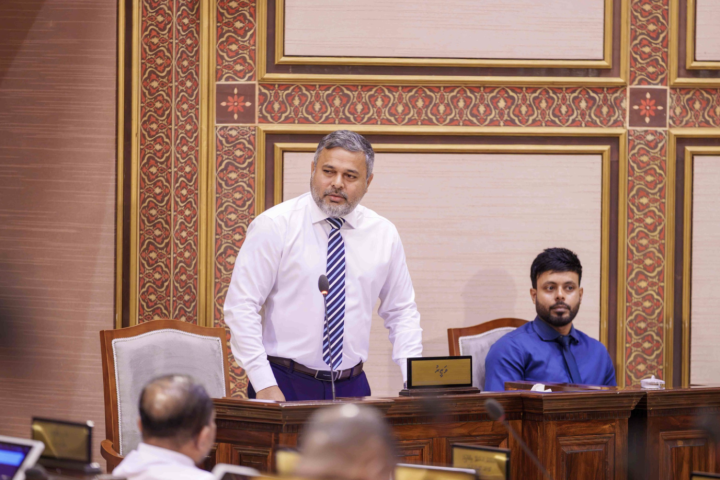
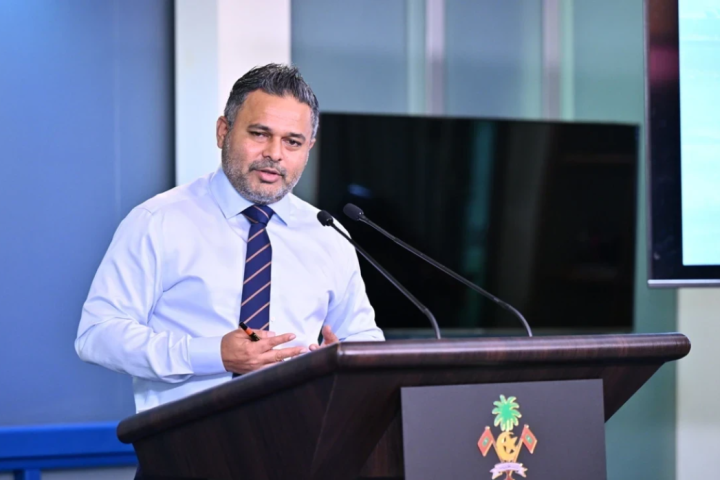
Addressing The Majlis, the Minister of Fisheries, Agriculture and Marine Resources, Ahmed Shiyam, delivered a scathing assessment of the previous administration’s management of this vital resource, whilst mapping out a major infrastructure drive to resolve the crisis.
Responding to a query from Kendhoo MP Mauroor Zakir (MDP) regarding a stalled ice plant project on the island of Kudarikilu, Shiyam did not mince his words. He described the former Maldivian Democratic Party (MDP) government’s decision to strip the Maldives Industrial Fisheries Company (MIFCO) of its ice plants and hand them over to state utility company Fenaka as “a catastrophe” for the fishing community.
According to the Minister, Fenaka lacked the technical expertise and engineering capacity to run the facilities. As a consequence of this administrative reshuffle, Shiyam claimed, less than half of the country’s state-run ice plants were operational by the time the current administration took office.
The shortage of ice, combined with severely limited regional cold storage and processing capacity, has long prevented fishers from securing fair market prices during peak seasons. Without adequate refrigeration, catch quality deteriorates rapidly, forcing crews to dump fish or sell them at a loss.
“The manifesto of President Dr Mohamed Muizzu offers a permanent solution to these three critical bottlenecks—ice, cold storage, and processing capacity—and we are actively executing it,” Shiyam told parliament.
The Minister detailed the current scale of the operation, noting that there are 74 land-based ice plants across the Maldives, with MIFCO directly managing 27 of them. Paradoxically, MIFCO’s internal data shows that average annual capacity utilization at these land-based plants hovers at just 10 to 12 percent, with demand steadily declining.
This decline is partly by design. The government’s long-term strategy focuses heavily on installing Refrigerated Seawater (RSW) cooling systems directly onto fishing vessels, allowing crews to preserve their catch at sea without relying on land-based ice.
However, Shiyam conceded that land-based ice plants cannot be phased out entirely, citing the rapid growth of the local reef-fishing sector, which still relies heavily on traditional ice blocks.
Turning to local concerns, the Minister assured Majlis that physical work on the promised five-tonne ice plant in Baa Kudarikilu would commence within the next fortnight, with the facility expected to be fully operational within six months.
Shiyam also highlighted that nine additional ice plants are currently in various stages of development across the archipelago, including facilities in Naifaru, Komandoo, and Kulhudhuffushi. Furthermore, tenders have been issued for five plants funded by the Saudi Fund for Development, alongside government-funded installations slated for Gaafu Alifu Atoll.
Should the ministry hit its targets for the year, the government hopes that the seasonal scramble for ice—and the political finger-pointing that invariably accompanies it—may finally be put on ice.