News Desk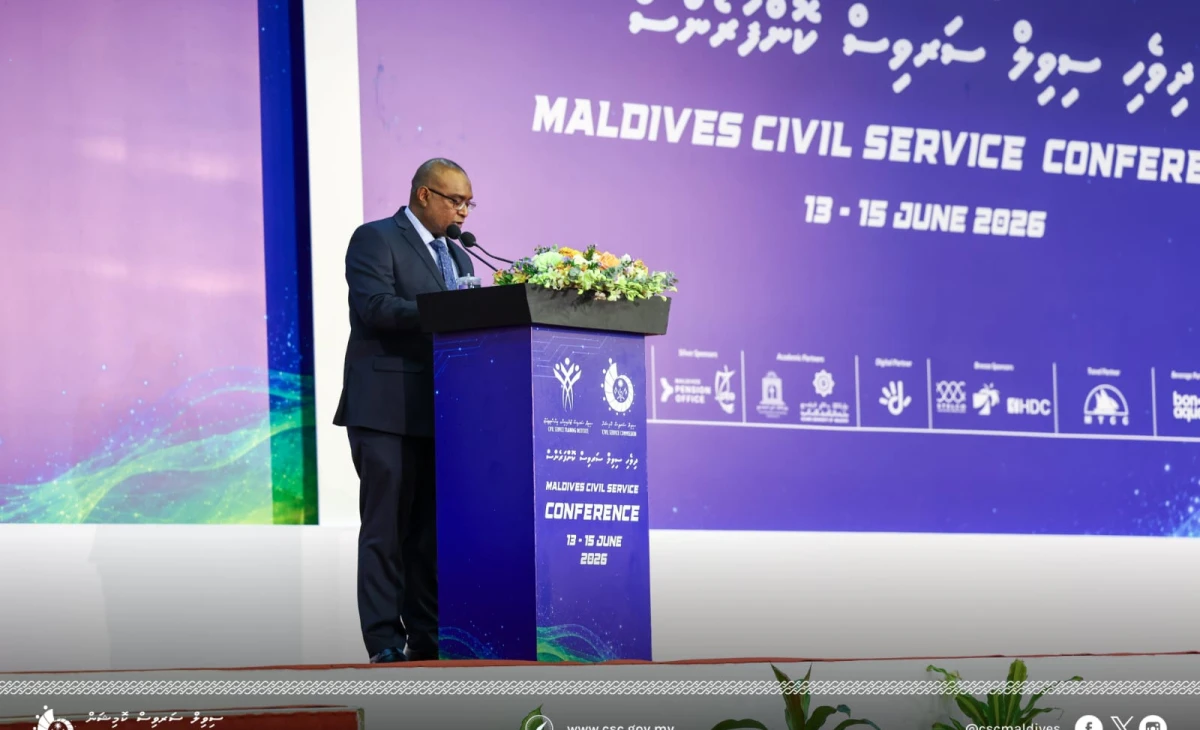
MALE’ — Education Minister Dr Ismail Shafeeu opened the biennial Civil Service Conference on Saturday with a pointed message: the civil service itself is the single most powerful force against corruption in the Maldives, and the responsibility sits with every staff member who shows up to work.
“The greatest contribution to making the Maldives free from the plague of corruption can be made by you, the civil servants,” Shafeeu said. “If administrative corruption is eliminated with speed and professionalism, our offices will become places that are trustworthy with public funds and deliver the service those funds deserve.”
He argued that financial corruption cannot take hold without administrative corruption enabling it first, and that civil servants who do their jobs properly and on time are the front line against both. He warned that slow service erodes public trust and said turning up to work regularly was a basic requirement, not an optional one. He tied the push to President Muizzu’s Maldives 2.0 initiative, which he described as a government-wide effort to build a system free of corruption.
Civil Service Commission president Mohamed Mujtaz, also speaking at the opening, acknowledged that the institution has not yet delivered what the public expects, despite annual performance reviews being in place for years. Complaints about slow service, unanswered phones and inattentive staff continue to arrive, he said.
“The tragedy is that we have not been able to work to the standard the public expects of civil service,” Mujtaz said. “We need to find ways to raise the quality of service our staff provide. This requires research.”
He said staff in the atolls should be able to work at the same pace and with the same tools as those in Male’ offices, and that bureaucratic delays between agencies need to be cut entirely.
The conference, held every two years since 2014, is in its fifth edition this year. It runs through Monday. A civil service action plan covering 2026 to 2030 was launched at the opening. Around 300 participants attended, drawn from government ministries, state-owned enterprises, and city and island councils. Eighteen research papers covering eight areas were presented, including governance reform, digital service delivery, workplace safety and modernising public administration.
Photo credit: Civil Service Commission