News Desk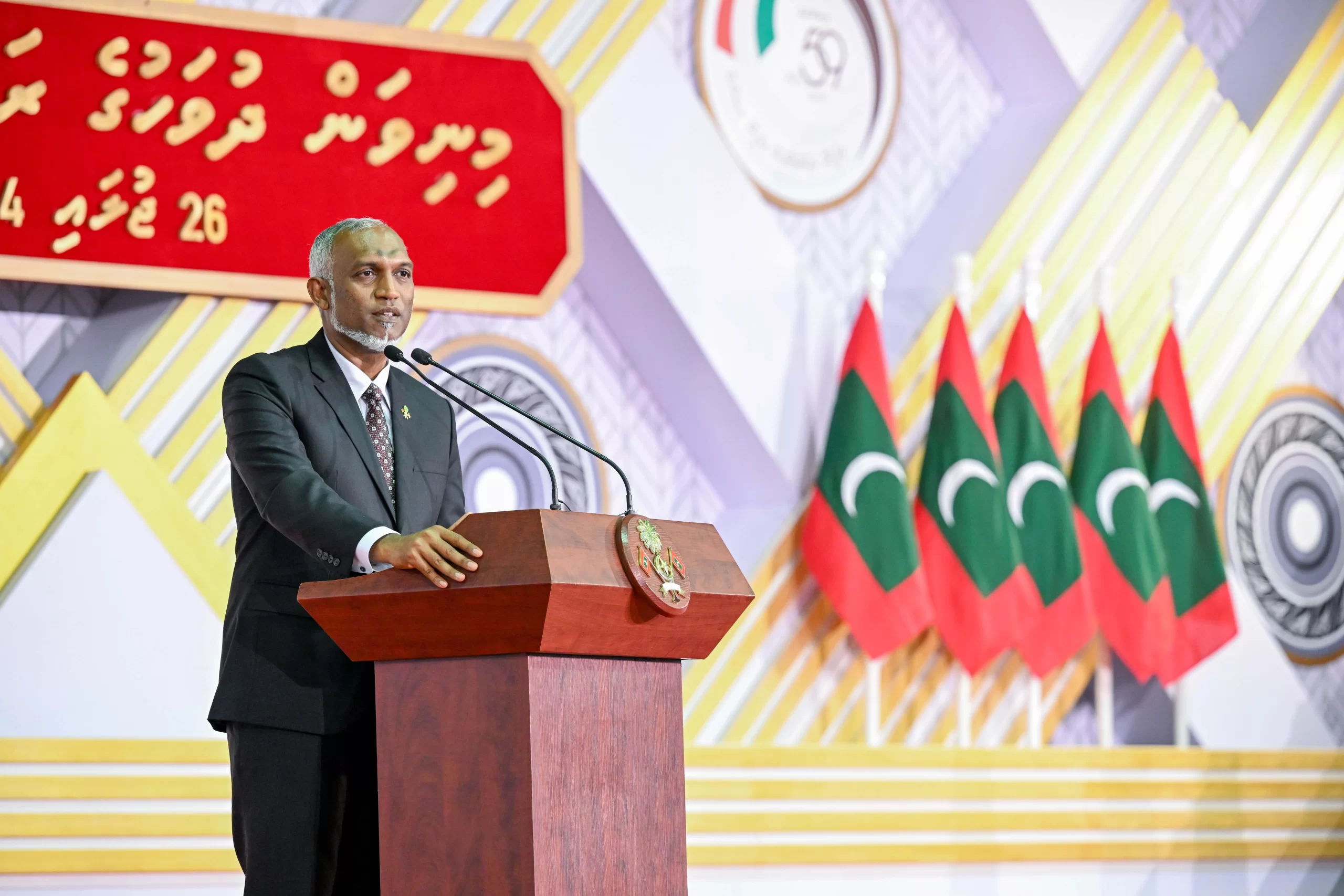
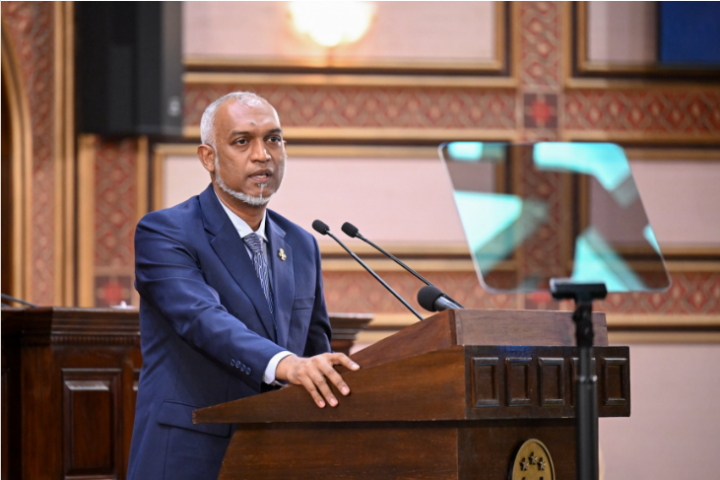
MALE’, – President Dr Mohamed Muizzu has firmly rejected the growing agitation for a radical change in the Maldives’ governance system, arguing that the public has no appetite for the structural upheaval proposed by the opposition.
In the latest episode of the state-run Nation Chat podcast, President Muizzu addressed the “Major Change” campaign spearheaded by Mohamed Nasheed, the former President and current Chairperson of the Maldivian Democratic Party (MDP). The MDP has gone as far as establishing a dedicated office to advocate for a transition away from the current presidential model, proposing a suite of five fundamental reforms to the state’s executive architecture.
President Muizzu took issue with the characterisation of the Maldivian system as a pure presidential model. Instead, he described the existing framework as a “hybrid system”-one that fuses the decisive executive power of a presidency with the checks and balances traditionally associated with parliamentary governance.
“The system we have is balanced by design,” President Muizzu remarked. He pointed to the instability often observed in nations that strictly adhere to parliamentary models, suggesting that the Maldivian electorate is acutely aware of the potential for such volatility to undermine national unity.
The President’s core argument rests on the preservation of the Maldives’ cultural and national homogeneity. He emphasised that the Maldives is a unitary state defined by a singular faith, language, and lineage-a unity he believes would be jeopardised by a shift in political structure.
“We are a people of one faith, one language, and one identity,” President Muizzu said. “I do not believe the public has any desire for a system that would alter this cohesion. They want these unique characteristics preserved, not experimented with.”
While acknowledging that some citizens might support such reforms out of loyalty to specific political leaders, he questioned whether these calls for change were rooted in the objective best interests of the country. “Supporters of a party leader may back a change simply because their leader dictates it, without necessarily examining whether it is the right path for the nation,” he added.
The reforms championed by Nasheed and his ally, Fayyaz Ismail, aim to fundamentally dismantle the current executive structure. Their proposal includes:
- Separation of Powers: Creating two distinct roles for the Head of State and the Head of Government.
- Accountability: Establishing a mechanism where the Head of Government is directly accountable to the People’s Majlis.
- Indirect Presidency: Redefining the President as an official elected by an electoral college comprising members of Parliament and local councils, rather than by a direct national mandate.
The President’s rebuttal highlights a deepening ideological rift as the country approaches a new electoral cycle. While the MDP portrays its “Major Change” as a necessary evolution to ensure transparency and accountability, President Muizzu’s administration frames it as a dangerous distraction that threatens the stability of a nation that has spent nearly two decades navigating its transition to democracy.
As the government continues its push to consolidate the current system, the MDP’s push for a parliamentary-inspired reform remains the most significant challenge to the political status quo, setting the stage for a protracted debate over the future of the Maldivian state.