News Desk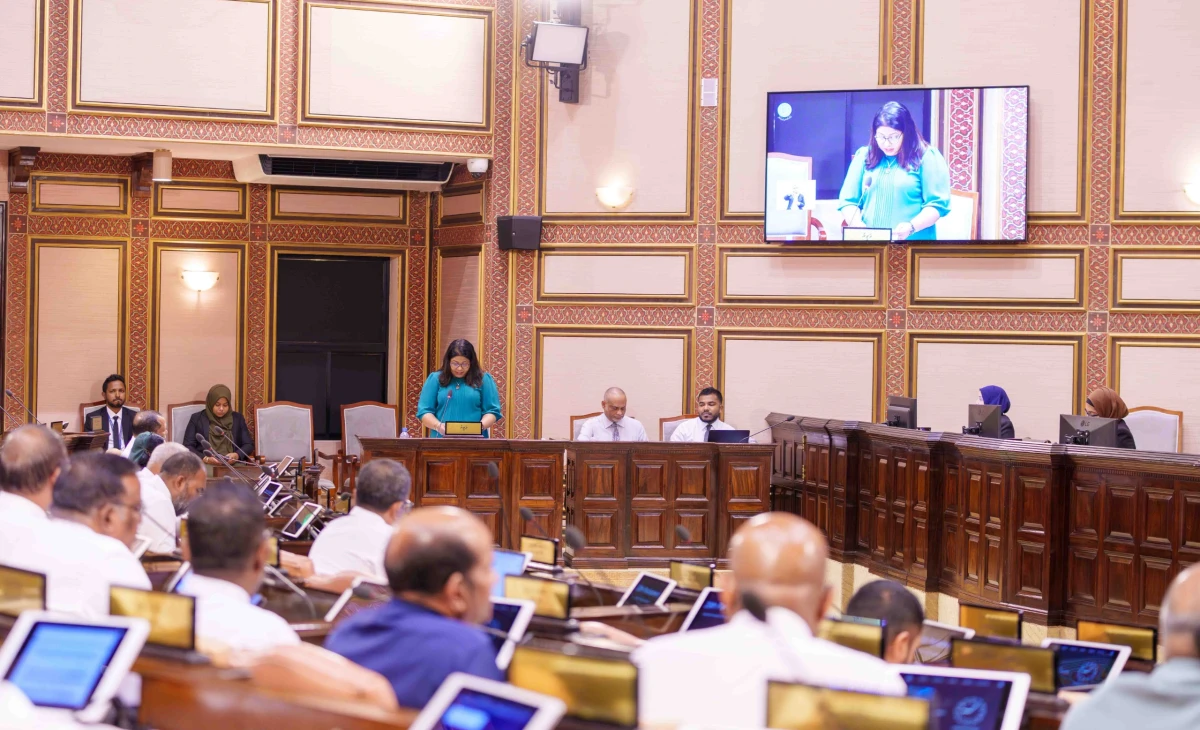
MALE’ — In a significant expansion of regional healthcare, the government has introduced mammography services across seven hospitals nationwide, with plans underway to establish the service in all remaining atoll hospitals.
The Minister of Health, Geela Ali, announced the expansion during a parliamentary session on Wednesday, responding to questions regarding decentralised medical care from North Galolhu MP Mohamed Ibrahim.
According to Minister Geela, breast cancer screening is now operational within the Malé region, across five regional hospitals, as well as at Fuvahmulah Hospital and the Baa Atoll Hospital. To date, 750 patients have utilised the localised screening facilities. The ministry is currently working to install mammography equipment in Shaviyani, Haa Alifu, and Gaafu Alifu atoll hospitals as part of a blanket policy to cover the entire archipelago. Government plans are also in motion to roll out cervical cancer screening tests to all atolls.
The shift reflects a broader, long-term strategy to reduce the state’s heavy financial reliance on sending citizens abroad for critical treatments under the Aasandha state health insurance scheme.
“This work is currently underway,” Minister Geela told the People’s Majlis, noting that cancer chemotherapy is increasingly becoming an entirely domestic option.
In 2025, only 39 Maldivian patients travelled abroad specifically for chemotherapy, while hundreds were treated locally. Indira Gandhi Memorial Hospital (IGMH) and Hulhumalé Hospital maintain a combined nine-bed capacity designated for chemotherapy, with Hulhumalé Hospital alone treating 655 cancer patients in 2025. Similar chemotherapy setups have been established in hospitals across Haa Dhaalu, Addu, Lhaviyani, Raa, and Gaafu Dhaalu atolls, alongside provisions in private hospitals.
Hulhumalé Hospital currently operates a five-bed oncology unit, supported by visiting consultants from Amrita Hospital in India who arrive every one to two months to treat patients. The minister stated that this partnership has substantially improved early detection rates, allowing local clinicians to catch malignant cases early and begin immediate intervention.
While the state budget spent on overseas cancer care remains high, Minister Geela defended the expenditure, emphasising that early intervention has saved numerous lives, allowing patients to live healthily at home with their families.
“This is a result far more valuable than the financial cost incurred by the state,” Minister Geela remarked. “The government’s long-term goal, instead of spending heavily overseas, is to establish a dedicated Cancer Hospital in the Maldives, expand services like PET scans, and introduce radiation therapy.”
Radiation therapy remains an ongoing gap; in 2025, 74 Maldivians had to seek the specialised treatment abroad. Preparations to begin physical construction on the new cancer hospital are currently being finalised to relieve the state budget and ensure local access to quality oncology care.
The health minister also addressed the rising tide of cardiovascular diseases, identifying them as the leading cause of mortality in the Maldives, with the number of patients seeking treatment for arterial blockages and heart failure growing daily.
While cardiac patients historically formed a large percentage of those seeking treatment overseas, the minister noted a growing public preference to be treated within the country. The National Cardiac Centre has functioned as the primary domestic hub for heart disease for the past decade, with catheterisation laboratories (cath labs) established across various facilities between 2016 and 2025. Despite the domestic growth, the state still spent upwards of 44 million Maldivian Rufiyaa between 2024 and 2025 alone to facilitate overseas cardiovascular treatment.