News Desk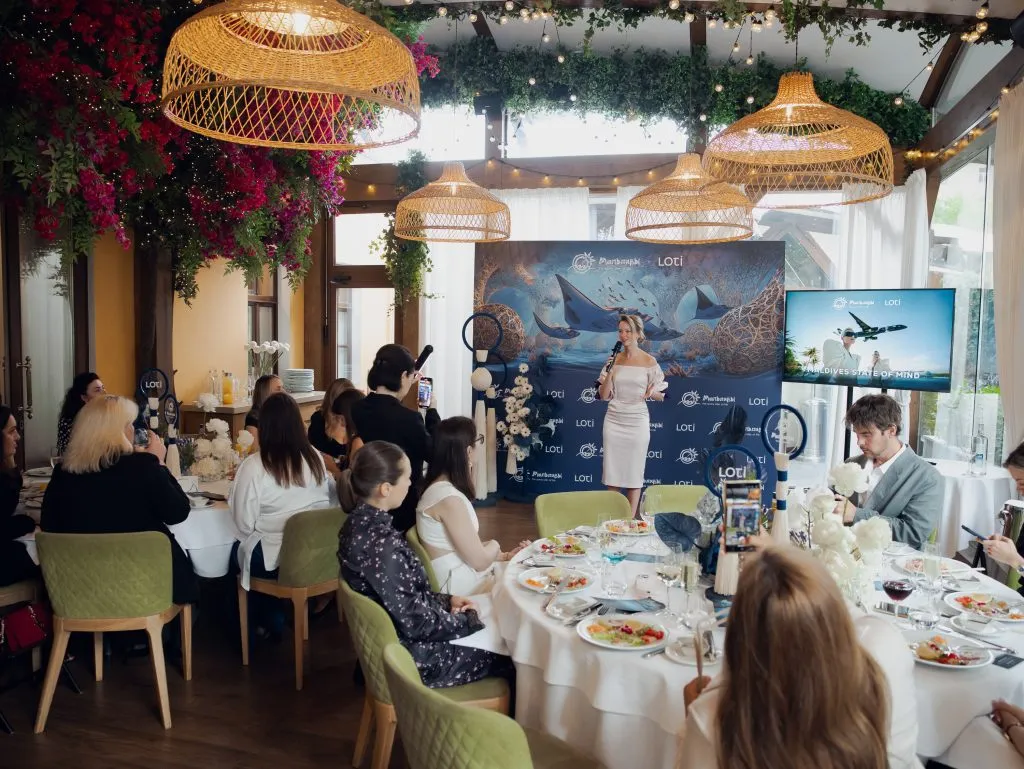
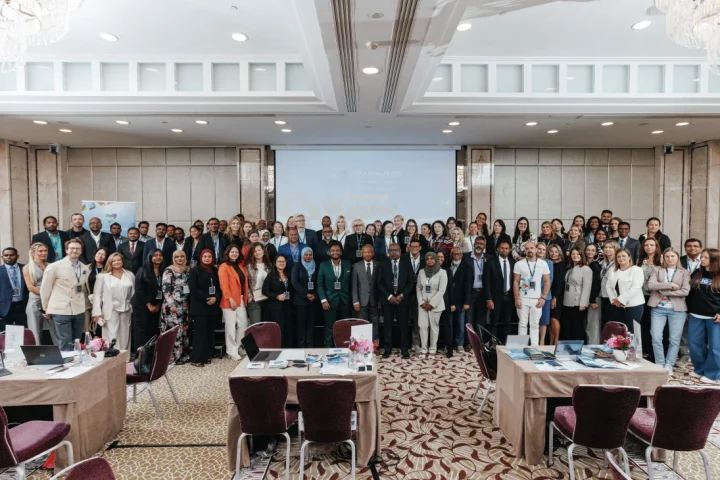
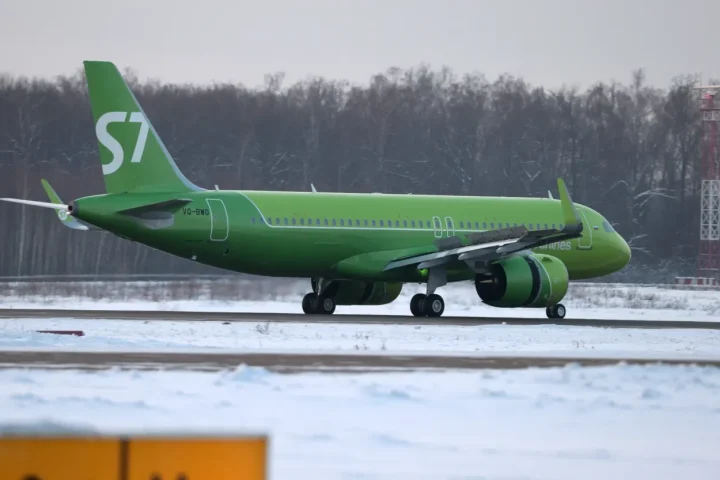
Visit Maldives Corporation just wrapped a glossy networking evening in Moscow with LOTİ, one of Russia’s premier luxury tour operators – fine dining built around Maldivian flavours, talk of record bookings, a 98% seat-load factor on charter flights, demand up threefold year-on-year. By VMC’s own telling, interest from Russia’s “slow travel” elite has never been stronger, and the winter season ahead already has 20% of inventory booked.
It is, by any measure, good news for an economy where tourism is the main engine. Russia is one of our two largest source markets, and Russian visitors are consistently the highest per-night spenders in the industry – averaging close to $15,000 USD per night, well above what most other source markets bring in. If that flow holds or grows, resorts, agents, and the state budget all benefit.
But there’s a second story sitting underneath the marketing copy, and it’s worth asking why it never seems to make it into the press releases.
Maldives and Russia established diplomatic relations on September 14, 1966, almost exactly one year after the Maldives joined the United Nations on September 21, 1965. The Soviet Union – and Russia after it – was never a difficult partner for a small Indian Ocean state to deal with. There was no colonial baggage, no conditionality lectures, no strategic encirclement anxiety. For a country that has had to learn, repeatedly, how exposed small states are to the interests of larger ones, Russia has been an unusually undemanding friend.
Which makes the last decade’s pattern harder to explain away as oversight.
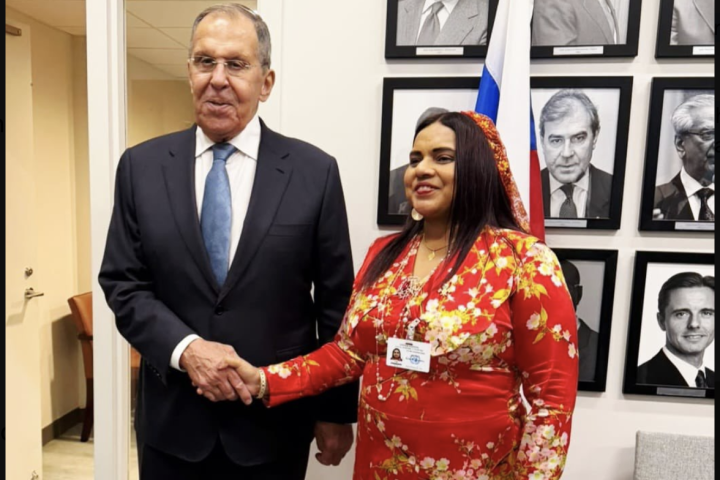
The first official on-record visit by a Maldivian Foreign Minister to Moscow was made by Abdulla Shahid. During his visit, he discussed opening a Maldivian embassy in Moscow, and the Russian Foreign Ministry even assisted in locating appropriate premises for the mission. While the Government of the Maldives gave the official go-ahead for the project, the onset of COVID-19 and subsequent financial constraints ultimately held it back, meaning the embassy never opened. The resident mission that materialised instead went to Ankara, in May 2024 – a new embassy built around trade in essential goods, Turkish investment, and the rising number of Maldivian students and tourists heading to Türkiye. A long-promised seat in Moscow stayed a promise; a newer relationship got the building and the flag.
Russia, for its part, only appointed its first Consul General to Malé in 2026. Russia’s diplomatic interests in Malé were handled at arm’s length, through its embassy in Colombo, while Russian citizens arrived by the planeload with no resident mission to call on.
Maldives has also, at times, struggled to maintain even an honorary consul in Moscow; a single individual, unpaid, meant to be the most basic thread of representation a country can offer. When that person’s term lapsed, no one was in a hurry to find a replacement. It is hard to imagine a clearer signal of where a relationship sits on a foreign ministry’s list of priorities than letting its most minimal diplomatic post simply go vacant.
There is also the less visible texture of how these things play out day to day.
A senior Russian official was, on at least one occasion, received at Velana International Airport with noticeably less courtesy than protocol would suggest-the kind of quiet slight that doesn’t make the news, but certainly doesn’t go unnoticed by the home country, either.
Invitations extended by the Russian Federation to Maldivian ministers have, at times, simply gone unanswered. None of this shows up in a press release. But people in the diplomatic community notice, and after a while, so does the other government.
And then there’s the multilateral record. At the United Nations, Maldives has voted on the resolutions condemning Russia’s actions in Ukraine – most recently alongside the large majority of the General Assembly, but conspicuously apart from regional peers like India, Sri Lanka, Bangladesh, and Pakistan, all of whom abstained. There’s a legitimate principled case for that vote, rooted in small-state solidarity around sovereignty and territorial integrity, and Maldives’ foreign ministry has made that case publicly. But it sits awkwardly next to a tourism strategy that leans hard on the same country’s outbound travellers, and it’s reasonable to ask whether the rest of the relationship – the coldness at the working level, the unfilled posts – reflects a coherent foreign policy choice or simply drift and neglect.
It’s possible to hold both halves of this story at once. The tourism side of the relationship, VMC, the resorts, operators like LOTİ, has done the patient, unglamorous work of building a market over years, and it shows. The diplomatic side has, by comparison, looked underinvested at best and dismissive at worst.
That gap matters because tourism dependency without diplomatic ballast is a fragile arrangement. Markets that feel taken for granted by a host government’s political class don’t always stay markets forever, especially when the host country’s voting record and protocol choices are visible to the sending country’s own diplomats and press.
Russia has not, to date, let any of this visibly affect the flow of visitors or the warmth of its tourism partnerships. That restraint shouldn’t be mistaken for indifference, and it certainly shouldn’t be mistaken for a guarantee.
If Malé wants to keep cashing the dividends of a tourism relationship built over a quarter-century, it might also want to ask whether the diplomatic side of that same relationship – the embassy seats, the appointments, the basic courtesies – has been getting anything like the same attention. Right now, the evidence suggests it hasn’t.
Image via Visit Maldives
An Op-Ed by Levan Dzhagaryan, Russian Ambassador to the Maldives