News Desk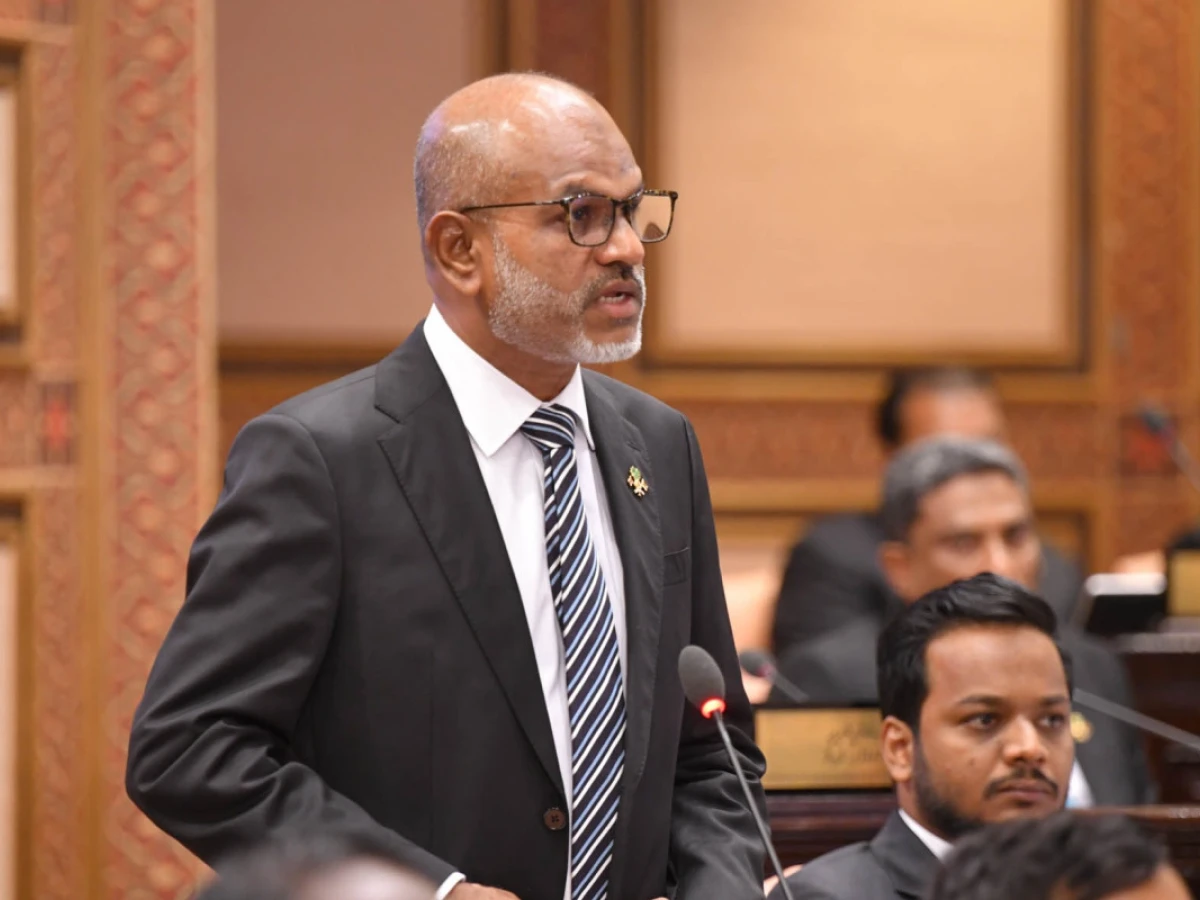
The no-confidence motion against Deputy Speaker Ahmed Nazim is, in procedural terms, straightforward. The PNC has the numbers. The committee meets today. The vote follows. Nazim loses the post. That part is settled.
What happens after is less clear, and more interesting.
The disciplinary question
Removing Nazim from the Deputy Speaker’s post does not automatically remove him from the PNC or from Majlis. Those are separate actions requiring separate decisions. But the language in the resolution matters. The charges are not merely procedural. Abuse of office. Working against the interests of Majlis. Neglecting responsibilities to members. If the party treats these as disciplinary findings rather than simply grounds for a parliamentary motion, the Ethics Committee of the Majlis could examine the matter, and the PNC’s own disciplinary machinery could be set in motion separately.
If the party moves to discipline him formally and ultimately expels him, the Anti-Defection Law becomes relevant. Nazim won his seat as a PNC candidate. A member expelled from the party that fielded them can lose their parliamentary seat under the law. That case would go to court, and whether the law applies retrospectively remains an unsettled legal question, with a case already filed by former MP Ali Hussain on related grounds working its way through the system.
So the ladder of consequences runs: removal from post, then possible party discipline, then possible expulsion, then possible loss of seat. Each step requires a deliberate decision. None of them are automatic.
Family, Loyalty and the Limits of Party Discipline
Here is where it gets personal.
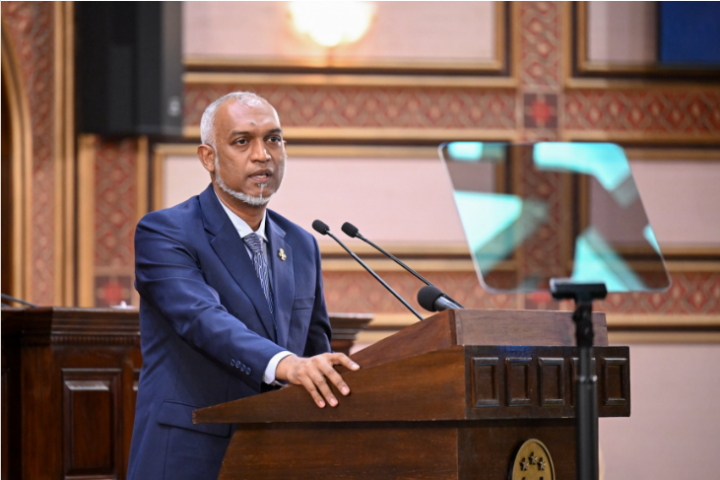
Nazim is not just a PNC member. He is President Mohamed Muizzu’s cousin. More than that, he is the son of President Muizzu’s only uncle, a man to whom the President is said to owe considerable personal and political debt. The relationship is not distant. It is close, and it has history.
And yet President Muizzu administers the PNC parliamentary WhatsApp group from which Nazim was unceremoniously removed. The expulsion from that group, which preceded the formal motion by hours, did not happen without the President’s knowledge. That is not how these things work in Maldivian political culture, and certainly not in a party where President Muizzu’s grip on internal discipline is well established.
This is not the first time in recent months that President Muizzu has moved against people in his own circle. He has taken actions that have affected close family members and political allies who stepped out of line or were perceived to be working at cross purposes to the presidency. The pattern suggests a leader who is willing to absorb the personal cost of internal discipline when he judges it necessary.
The question is whether he will take that same approach all the way with Nazim. Removing him from the Deputy Speaker post is one thing. Expelling him from the party, stripping him of his seat and making an enemy of his only uncle’s son is another order of magnitude entirely.
The wider political cost
President Muizzu is already fighting on several fronts simultaneously. Three former presidents have formed an alliance against his government. Street protests are running in Male’. The tourism sector is under pressure. The reserves have been drawn down significantly by debt repayments. Two parliamentary seat vacancies are either open or approaching. A no-confidence motion against a sitting Deputy Speaker, while manageable arithmetically, adds another contested front.
A leader can absorb multiple conflicts if each one is contained and resolves quickly. What becomes dangerous is when they compound, when internal party fractures align with external opposition pressure and when personal relationships become political liabilities in public view.
President Muizzu has shown a willingness to move hard and fast when he decides to act. That has served him well in some contexts. Whether picking a fight with his own cousin, a seasoned political operator who has spent enough years inside Maldivian politics to know exactly which closets rattle and which skeletons have names, reflects strategic clarity or political overreach is a question his opponents will be asking loudly in the weeks ahead.
For now, watch the 4pm committee meeting. It will set the terms, not the outcome. The real decision comes when the vote is done and the party chief has to decide how far he is willing to go.