News Desk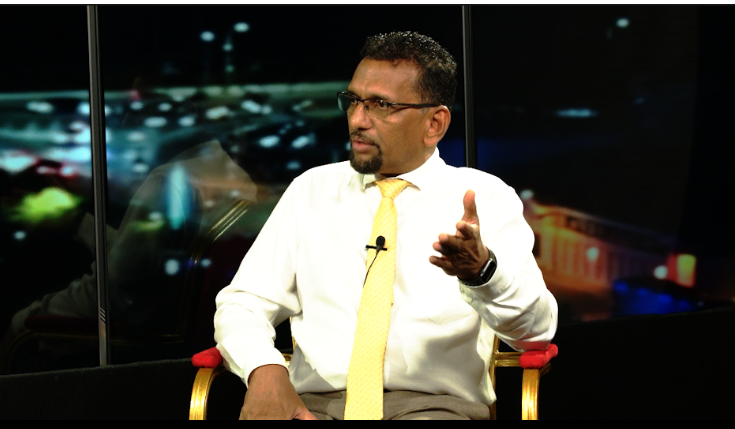
MALE’, – As the current administration approaches its three-year mark, the political battle over housing has intensified. Dr Ibrahim Didi, former President of the Maldivian Democratic Party (MDP), has launched a scathing critique of President Dr Mohamed Muizzu’s housing legacy, asserting that despite grand promises, not a single new housing unit has risen from the ground under the current government.
Speaking on SanguTV’s Khabarah Fahu programme, Dr Didi argued that while President Muizzu continues to rebrand housing policies under various initiatives, the actual progress on the ground remains invisible.
The critique centres on the fate of thousands of housing units promised during the tenure of the previous administration. Under the “Gedhoruveriya” scheme, the Solih government had issued documentation to beneficiaries for 4,000 flats. Dr Didi noted that the current government had pledged to manage these projects more effectively, yet nearly three years later, beneficiaries remain in limbo.
“They promised to handle it better, but for two-and-a-half years, nothing has been achieved,” Dr Didi remarked. He further alleged that land reclamation projects in Gulhifalhu and Giraavaru Falhu, key components of the capital’s expansion, have effectively stalled.
Dr Didi expressed deep concern that the government has quietly sidelined promises made to those registered on the official housing registry. He criticised the requirement for citizens to re-submit applications, describing it as an unnecessary hurdle that exacerbates the plight of those desperate for homes.
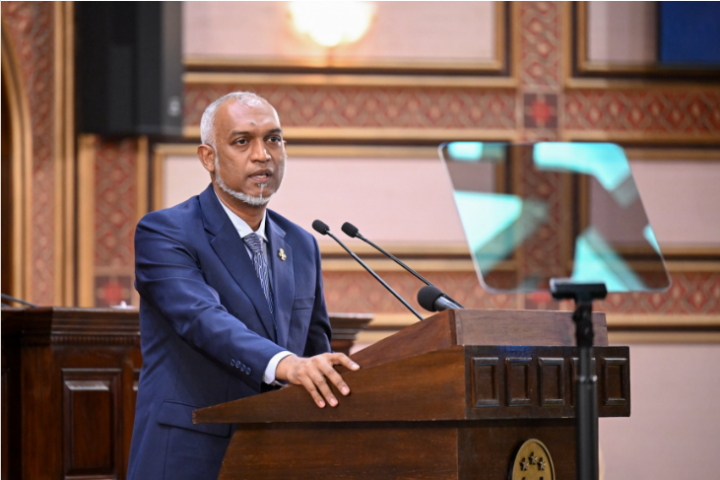
The administration’s stance remains firm: it maintains that the delay is a necessary consequence of cleaning up a flawed system. Minister of Housing, Dr Abdulla Muththalib, has previously informed the People’s Majlis that the review of flat beneficiary lists was inevitable.
The Minister has repeatedly argued that the previous administration’s finalisation of lists during its closing days-followed by the rushed signing of one-page agreements-was deeply fraudulent and lacked transparency. According to the current government, the decision to pause and audit these lists was not an act of obstruction, but a move to ensure fairness and prevent systemic injustice.
Housing remains the most emotive issue in Maldivian politics, particularly in the Greater Malé region, where demand continues to outpace supply. The opposition’s narrative focuses on the government’s failure to deliver, while the administration frames its current actions as an essential, if difficult, recalibration of an inherited system marred by mismanagement.
As the political rhetoric heats up, the tens of thousands of residents waiting for a home find themselves caught in the middle of a deepening cycle of partisan blame, with little consensus on the horizon regarding when these housing projects will realistically break ground.